Tell us how it went, whatever the star rating. Your review helps another Mama choose with confidence.
What Mamas noticed
Each figure comes from a survey or a test, with its method, year and number of people beneath it.
97%
of Mamas liked the taste of the product
Consumer satisfaction survey 2022, n=114
27.5%
almonds in the formula
The survey results in full
Consumer satisfaction survey 2022, n=114
The top three results in each category. The rest sit behind the link under each one, including the question that scored lowest.
88–97%the range across all 3 questions, the lowest one included.
Taste, scent and packaging
97%
liked the taste of the product
89%
liked the scent
88%
liked the shape of the packaging
Ingredients
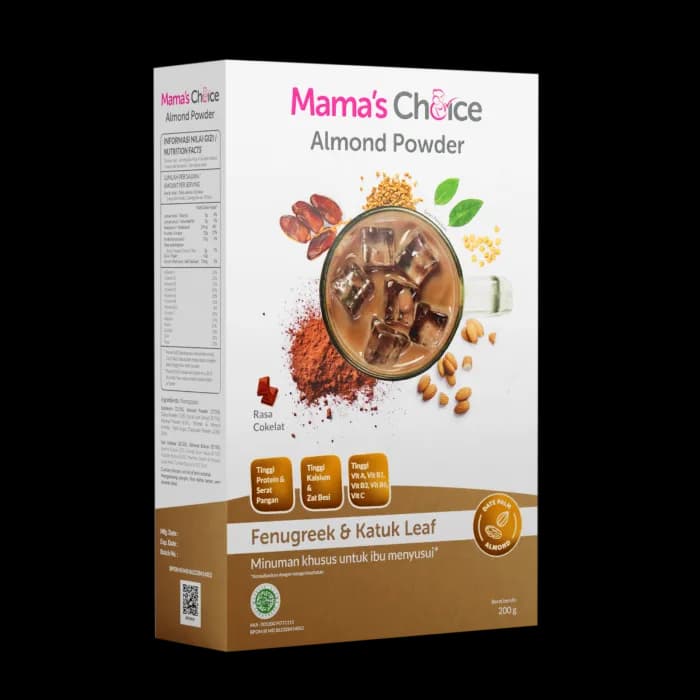
Formulated and tested in a laboratory in Singapore, with every ingredient listed in full.
Almond
a source of protein, healthy fats and vitamin E
Dates
a natural sweetener and a source of fibre and potassium
Fenugreek
a traditional spice herb used during breastfeeding
Katuk leaf (Daun Katuk)
our hero botanical, a leafy green traditionally eaten by breastfeeding mothers across the region
DHA
an omega-3 fatty acid
Added vitamins and minerals, among them vitamin C, calcium, iron and zinc
FAQ
FAQ
Who can use this product?
Breastfeeding mothers
What have Mamas noticed after using it?
97% of Mamas liked the taste of the product (Consumer satisfaction survey 2022, n=114). Results differ from person to person.
How do I take this product?
1. Put 3–4 tablespoons of Mama's Choice Almond Powder into a glass. 2. Add 150 ml of warm water slowly, stirring until smooth. 3. Drink it warm, or chill it. One 200 g box makes about 5 servings.
I am breastfeeding but pregnant again. Is it all right to take?
No. The fenugreek in it is not recommended in pregnancy because it may bring on contractions. You can start again after you have given birth.
Can it be taken while trying to conceive?
We do not recommend it. It is made for breastfeeding mothers, and the fenugreek in it is not recommended in pregnancy. Ask your doctor which drink or supplement suits your programme.
What if I am allergic to nuts or soy?
Do not take it unless your doctor says you can. It is made from nuts and soy (32.5% soy extract and 27.5% almond powder), and fenugreek can also cause reactions in people allergic to peanuts or chickpeas.
Where does the DHA come from? What if my baby is allergic to fish?
The DHA comes from fish, at 500 mg per serving (1.25%), so it is not suitable for vegetarians. If your baby has a fish allergy, talk to your doctor before you take it.
Is it all right with GERD or acid reflux?
Usually, yes. Do not take it on an empty stomach or just before lying down, and leave about 2 hours between it and any medicine.
How many times a day should it be taken?
1 or 2 servings a day, in the morning and late afternoon. It can be taken before or after a meal. While fasting, have a serving when you break the fast; it makes a good first drink. It pairs well with our Breastfeeding Support capsules.
Can it be mixed with other products or with another brand of breastfeeding drink?
You can stir it into your favourite food or drink, but not into supplements. If you also take another brand's breastfeeding product, do not mix them in one glass; leave a gap between the two.
The powder will not dissolve. What do I do?
Use hot water, or make sure the water is warm enough, then stir slowly until the powder has dissolved.
It tastes like a herbal tonic and is not creamy enough. Why?
The herbal note comes from the fenugreek. It is less creamy than ordinary milk because it contains no cow's milk or other animal milk; its protein comes from almond and soy, and it contains no lactose. The matcha flavour has a little bitterness; if that bothers you, try it cold or blended into a drink you enjoy.
What nutrients does it contain?
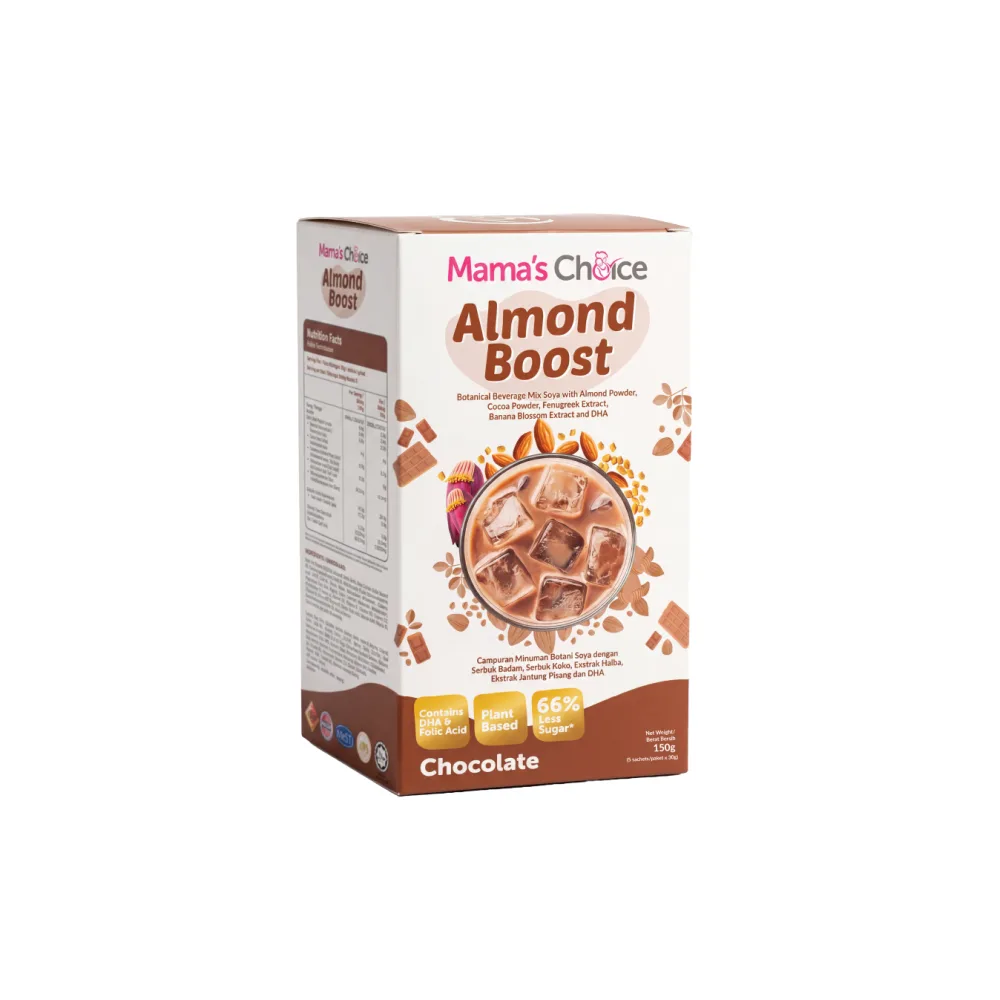
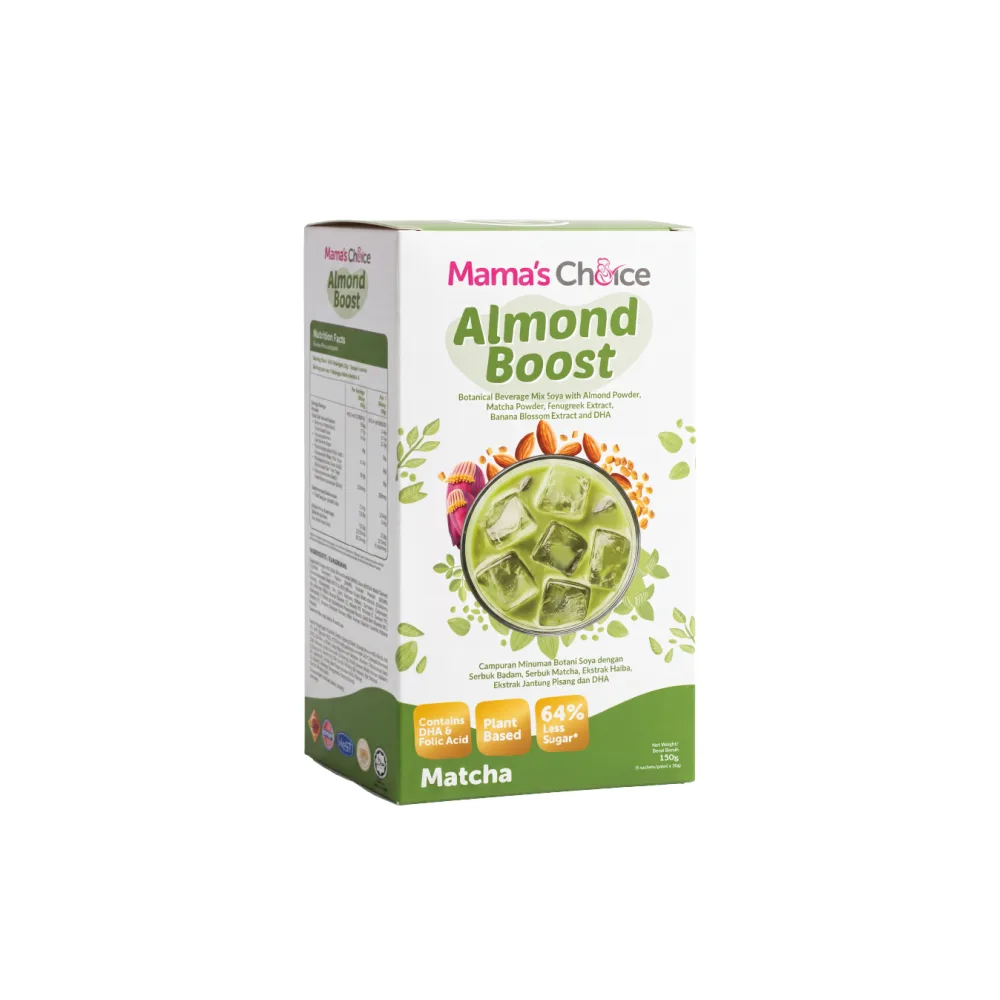
About 160 kcal per serving, with 12 g of sugar in the chocolate flavour and 13 g in matcha, from palm sugar rather than artificial sweetener. It contains moringa leaf extract, vitamin E from soy, folic acid (vitamin B9), and vitamins A, B1, B3 and B12. The full nutrition information is on the pack.
Does it contain cow's milk, lactose, creamer, caffeine or artificial sweetener?
None of them. It is dairy-free and gluten-free, with no creamer, no caffeine, no artificial sweetener, and no maltodextrin, xanthan gum or steviol; it is sweetened with palm sugar. With no animal milk and no lactose, it suits people who are lactose intolerant, and its protein comes from almond and soy.
How soon will I notice a difference?
Your milk depends above all on how often milk is removed, by feeding or pumping, and on rest, food and fluids. Enjoy it regularly as part of that routine.
It has been a week and nothing has changed. Why?
Milk depends mostly on feeding or pumping every 2–3 hours and emptying both breasts, eating well, managing stress and drinking enough. If your supply worries you, a lactation consultant will help more than taking more of any product.
Does it cause body odour or constipation, or make the baby spit up and pass stools more often?
Fenugreek can give urine and sweat a sweet, maple-syrup smell. The drink is not known to cause constipation; the usual causes are too little fibre, fruit and vegetables, drinking less than 2 litres a day and moving about too little. If your baby spits up or passes stools more often after you start, see the next answer.
My baby is passing stools more often, or has diarrhoea. Is it because of this?
It depends on your baby's age. Under 2 months, frequent stools are normal; the more milk a baby takes in, the more often they pass stools. If the colour is between dark green and mustard yellow and the stools are not very watery, it is not diarrhoea. If your baby has started solids, look at the food too, and at whether they have an almond or soy allergy; if so, stop taking it and talk to your doctor.
Can it make the baby chubbier?
Your baby's weight depends on how much milk they take, on the latch and how often they feed, and on their health. If your baby is not gaining well, look into it with a doctor or lactation consultant.
Can someone who is not breastfeeding drink it, or children?
Yes, as long as she is not pregnant, because of the fenugreek. It is a plant-based drink with protein from almond and soy, at about 160 kcal a serving. Children from 5 can drink it too. For relactation, or for starting milk without having been pregnant, talk to a doctor or lactation consultant first.
Which should I choose, this or Breastfeeding Support?
They suit different routines. Breastfeeding Support is a capsule of measured plant extracts (katuk leaf, fennel seed, moringa leaf, fenugreek, almond and soy), quick to take, with no calories or sugar to speak of. Almond Milk Powder is a drink with added vitamins, minerals and DHA, so it doubles as a daily nourishing drink. Choose the capsules for convenience and the drink for extra nutrition, or combine the two.
How do I store it after opening? Where can I buy it?
Once opened, it keeps until the expiry date on the pack, as long as the pack is closed tightly. See Where to buy for current stockists. A bundle comes in the flavour shown in its picture, and flavours cannot be mixed; to mix, buy single packs. We do not offer testers yet; the reviews from other Mamas on this page give a good idea of the taste.
Can it be taken during pregnancy?
No. It is made for breastfeeding mothers, and it contains fenugreek, which is not recommended in pregnancy because it may bring on contractions. Start taking it after you have given birth.
Will it make me gain weight?
Each serving has about 160 kcal and 12–13 g of sugar, made from plant ingredients such as almond, dates, fenugreek and katuk leaf. At 1–2 servings a day, it is a modest addition to what you eat.
Complete the routine
The products named in the usage notes for this one.