Why choose an alcohol-free mouthwash in pregnancy
Why pregnant mums often prefer an alcohol-free mouthwash, what it can and cannot do for your gums, and when to see a dentist in Malaysia.
Pregnancy changes your mouth more than most people expect. Gums bleed when you brush, breath tastes metallic, and morning sickness brings stomach acid up against your teeth. A mouthwash can help you feel fresh between brushes. If you want one in pregnancy, an alcohol-free formula is usually the more comfortable pick.
Why your mouth feels different now
Rising pregnancy hormones make gum tissue react more strongly to plaque. Many women notice swollen, tender gums that bleed a little when they brush, often from the second month. Dentists call this pregnancy gingivitis. It is common, and it usually settles after birth if plaque is kept under control.
Nausea plays its part too. Vomiting leaves acid on the teeth, and a strongly flavoured toothpaste can set off retching. So some days brushing simply gets skipped.
Good reasons to pick an alcohol-free mouthwash
It is gentler on a sensitive mouth
Alcohol gives a strong burn. When your gums are already tender, that sting can be the reason you stop using a mouthwash at all. An alcohol-free rinse is milder and many pregnant women find it easier to keep up.
It does not dry your mouth out
Pregnancy can leave your mouth drier than usual, and alcohol adds to that dry feeling. A dry mouth tends to feel less fresh, which is the opposite of what you wanted.
A mild flavour is easier when you feel sick
Look for a light mint rather than a fierce one. A rinse you can tolerate on a queasy morning does more good than a stronger one left in the cupboard.
It is a useful extra after vomiting
After you are sick, the NHS suggests rinsing your mouth with plain water rather than brushing straight away, because acid softens enamel for a while. A plain water rinse or a mild alcohol-free mouthwash keeps your mouth fresher until you can brush.
It fits in a handbag
Small bottles make it easy to freshen up at work or on the road, which matters when bad breath and a bitter taste come and go all day.
What a mouthwash cannot do
A rinse is an extra. It does not replace brushing twice a day and cleaning between your teeth, and it will not reverse gum disease once it has set in. If your gums bleed heavily, stay swollen, or you notice a loose tooth or a lump on the gum, see a dentist.
Dental care is safe in pregnancy, and the second trimester is often the most comfortable time for a check-up. Government dental clinics in Malaysia see expectant mothers, so ask at your klinik kesihatan when you book your antenatal visits.
A toothpaste that is easier on queasy mornings
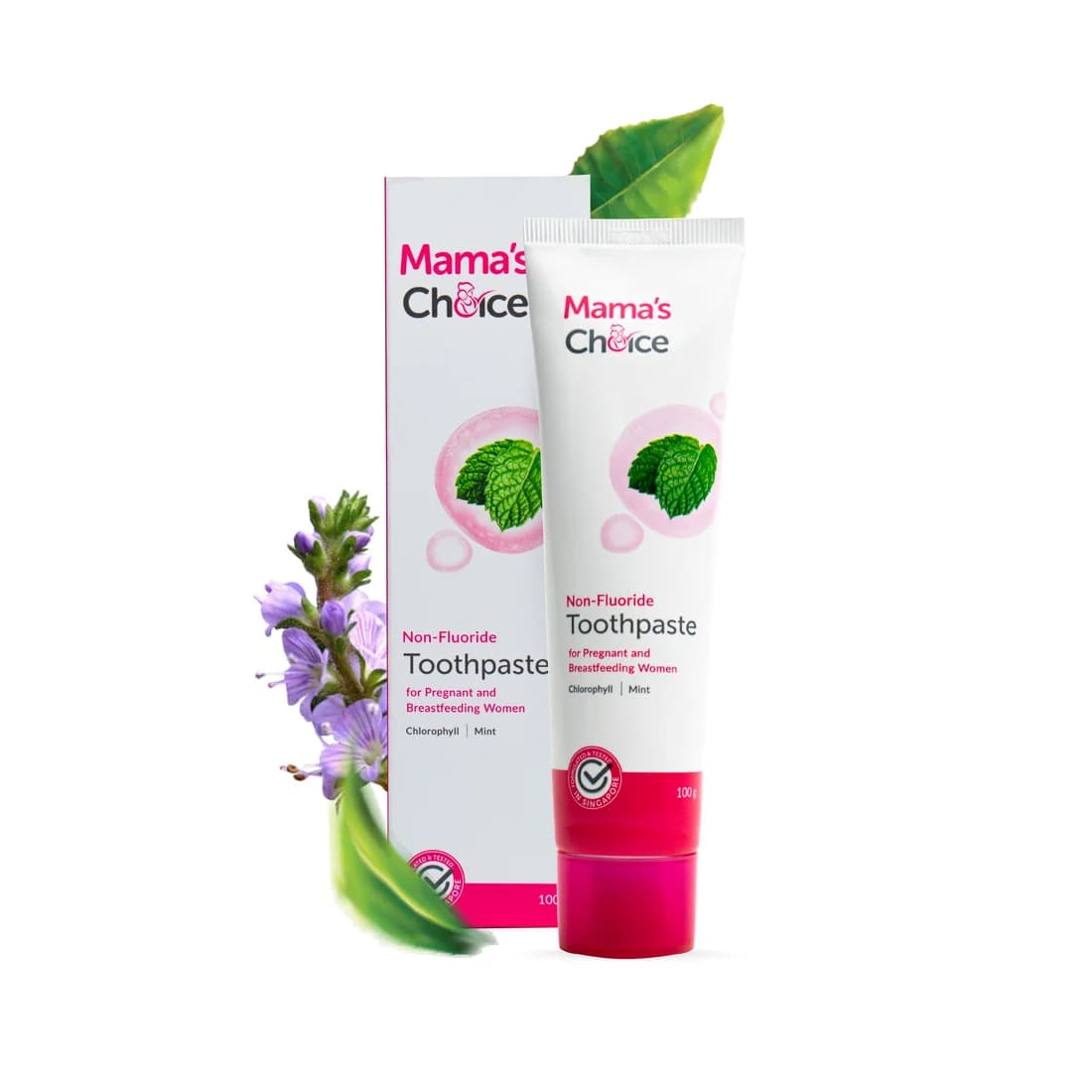
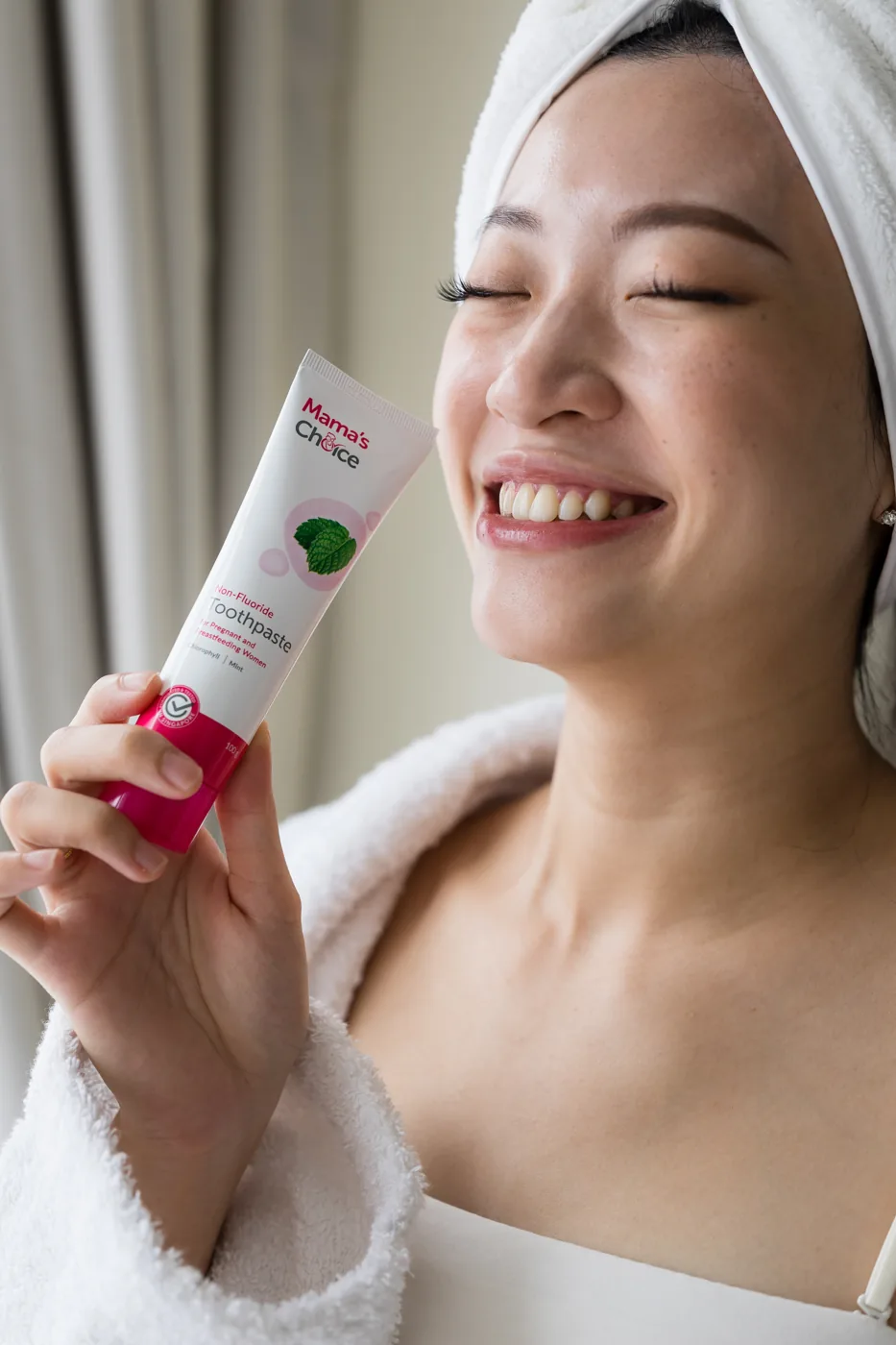
If brushing itself is the hard part, the paste matters as much as the rinse. Our Non-Fluoride Toothpaste is formulated for pregnancy and breastfeeding, with a gentle mint and no SLS, the foaming agent some people find harsh. In a Mama's Choice satisfaction survey of 62 mothers (2022), 93% said they felt comfortable using it with no nausea, and 89% felt the mint was just right. It is halal certified by BPJPH, Indonesia.
Fluoride toothpaste is what dentists generally recommend for preventing tooth decay. If you choose a fluoride-free paste, talk to your dentist about how to keep your teeth protected. You can see the latest price on Shopee.
Sources
Share this article
This article is for information only and is not a substitute for diagnosis or medical advice. Please talk to your doctor about your own situation.