What the natural ingredients in alcohol-free mouthwash do
Mint, chlorophyll, miswak and allantoin turn up in alcohol-free mouthwash and toothpaste. What each one does, and what the evidence says, in pregnancy.
Pregnancy has a way of making you read labels you used to ignore. Mouthwash is a good place to start, because the bottle in most bathrooms contains alcohol, a strong flavour and a list of names nobody can pronounce.
An alcohol-free rinse leaves out the ethanol that gives many mouthwashes their burn. That alone makes it more comfortable for tender pregnancy gums and a dry mouth. What goes in its place varies, and plant-derived ingredients are popular. Each of the common ones does something slightly different.
Mint
Peppermint and spearmint give a mouthwash or toothpaste its fresh taste and cool feel. That freshness is the main thing mint brings. Some people find that mint helps an unsettled stomach, and peppermint tea is a popular choice for queasy days, though the research on it in pregnancy is limited.
The flavour strength matters. A fierce mint can set off gagging when you have morning sickness. A light one is easier to use every day.
Chlorophyll
Chlorophyll is the green pigment in plants. In oral care it is mostly used as a natural colour and a breath freshener. Laboratory studies suggest it may slow the growth of some bacteria, but there is not much evidence from people. Take it as a pleasant extra, and leave the plaque control to brushing.
Miswak
Miswak, from the Salvadora persica tree, has been used as a chewing stick for teeth cleaning across the Middle East, Africa and South Asia for centuries. Extracts are now added to toothpastes. Studies suggest miswak extract can help reduce plaque, and the WHO has recognised the chewing stick as a tool for oral hygiene.
Allantoin
Allantoin was first found in the comfrey plant and is now usually made in the laboratory. In skincare it softens and soothes. In toothpastes and mouthwashes it is used for the same comforting feel on the gums. A University of Oslo review of dentifrice ingredients lists it among soothing agents.
What a mouthwash cannot do
None of these ingredients replaces brushing twice a day and cleaning between your teeth. Pregnancy hormones make gums swell and bleed more easily, so plaque control matters more than usual. If bleeding is heavy or does not settle, see a dentist. Dental check-ups are safe in pregnancy, and government dental clinics see expectant mothers.
A toothpaste with the same ideas
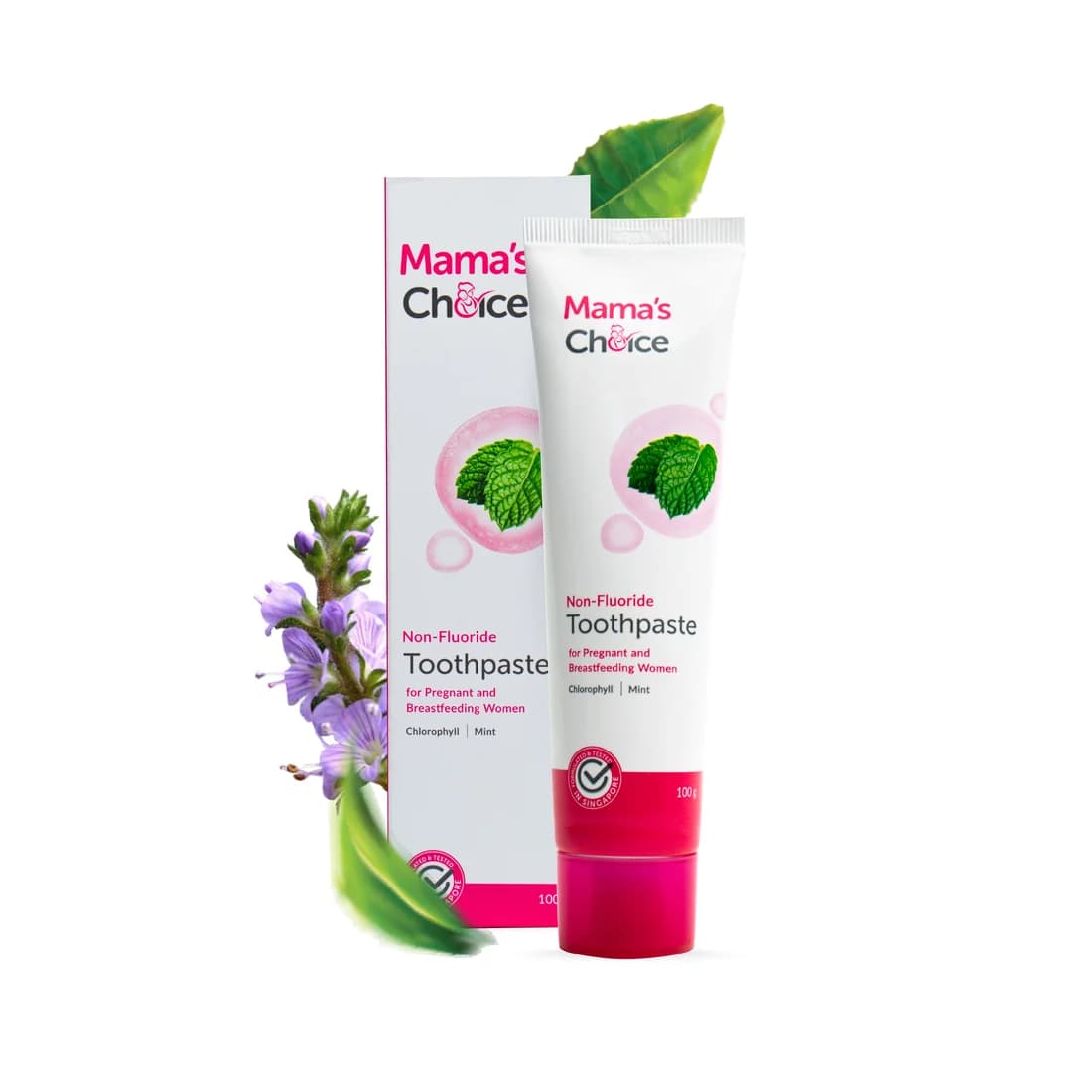
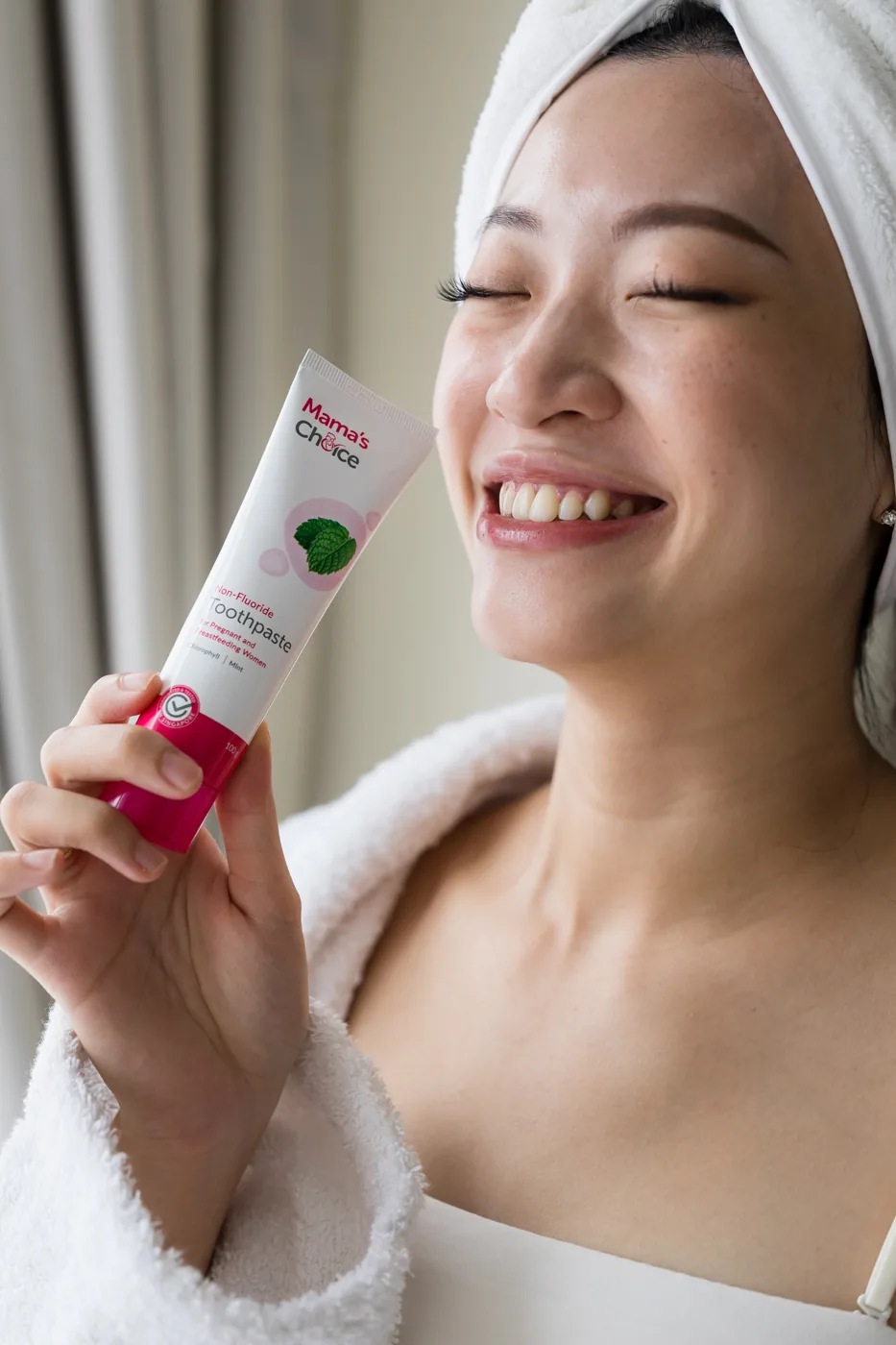
We do not sell a mouthwash in Malaysia. Our Non-Fluoride Toothpaste is built on the same thinking. It contains miswak and allantoin, with a gentle mint, and leaves out SLS, triclosan and fluoride. It cleans teeth, helps clear away plaque and leaves your breath fresh.
It is formulated for pregnancy and breastfeeding. In a Mama's Choice satisfaction survey of 62 mothers (2022), 93% felt comfortable using it with no nausea, and 89% felt the mint was just right. It is halal certified by BPJPH, Indonesia.
Fluoride toothpaste is what dentists usually recommend to prevent tooth decay, so if you choose a fluoride-free paste, ask your dentist how best to protect your teeth. Find the toothpaste and its latest price on Shopee.
Sources
Share this article
This article is for information only and is not a substitute for diagnosis or medical advice. Please talk to your doctor about your own situation.