
The best exercise during pregnancy, trimester by trimester
How much to exercise in pregnancy, the best exercise for each trimester, when to avoid it, and the warning signs that mean stop and call your doctor.
Relatives mean well when they tell you to rest and take it easy. For most pregnancies, though, the advice from doctors is the opposite: keep moving. The American College of Obstetricians and Gynecologists (ACOG) says exercise in a healthy pregnancy does not raise the risk of miscarriage, low birth weight or early delivery. It helps your body and your mood.
Why exercise helps
ACOG lists these benefits of regular exercise in pregnancy:
- Less back pain
- Easier bowel movements
- A lower risk of gestational diabetes, pre-eclampsia and caesarean birth
- Healthy weight gain
- Better fitness and a stronger heart
- An easier return to your usual weight after birth
It also lifts your mood and helps you sleep. When your body is changing fast, that matters.
How much is enough?
The WHO and ACOG both suggest at least 150 minutes of moderate activity a week. That could be 30 minutes on five days. Moderate means you can talk but not sing. If you were not active before pregnancy, start with 10 minutes a day and build up.
Staying safe

Check with your doctor before you start, whether you are new to exercise or a regular at the gym. Then:
- Warm up first and cool down after.
- Drink water before, during and after. Malaysian heat and humidity make overheating easy, so exercise in the cool of the morning or evening, or indoors with air-conditioning.
- Wear light, comfortable clothes with good support, and non-slip shoes.
- Avoid contact sports, activities with a high risk of falling, hot yoga and scuba diving.
- From the second trimester, avoid lying flat on your back for long. Prop yourself up or exercise on your side.
- Do not push to exhaustion. Slow down when your body asks.
When exercise is not advised
Some women are told to avoid or limit exercise. Talk to your doctor first if you have:
- Pre-eclampsia or high blood pressure in pregnancy
- A weak cervix or a cervical stitch
- Severe anaemia
- Some heart or lung conditions
- Placenta praevia after 26 weeks
- A twin or triplet pregnancy with risk of early labour
- Bleeding, or signs of preterm labour
Good exercise for each trimester
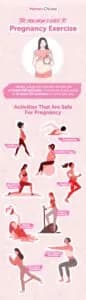
Most of these work through the whole pregnancy. Adapt as your bump grows.
First trimester
Jogging. If you ran before pregnancy, you can usually keep going, at a slower pace and shorter distance. If you did not, brisk walking is a better start.
Light to moderate strength training. Working with light weights or resistance bands keeps your muscles strong for carrying a baby later. Use good form, breathe out as you lift, and do not hold your breath. Drop moves that have you lying flat on your back as you move into the second trimester.
Dancing. It counts. Skip leaps, jumps and fast spins as your balance shifts.
Second trimester
Yoga. With morning nausea often easing, this is a good time to start a pregnancy yoga class. It builds strength and teaches slow breathing that helps in labour. Avoid deep backbends, twists through the tummy, headstands and lying on your back for long.
Pelvic floor (Kegel) exercises. Squeeze the muscles you would use to stop passing urine, hold for a few seconds, then relax. Aim for a few sets every day. They help bladder control during pregnancy and after birth.
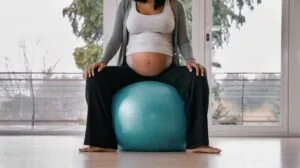
Stationary cycling. Easy on the joints, with no risk of falling off a bike on a busy road.
Pregnancy Pilates. Classes adapted for pregnancy build core and back strength and balance.
Third trimester
Walking. The simplest exercise of all. All you need is a good pair of shoes. A brisk walk round the taman or a mall works the whole body and fits into any day.

Swimming and water aerobics. The water takes your weight, which is a relief late in pregnancy. Swim where there is a lifeguard or with someone, drink water, and use sunscreen and a hat outdoors.
Stop and call your doctor if you notice
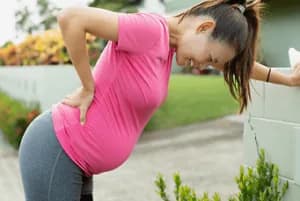
- Bleeding from the vagina
- Fluid leaking from the vagina
- Regular, painful contractions
- Dizziness or feeling faint
- Breathlessness before you start exercising
- Chest pain
- A headache
- Pain or swelling in your calf
- Muscle weakness that affects your balance
What to wear
Clothes that move with you make it easier to keep going. Our Maternity Leggings have a high, adjustable waistband that sits over your bump, with stretchy fabric that stays opaque when you bend and squat. In a Mama's Choice satisfaction survey of 63 mothers (2022), 98% found them comfortable to wear and 94% felt the fabric was not see-through. See the colours and latest price on Shopee.
Listen to your body. Some days a short walk is plenty, and that still counts.
Sources
Share this article
This article is for information only and is not a substitute for diagnosis or medical advice. Please talk to your doctor about your own situation.