Breastfeeding pain remedies: common causes and what helps
Why breastfeeding hurts, from a shallow latch to engorgement, blocked ducts, mastitis and thrush, what helps at home, and when to see a doctor.
Many mothers find breastfeeding uncomfortable in the first days. Some tenderness as your baby latches on is common while you both learn. Pain that lasts through the whole feed, gets worse instead of better, or comes with cracked skin, a lump or a fever is a sign that something needs fixing. Most causes can be sorted out, often quickly, once you know what you are dealing with.
1. A shallow latch
This is the most common cause of sore nipples. If your baby takes only the nipple into her mouth, it gets squeezed against the hard palate with every suck. She also removes less milk, which can lead to engorgement and blocked ducts.
What helps:
- Bring your baby to the breast with her nose opposite your nipple, so she tips her head back and opens wide.
- Aim for a mouthful of breast, with more of the areola covered below the nipple than above it. Her lips should be turned out.
- Try other holds: cross-cradle, rugby (underarm), laid-back or side-lying.
- To take her off, slide a clean finger into the corner of her mouth to break the suction first.
- Ask a nurse, midwife or lactation consultant to watch a whole feed. Your hospital or klinik kesihatan can help. A tongue-tie can also cause a shallow latch and is worth checking for.
2. Engorgement
Around day 3 to 5, as your milk comes in, your breasts can become hard, swollen, warm and painful. Engorgement can also happen later if feeds are missed.
What helps:
- Feed often, 8 to 12 times in 24 hours, following your baby's cues.
- If your breast is too firm for her to latch, hand express a little first to soften the areola.
- Use cold packs between feeds to ease swelling.
- Gentle, light strokes from the nipple towards the armpit can help fluid drain. Avoid deep or hard massage.
- Express only enough for comfort. Pumping a lot tells your body to make even more.
3. A blocked duct
A blocked duct feels like a tender, firm lump in one part of the breast, sometimes with a red patch over it. You usually feel well otherwise.
What helps:
- Keep feeding as usual, from both breasts.
- Use cold packs and take paracetamol or ibuprofen if needed (both are generally considered compatible with breastfeeding; check with your pharmacist).
- Avoid hard massage on the lump, which can make swelling worse.
- Check that your bra is not pressing into the breast. A wire-free bra that fits well helps.
- If the lump has not settled in a day or two, see your doctor.
4. Mastitis
Mastitis is inflammation of the breast, sometimes with infection. The breast is red, hot, swollen and painful, and you may have a fever, chills and aches like the flu.
What helps: See a doctor the same day. You may need antibiotics. Keep feeding normally, since your milk stays fine for your baby, and rest as much as you can. Use cold packs and pain relief. Go to hospital urgently if you feel very unwell, have a high fever that will not come down, or the red area is spreading fast.
5. Thrush
Thrush is a yeast infection. Nipples may look shiny, pink or flaky, and many women describe a burning or shooting pain in the breast during and after feeds. Your baby may have white patches in the mouth that do not wipe off, or a red diaper area.
What helps: See a doctor. You and your baby both need antifungal medicine, at the same time, so the infection is not passed back and forth.
6. Sore or cracked nipples
Soreness in the first week is common. Cracks, blisters or bleeding almost always point back to the latch, so start there. La Leche League also suggests avoiding soap and shower gel on the nipples, which dry the skin. Expressing a few drops of milk and letting it dry on the nipple after a feed is a simple, free option many mothers use. If a crack does not heal, or looks infected, see a doctor.
Later, when teeth arrive, a nip can catch you by surprise. Read our tips for breastfeeding a teething baby.

Looking after your nipple skin
Prevention is easier than repair. Keep nipple skin soft from the first day, before any problem starts.
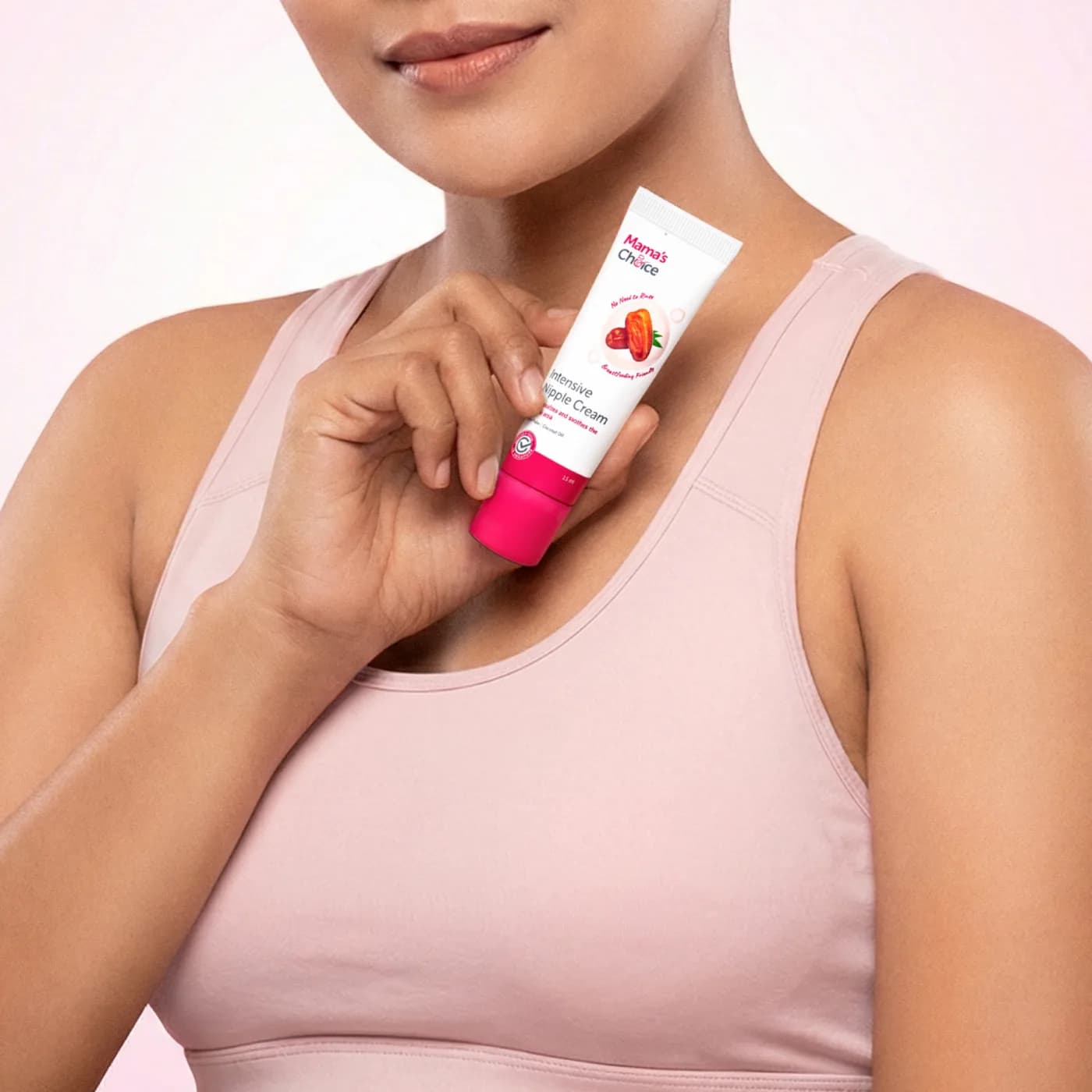
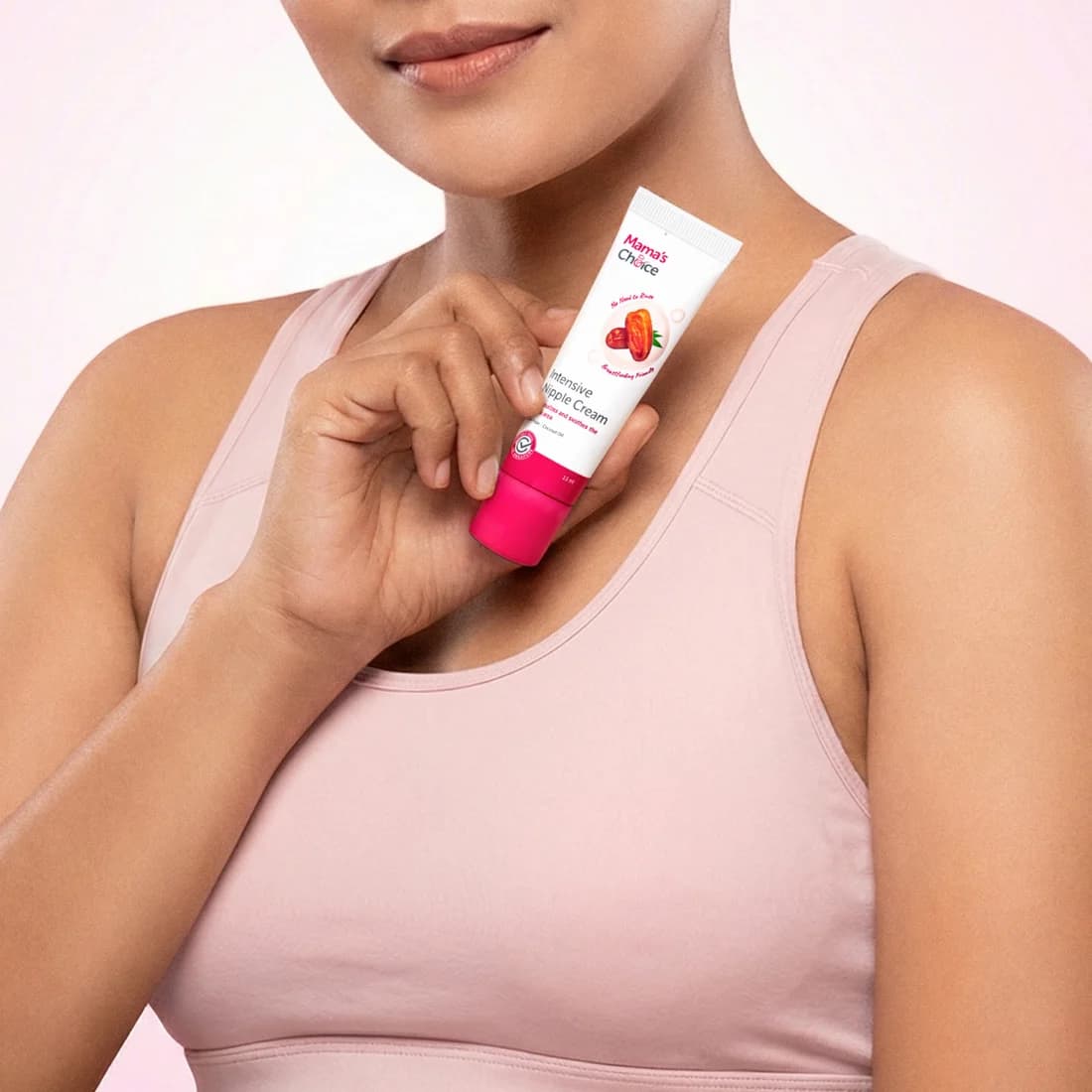
Our Intensive Nipple Cream moisturises and protects nipple and areola skin, helps prevent dryness and helps prevent cracked nipples. It has just five ingredients: lanolin, shea butter, coconut oil, vitamin E and date fruit extract. There is no fragrance or alcohol, and no need to wipe it off before a feed. Squeeze a bean-sized amount onto a clean finger and spread it over the nipple and areola after each feed.
In a Mama's Choice satisfaction survey of 74 mothers in Indonesia (2022), 96% felt dry nipple skin became softer and 92% felt more comfortable while breastfeeding. It is dermatologically tested and halal certified by BPJPH, Indonesia. It contains lanolin, from sheep's wool, so skip it if you react to wool. Buy it on Shopee, and read more about what is in it.
A soft, wire-free Maternity Nursing Bra that does not press on your nipples or breasts also helps.
Nobody gets breastfeeding right on the first try. If it hurts, ask for help early. It gets easier.
Sources
Share this article
This article is for information only and is not a substitute for diagnosis or medical advice. Please talk to your doctor about your own situation.