The truth about aloe vera and shea butter for stretch marks
What aloe vera and shea butter really do for skin that is stretching in pregnancy, what the research says about stretch marks, and how to use them well.
Aloe vera and shea butter turn up in almost every stretch mark cream. Both are good for dry, stretching skin. Neither is magic, and it helps to know the difference.
What stretch marks are
Stretch marks (striae) form when skin stretches faster than it can adapt. The supporting fibres in the deeper layer of skin tear, and the skin above shows thin lines. New marks are often pink, red or purple. Over months they usually fade to silvery or pale lines that are much less noticeable.
Most women get some stretch marks during pregnancy, usually from the second half onwards, on the belly, breasts, hips and thighs. Your genes play a big part. If your mother had them, you are more likely to get them too. Rapid weight gain, a large bump and younger age also add to the odds.
What the research says about creams
A Cochrane review of creams and oils used to prevent stretch marks in pregnancy found no high-quality evidence that any of them stops marks from forming. The trials were small, and products such as cocoa butter and olive oil did no better than no cream at all.
That does not make creams pointless. Stretching skin often feels dry, tight and itchy, and a good moisturiser helps with that every day. Many mothers also find that regular use helps marks look less noticeable over time. A cream is about how your skin feels and looks. It cannot change the genes you were born with.
Aloe vera and skin
Aloe vera gel comes from the inner leaf of the aloe plant. It is mostly water, with sugars, vitamins and other natural compounds. On the skin it is light, cool and refreshing.
What aloe does well:
- It helps skin feel moisturised and soft
- It feels cooling on warm, tight skin, which many women love in Malaysian heat
- It is gentle and well tolerated by most people
Some laboratory and small human studies suggest other benefits, but none is strong enough to promise that aloe prevents or removes stretch marks. If you use pure aloe gel from the plant, patch test first, as the yellow sap under the skin of the leaf can irritate.
Shea butter and skin
Shea butter is the fat from the nuts of the African shea tree. It is rich in fatty acids that soften skin and help it hold on to moisture. It is thick and comforting, so it works especially well on very dry patches.
What shea does well:
- It softens and smooths dry skin
- It helps skin hold moisture, so it feels supple
- It makes a cream feel rich and cushioning
No good trial shows that shea butter on its own prevents or fades stretch marks. Its strength is comfort and softness, which is exactly what tight, itchy skin over a bump needs.
Why aloe and shea work well together
Aloe brings a light, cool, watery feel. Shea brings richness and staying power. Together they give a cream that spreads easily, sinks in without feeling heavy, and leaves skin soft for hours. That is the combination we chose for our own cream.
Our Stretch Mark Cream
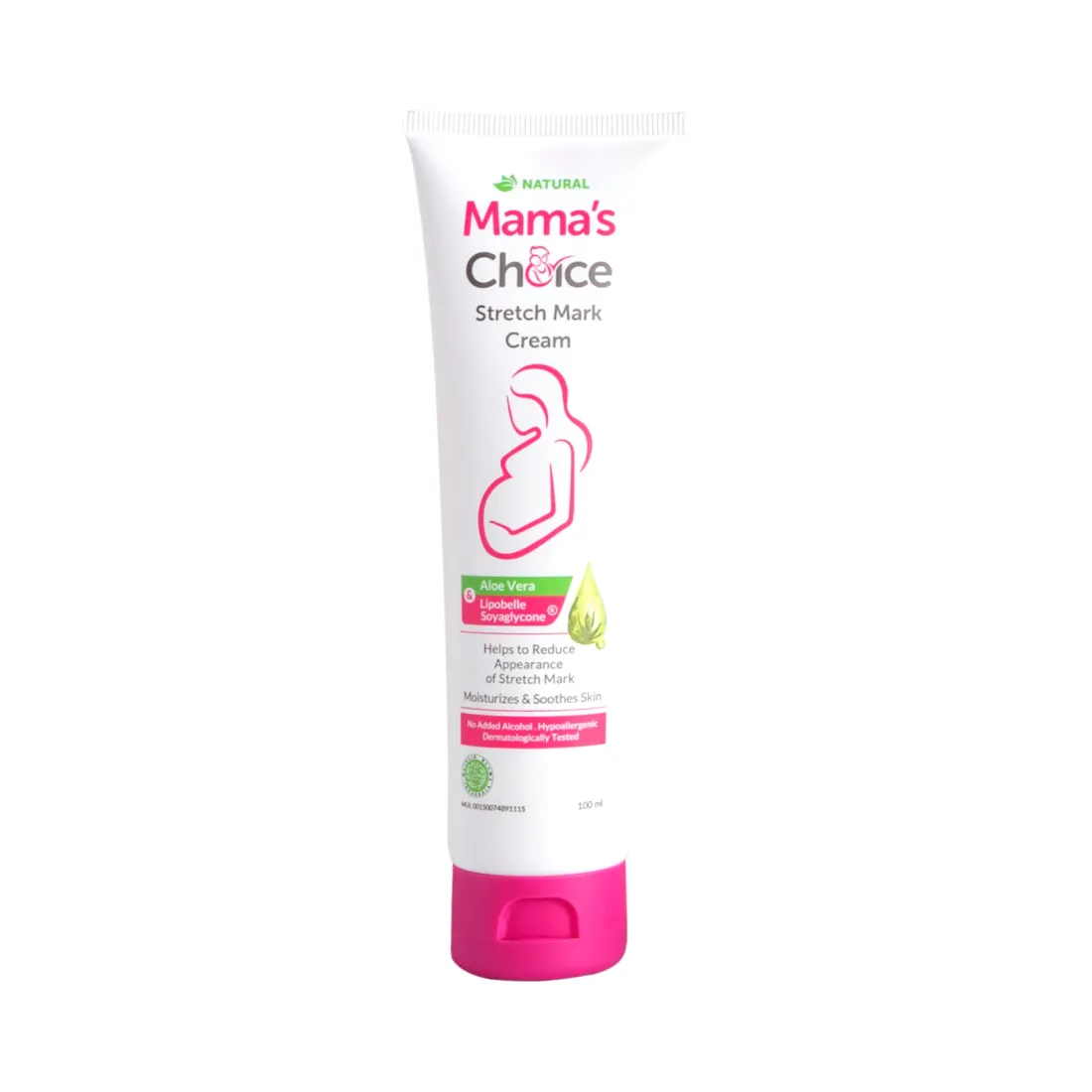
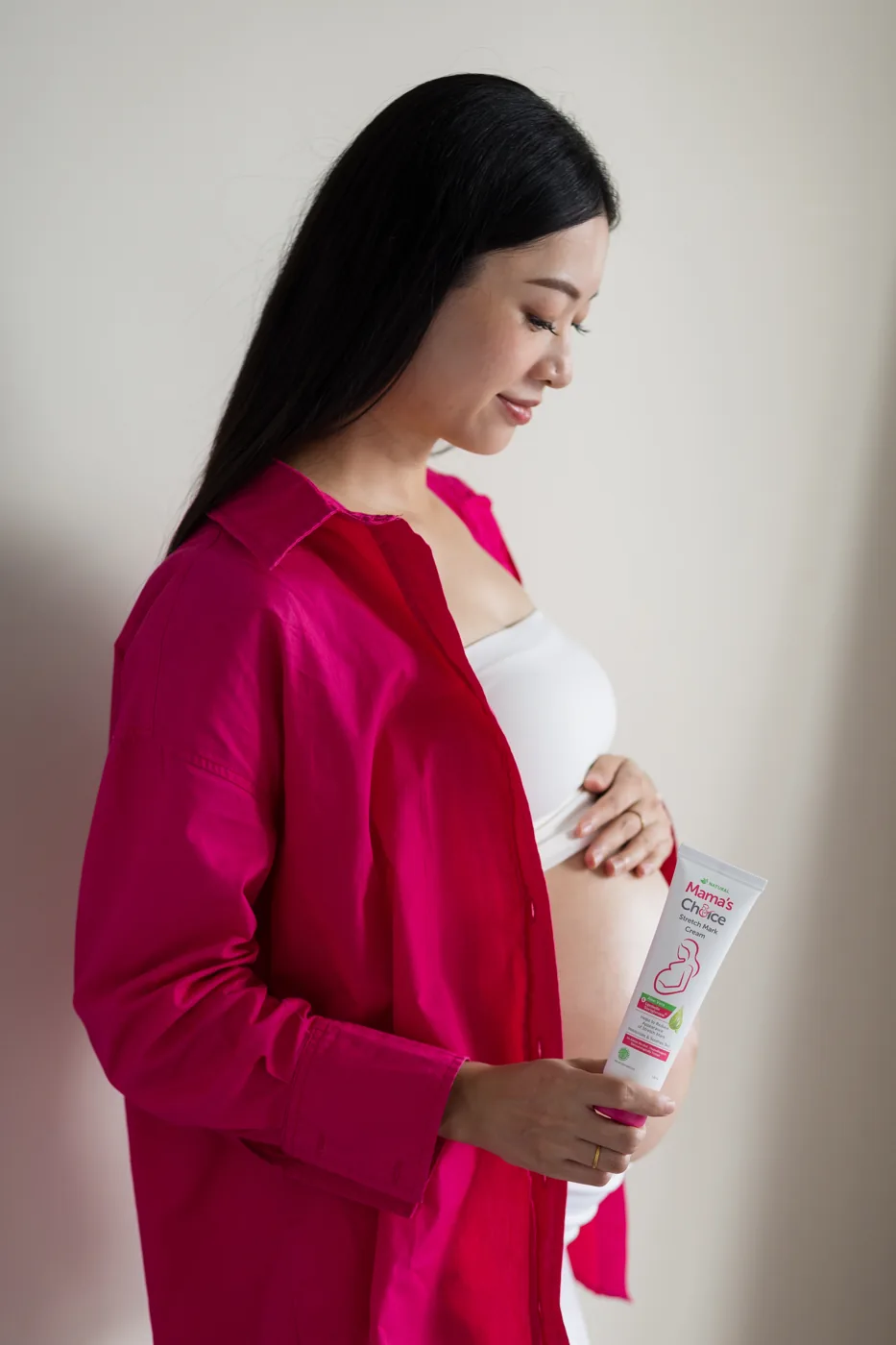
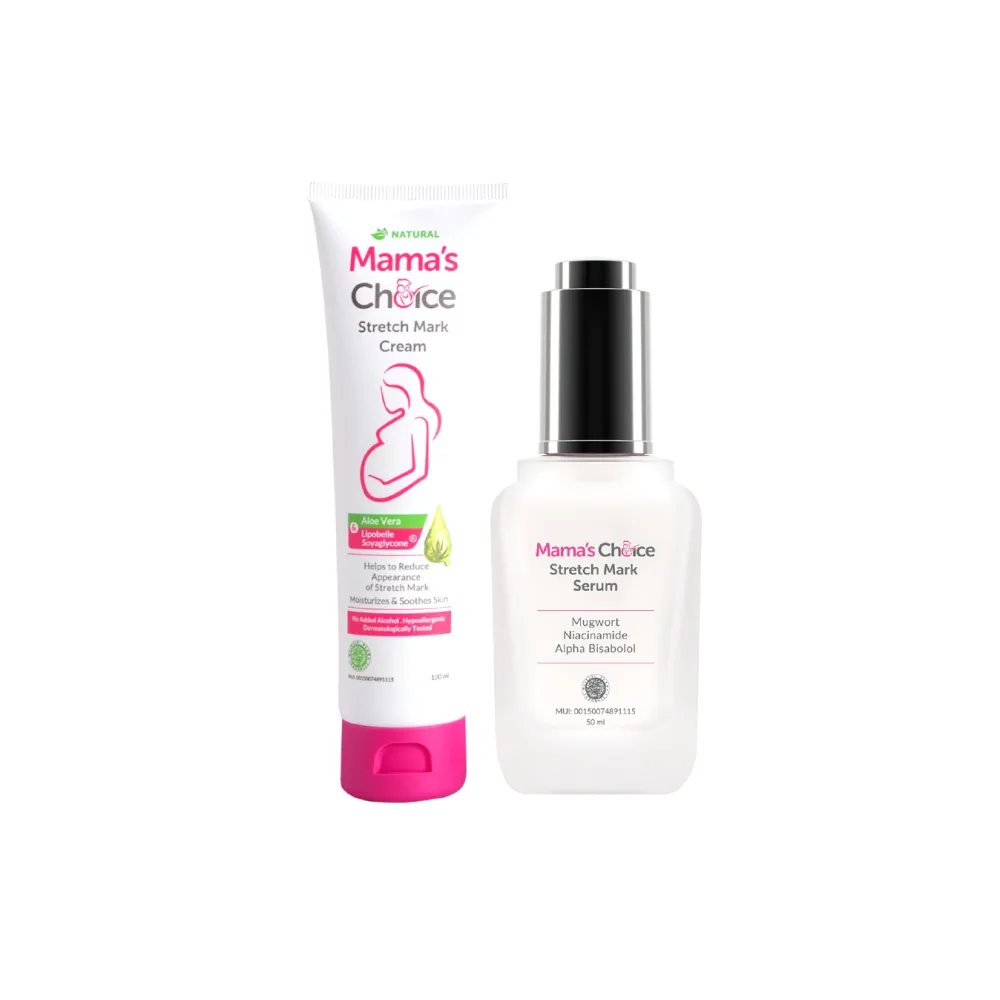
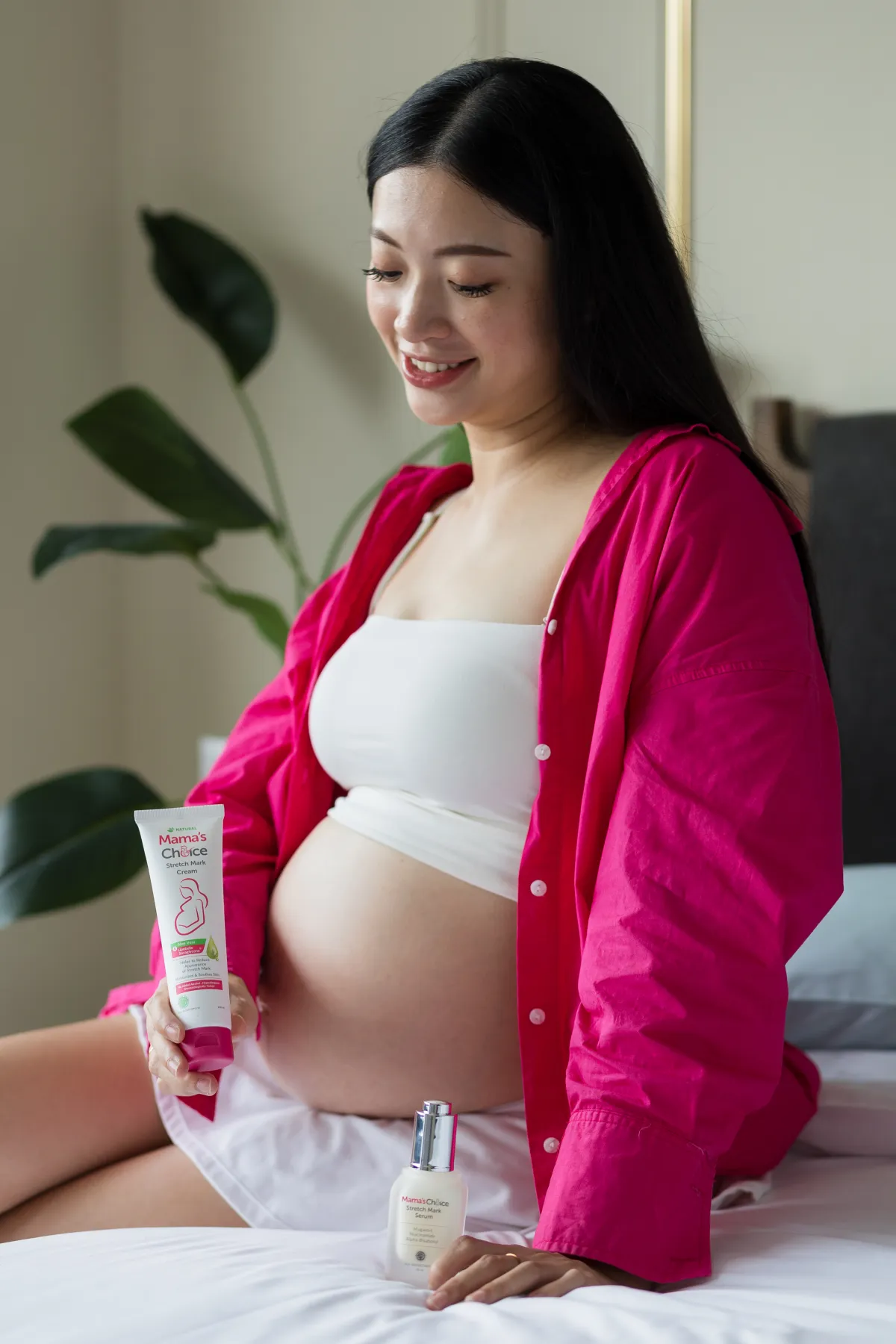
Mama's Choice Stretch Mark Cream is formulated for pregnancy and breastfeeding. It pairs aloe vera and shea butter with olive oil, jojoba oil and Lipobelle soyaglycone, a soy-derived ingredient, in a light cream that absorbs quickly. It is made without parabens or drying alcohol and is halal certified by BPJPH, Indonesia.
In a Mama's Choice satisfaction survey of 78 mums in Indonesia in 2022:
- 100% felt the texture was just right
- 98% felt it absorbed easily
- 97% felt it was comfortable to use and not sticky
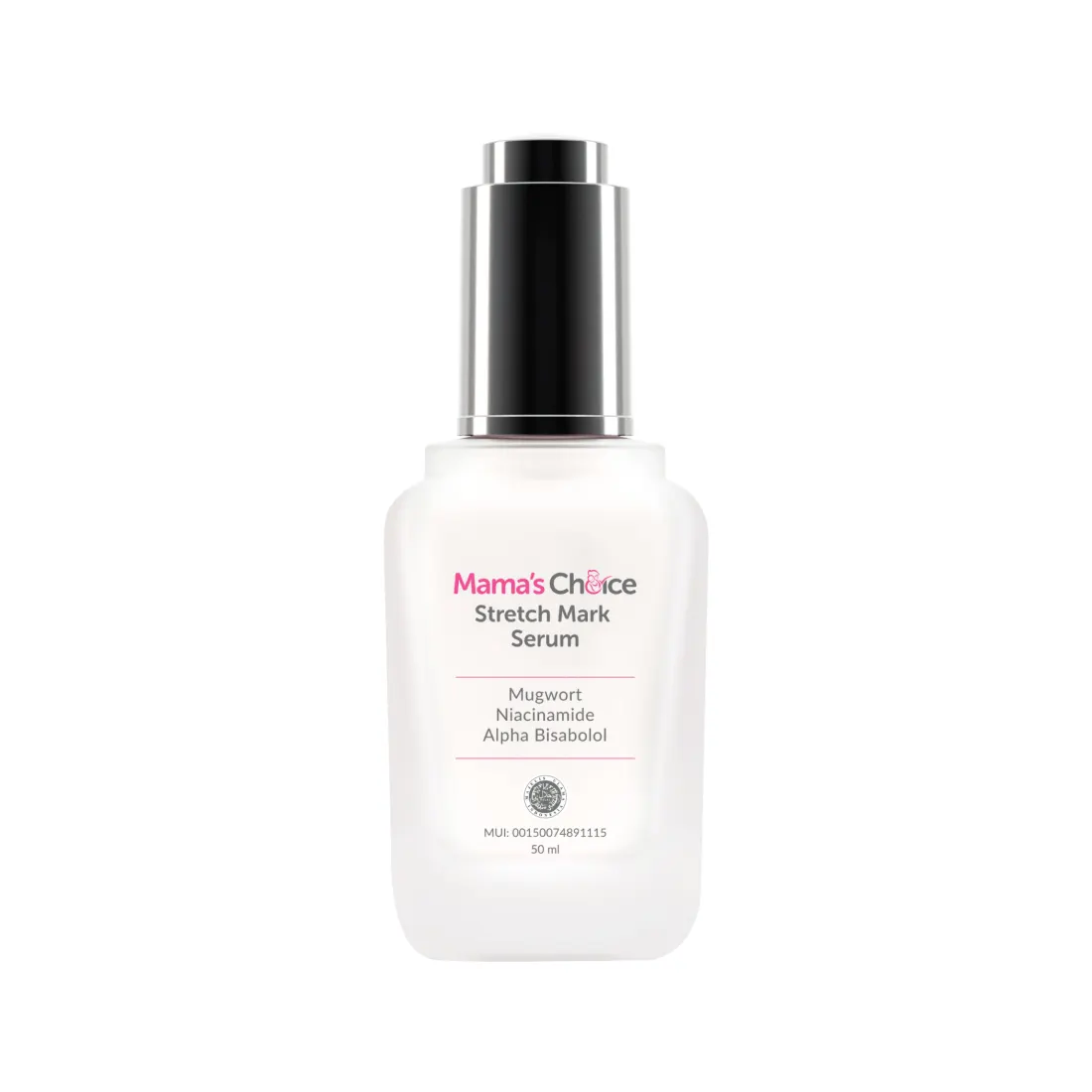
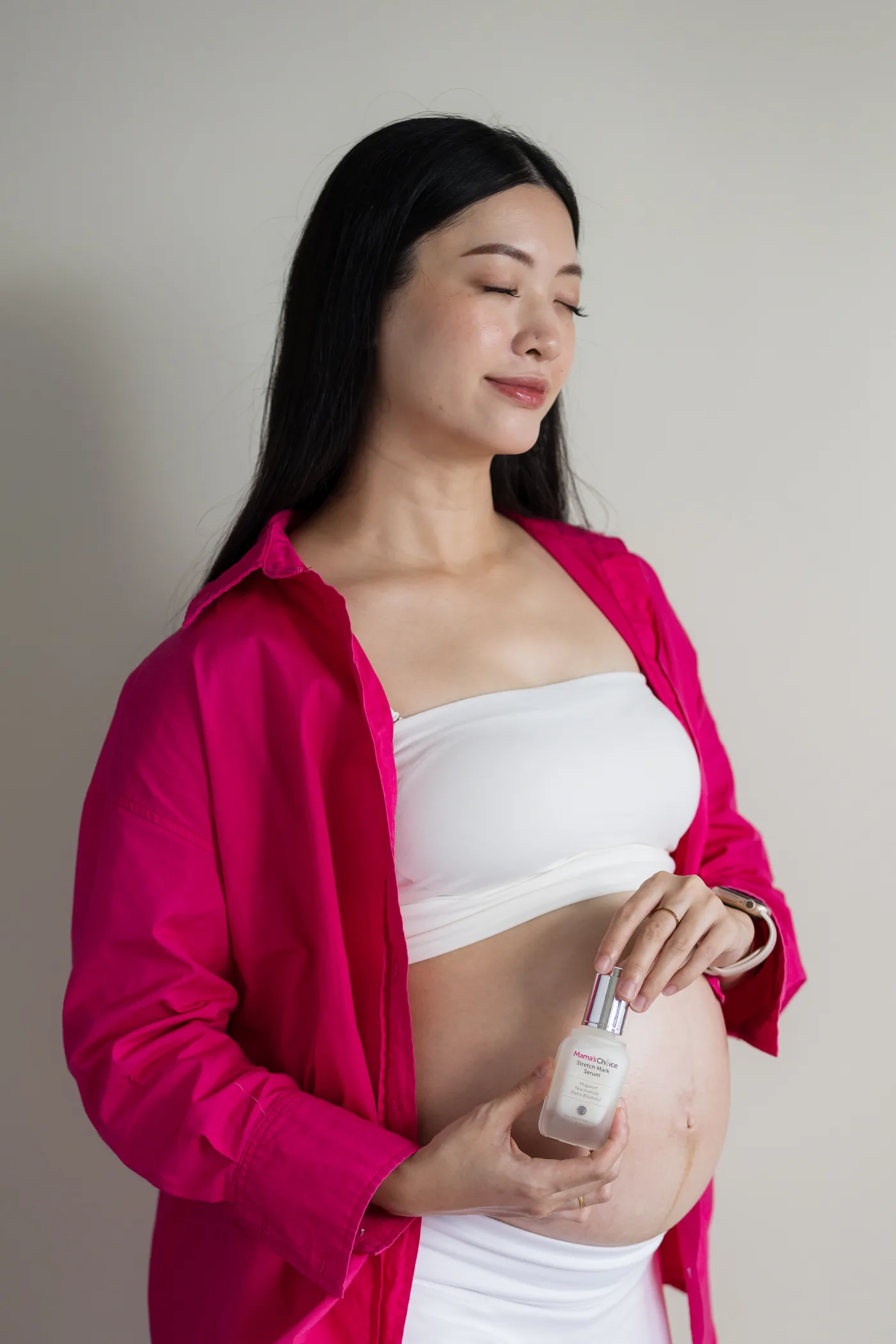
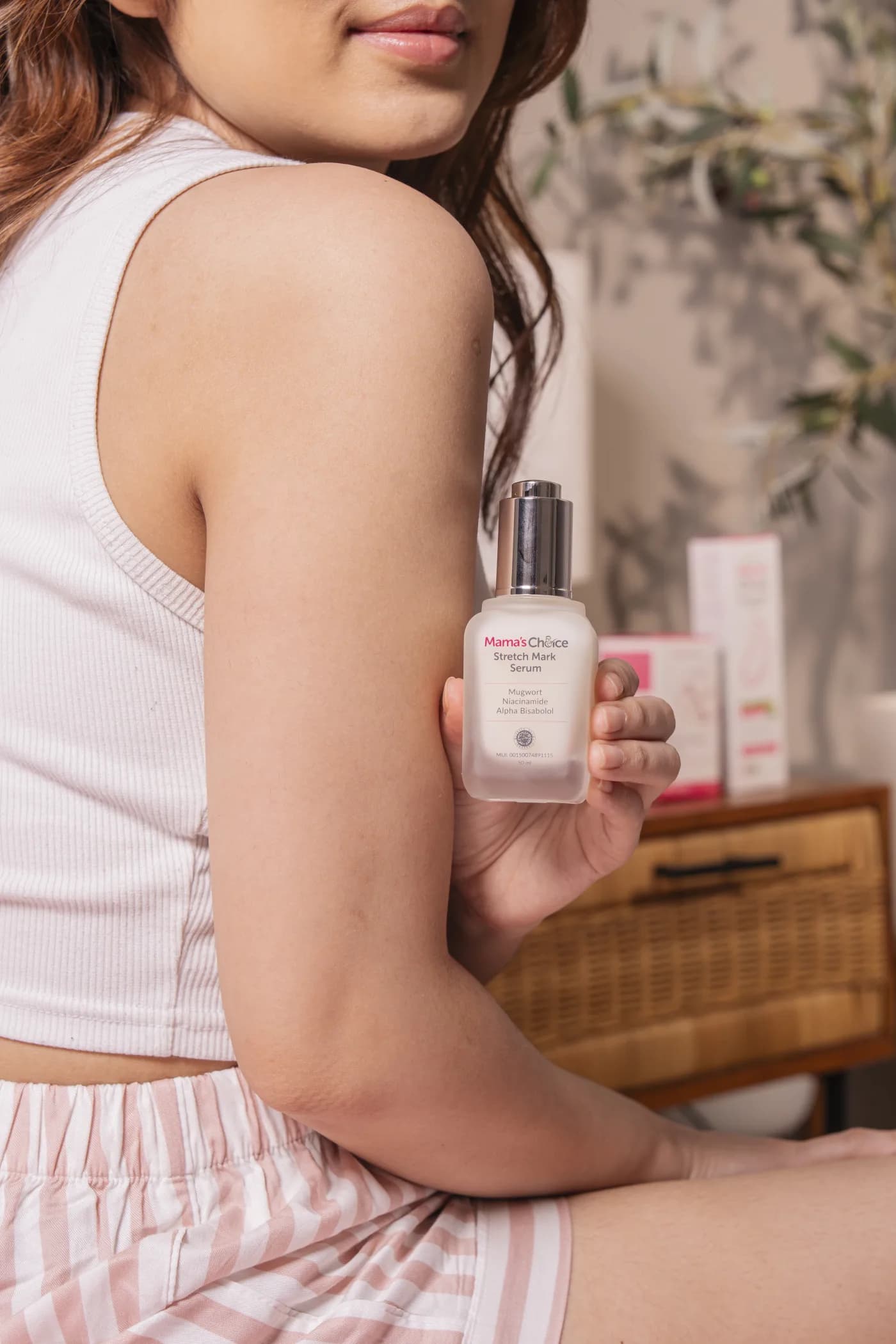
If you want to do more for marks that are already there, use the cream with our Stretch Mark Serum. In a Mama's Choice use test with 29 mums in 2022, 83% agreed the serum helps skin look smoother. Results differ from person to person. You can buy the two together as the Stretch Mark Cream and Serum Set.
The cream is on Shopee and Lazada, where the latest price is shown.
How to get the most from any stretch mark cream
- Start early, from the end of the first trimester, so your skin is already well moisturised as it stretches
- Apply morning and night to your belly, breasts, hips and thighs
- Massage gently until absorbed, with a light touch over your bump
- Keep going after the birth, when skin changes again
- Gain weight steadily, as your doctor advises, rather than quickly
Itching that is intense, especially on the palms and soles and worse at night, is not a stretch mark problem. It can be a sign of a liver condition of pregnancy (obstetric cholestasis). See your doctor promptly if you have it.
After pregnancy, marks usually fade a great deal on their own. If they still bother you once you have finished breastfeeding, a dermatologist can talk you through treatments that are not used during pregnancy.
Sources
Share this article
This article is for information only and is not a substitute for diagnosis or medical advice. Please talk to your doctor about your own situation.