
DEET in mosquito repellent: is it safe for kids?
What DEET is, what the evidence says about using it on babies and children, the alternatives that work, and how to protect your family from dengue.
In Malaysia, a mosquito bite is more than an itchy bump. Aedes mosquitoes spread dengue all year round, and children are among those hit hardest. So when you pick a repellent, you want one that works and that you are comfortable putting on your child's skin. DEET is the ingredient parents ask about most.
The short answer from paediatric bodies is that DEET is suitable for children over 2 months when used as directed, at the right strength.
What is DEET?
DEET (N,N-diethyl-meta-toluamide) is an insect repellent developed by the US Army in the 1940s and sold to the public since 1957. It is one of the most studied repellents in the world. The US National Pesticide Information Center describes it as a repellent against mosquitoes, biting flies, fleas and ticks.
How it works is still being studied. A 2019 study in Current Biology found that mosquitoes sense DEET through their legs when they touch skin covered in it, and fly off before biting.
Is DEET the same as DDT?
No. DDT is an insecticide, used from the 1940s to kill mosquitoes and lice. It persists in the environment and was banned for farming in many countries. DEET is a repellent that keeps insects from biting. They are different chemicals that happen to have similar names.
What does the evidence say about DEET and children?
The American Academy of Pediatrics (AAP) says repellents with DEET can be used on children from 2 months of age. It recommends a concentration of 10% to 30%. A higher percentage lasts longer, not stronger: about 10% protects for around 2 hours, about 30% for around 5 hours. Use the lowest strength that covers the time your child will be outside.
Side effects are uncommon when DEET is used as directed. Some people get skin irritation or a rash. Seizures have been reported, but they are very rare, and many cases involved swallowing the product or heavy, repeated use over large areas of skin. There is no good evidence that DEET causes cancer.
Using any repellent safely on a child
- Do not use DEET on babies under 2 months. Use a mosquito net over the cot or stroller instead.
- An adult should apply it. Spray or squeeze it onto your hands first, then spread it on your child.
- Keep it off the hands, eyes, mouth, and any cuts or irritated skin.
- Apply it to exposed skin and clothing only, not under clothes.
- Use only as much as you need, and do not reapply more often than the label says.
- Wash it off with soap and water when your child comes indoors.
- Do not use combination sunscreen-and-repellent products, because sunscreen needs reapplying more often than repellent.
Other repellents that work
DEET is not the only option. These have good evidence behind them:
- Picaridin (icaridin), at 5% to 20%. Odourless and less oily than DEET, with similar protection. The AAP lists it as suitable for children.
- IR3535, a gentler-smelling repellent with shorter protection.
- Oil of lemon eucalyptus (PMD). It works but should not be used on children under 3 years.
What about natural oils?

Citronella, lavender and andiroba oils are often sold as natural repellents. Some show an effect in laboratory studies, including a study on andiroba oil against Aedes aegypti. In real-world use, though, most plant oils protect for a much shorter time than DEET or picaridin and need frequent reapplying. Essential oils can also irritate a child's skin. In a dengue area, choose a repellent whose protection has been shown on the label.
Other ways to prevent bites
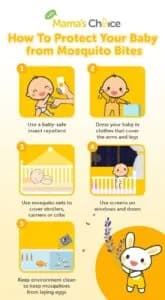
- Dress your child in light-coloured long sleeves and long trousers when mosquitoes are about, particularly early morning and late afternoon, when Aedes mosquitoes bite most.
- Use mosquito nets over cots, strollers and car seats.
- Fit screens to windows and doors, and use a fan, since mosquitoes are weak fliers.
- Empty standing water every week: flowerpot trays, pails, old tyres, blocked drains and roof gutters. A ten-minute check round the house each week is enough.
- Check the iDengue website for dengue hotspots near you.
Children tend to scratch bites until they break the skin, which can lead to infection. Keep nails short, and see a doctor if a bite becomes hot, swollen and painful, or weeps.
Know the signs of dengue
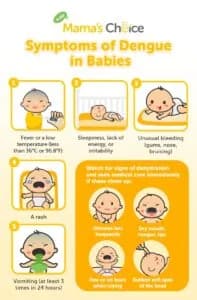
In babies and young children, dengue can look like a common viral fever at first. Watch for:
- A high fever, or in young babies a temperature that is unusually low
- Sleepiness, floppiness or unusual irritability
- A rash
- Vomiting, at least 3 times in 24 hours
- Bleeding from the gums or nose, or unexplained bruising
- Fewer wet diapers, a dry mouth, no tears or a sunken soft spot on the head
Take a child with fever to a doctor and mention if there is dengue in your area. The most dangerous time is often when the fever comes down, around day 3 to 7. If your child has tummy pain, keeps vomiting, bleeds, becomes very drowsy or restless, or has cold hands and feet, go to the hospital straight away or call 999.
Sources
- National Pesticide Information Center: DEET general fact sheet
- AAP HealthyChildren: Choosing an insect repellent for your child
- CDC: Dengue
- Dennis et al.: Mosquitoes 'smell' DEET through their legs (Current Biology, 2019)
- CDC MMWR: Seizures temporally associated with use of DEET insect repellent (1989)
- Miot et al.: Andiroba oil as a mosquito repellent (2004)
- iDengue (Ministry of Health Malaysia)
Share this article
This article is for information only and is not a substitute for diagnosis or medical advice. Please talk to your doctor about your own situation.