
What is swaddling and when do you stop?
How swaddling (bedung) calms a newborn, the safety rules that matter, when to stop, and how to swaddle in a hot climate where overheating is the real risk.
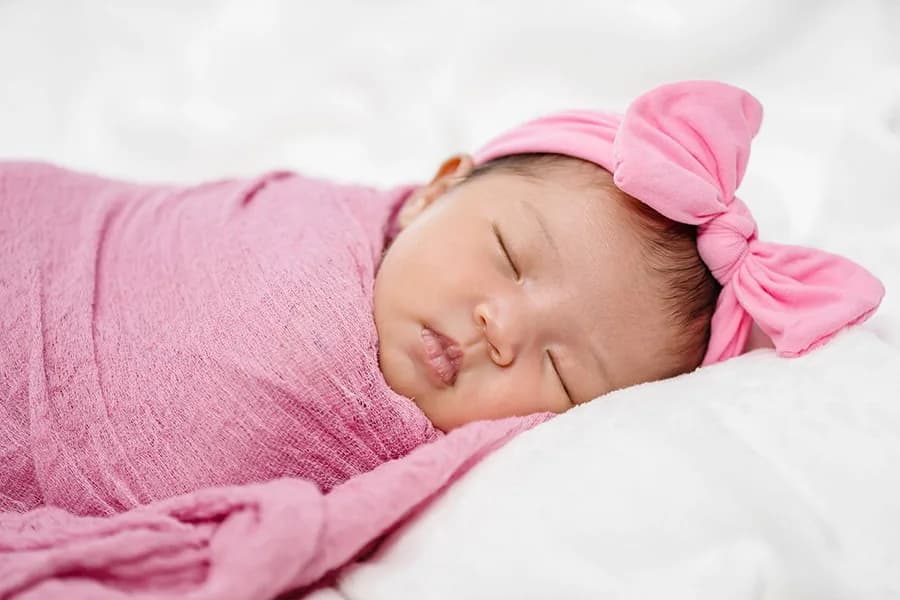
Swaddling, or bedung, is wrapping a newborn snugly in a thin cloth so her arms stay still, which calms the startle reflex that keeps waking her. The American Academy of Pediatrics allows it with conditions. Always lay her on her back, leave her hips free to bend, let her chest expand, and stop as soon as she tries to roll.
What is swaddling?
A thin square of cloth, folded and wrapped so the arms are held against the body while the legs can still move.
It works because of the startle reflex. A newborn who is drifting off will throw her arms out as if she is falling, which wakes her up, and she has no control over it. Holding the arms still removes the trigger.
It also feels familiar. For months she was held snugly on all sides, and a wrap is closer to that than an open cot.
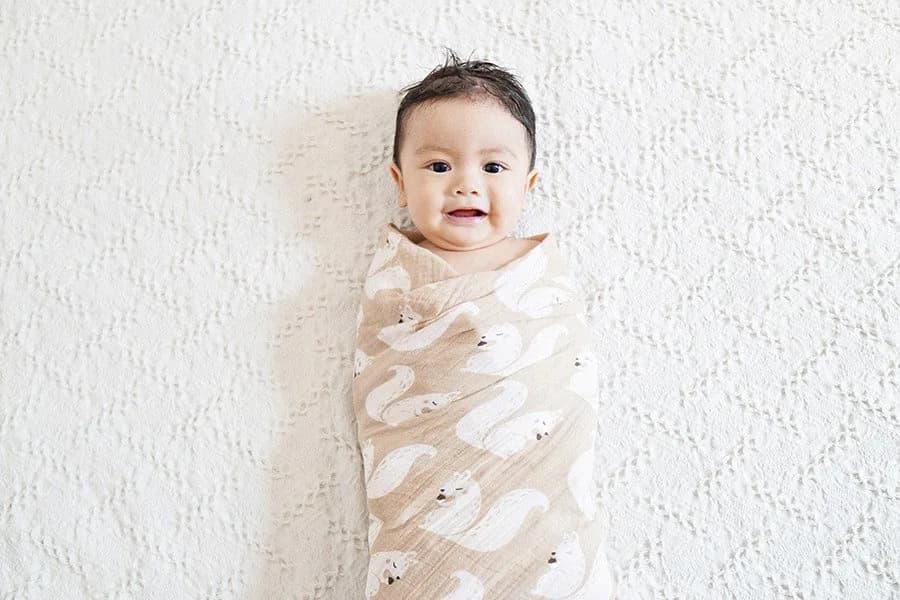
Is swaddling safe?
Yes, when the rules are followed, and the American Academy of Pediatrics is specific about them.
- Always on her back. A swaddled baby placed on her front has a much higher risk of sudden infant death
- Hips and knees free. She should be able to draw her legs up and let them fall outwards
- Room for her chest. You should be able to slide a flat hand between the cloth and her chest
- Nothing loose nearby. The swaddle replaces blankets rather than going under one
- In her own cot, in your room. Swaddling does not change that, and the NHS advises sharing a room for at least the first six months
- On a firm, flat surface. A hanging sarong cradle or buai is not one, so do not put a swaddled baby to sleep in it
Not every baby likes being wrapped. Some fight it and settle better with their arms out in a sleep bag, and that is fine.
When must you stop?
At the first sign of rolling, which the American Academy of Pediatrics puts at around two months for many babies.
You do not need to see a full roll. Rocking onto a shoulder, pushing with her legs, or turning further onto her side than before all mean she is working on it. A wrapped baby who makes it onto her front has no arms free to push herself back.
Moving away from swaddling takes a few nights. One arm out first, then both, then a sleep bag. Some babies barely notice, and some protest for a week.
How do you swaddle in a hot country?
Overheating is the risk that matters most here, and it is the one many overseas guides play down because they are written for cooler homes.
- One layer of thin muslin, nothing quilted or padded
- No cap or hat indoors, since babies lose heat through their heads
- Nothing over the top of the swaddle, whatever the air-conditioning is set to
- Check the back of her neck rather than her hands, which often feel cool in a healthy baby
- Take off a layer if she is damp, flushed or breathing fast
Prickly heat is the sign it has gone too far. The NHS describes it as tiny raised spots, often in the neck folds and across the shoulders, and it settles when the baby cools down.
If you do not run the air-conditioning at night, a swaddle may be one layer too many. A diaper, a thin muslin wrap and nothing else is a sensible combination at 28°C, and on some nights even that is warm.
The traditional bedung, and common mistakes
Many of us grew up being wrapped in a tight bedung with our legs pulled straight, and plenty of grandmothers and confinement ladies still do it that way. The arms part is fine. The legs part is the problem.
| Mistake | Why it matters |
|---|---|
| Legs wrapped straight and tight | Pressure on the developing hip joints |
| Too tight across the chest | Makes breathing harder |
| Too loose | The cloth works free and becomes a loose blanket in the cot |
| Wrapped over the chin or neck | Can cover the airway |
| Swaddled and placed on her side or front | The most dangerous combination |
| Still swaddling a baby who can roll | No way to recover from rolling onto her front |
The legs are the part most people get wrong, usually because a tight wrap looks neater. Snug around the arms and roomy below the waist is the shape to aim for.
Your baby's hips are checked at her routine visits in the first year. Mention it if one leg seems stiff, if the creases on her thighs look uneven, or if you hear a click when you change her.
What swaddling will not do
It will not fix colic. A baby who cries for hours with her knees drawn up may be calmer when wrapped, but the cause is still there.
It will not prevent a flat head. Time off the back of the head while she is awake does that, mainly supervised tummy time. Our article on flat head syndrome explains more.
It will not delay or speed up walking. That idea is widely repeated and has nothing behind it.
And it will not add a set number of hours to the night. Some babies settle much faster, which is reason enough to try it, but the exact figures you see quoted are not reliable.
When should you speak to a doctor?
Mention it at your klinik kesihatan visit, or see your doctor sooner, if your baby:
- Seems not to want to move one leg, or her thigh creases look uneven
- Breathes fast or noisily when wrapped
- Has prickly heat that keeps coming back despite lighter wrapping
- Cries and cannot be comforted for hours most days
- Sweats heavily while sleeping, even in a cool room
If your baby is struggling to breathe, turning blue or cannot be woken, call 999.
Everyone who puts her down needs to know the rules. A grandmother or confinement lady may wrap much more tightly, with the legs straight, because that is how it was taught a generation ago. On her back, hips loose, one thin layer, and stop at the first roll is the whole message.
When she is older, our guide to sleep training looks at the next stage.
Frequently asked questions
- Is swaddling safe?
- It can be, with conditions. The American Academy of Pediatrics says a swaddled baby must always be placed on her back, must have room to bend her hips and knees, and must not be wrapped so tightly that her chest cannot expand.
- When should I stop swaddling?
- At the first sign your baby is trying to roll, which the American Academy of Pediatrics puts at around two months for many babies. A swaddled baby who rolls onto her front cannot push herself back, and that is the dangerous situation.
- Will my baby overheat in a swaddle?
- She can, which is why fabric matters so much in Malaysia. One layer of thin muslin, no cap indoors, nothing on top, and check the back of her neck. Damp or clammy means take a layer off.
- Is the traditional bedung with straight legs all right?
- Wrapping the legs straight and tight can harm the hips, which is why the American Academy of Pediatrics says the hips and knees must be free to bend up and out. Keep the bedung snug around the arms and loose around the legs.
- Does swaddling make a baby sleep longer?
- Many babies settle faster because it dampens the startle reflex. No reliable source gives a figure for how much extra sleep it adds.
Sources
Share this article
This article is for information only and is not a substitute for diagnosis or medical advice. Please talk to your doctor about your own situation.