When can you give your baby a teether?
When a teether is safe to offer, which types to avoid, what teething does and does not cause, and how to keep teethers clean in Malaysian humidity.
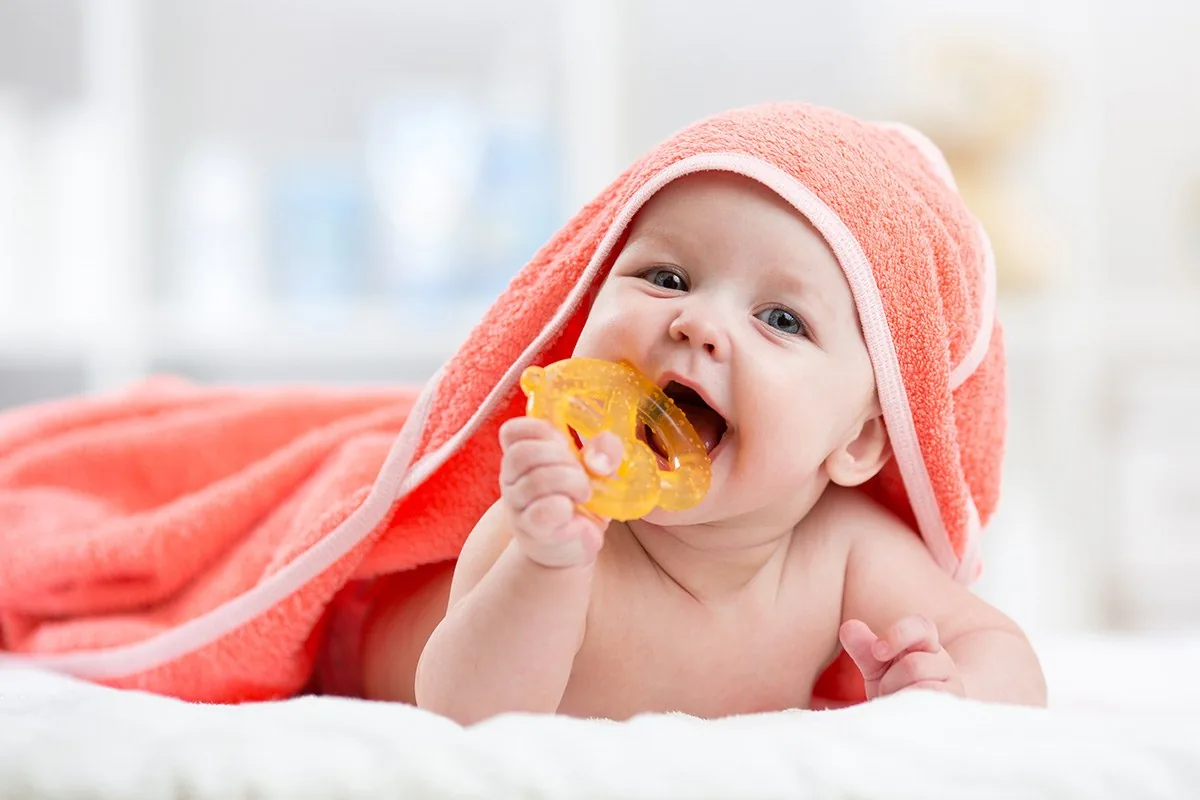
A teether is fine to offer as soon as your baby can hold something and bring it to her mouth, usually around 3 to 4 months. The first tooth normally arrives at about 6 months. Chill a one-piece silicone or solid rubber teether in the fridge, never the freezer, and skip numbing gels, teething powders and anything worn around her neck.
Behind the teether question sits a harder one: is this teething at all?
When to start offering one
There is no minimum age printed anywhere, because the limit is her coordination. At around 3 to 4 months she starts reaching for things and taking them to her mouth on purpose, and from then a teether is a toy she can use.
This mouthing stage comes before the teeth do. It is how babies explore, and it is part of normal development.
Teething itself makes the chewing more determined. She will bite harder, on firmer things, and may favour one side.
When teeth actually arrive
The NHS puts the first tooth at around 6 months, with a wide normal range. Some babies start before 4 months, some after their first birthday, and a few are born with one already through.
The usual order:
| Teeth | Typical age |
|---|---|
| Lower front two | 6 to 10 months |
| Upper front two | 8 to 12 months |
| Upper and lower side front teeth | 9 to 16 months |
| First molars | 13 to 19 months |
| Canines | 16 to 23 months |
| Second molars | 23 to 33 months |
Most children have all 20 milk teeth by about two and a half to three years. No teeth at all by the first birthday is worth mentioning at your klinik kesihatan visit, and is very often just late.
How do you tell teething from illness?
Likely teething. Drooling, chewing everything, a red or swollen patch of gum, a flushed cheek on one side, crankiness, broken sleep, and feeds that start and stop.
Not teething. A fever of 38°C or more. Diarrhoea. A rash over the body. Vomiting. Being floppy or unusually sleepy. The American Academy of Pediatrics is clear that teething does not cause high fever or diarrhoea.
That difference matters a lot in Malaysia. Hand, foot and mouth disease spreads through nurseries and taska, and it starts with a drooly, miserable baby who will not eat, which looks just like teething until the mouth ulcers and spots appear. Dengue can start as a high fever and nothing else.
So a baby with a temperature needs to be seen by a doctor. Do not put it down to teething. If your baby is under 3 months with any fever, or is floppy, hard to wake or struggling to breathe, get help straight away and call 999 in an emergency.
Which teethers to choose
One solid piece. Silicone or firm rubber, with nothing that can come off.
Too big to fit in whole. Wider than her mouth.
No liquid inside. Liquid-filled teethers can split, and in our humidity anything with a hollow inside can grow mould you cannot see.
Nothing around the neck. A clip to her clothes is fine. A cord around her neck is not.
Easy to wash. Boilable or dishwasher-safe, because you will clean it several times a day.
Textured silicone and solid wooden teethers both work. Wooden ones need drying properly after washing, which takes longer than you expect in this climate.
Chilled, never frozen
Cold dulls the soreness and helps with swelling, and it is one of the simplest things you can do for sore gums.
Put the teether in the fridge, not the freezer. A frozen teether gets hard enough to bruise the gums, and the American Academy of Pediatrics advises against it for that reason.
Other options that work:
- A clean, damp face cloth, chilled and offered to chew
- Firm pressure on the gum from your clean finger
- A chilled spoon
- Cool water from a cup, once she is drinking water
- Chilled cucumber or melon in a mesh feeder, once she has started solids, with you watching the whole time
For a baby over 2 months, infant paracetamol at the right dose for her weight is reasonable for a bad night. A pharmacist or your klinik kesihatan will confirm the dose.
Our article on teething in babies has more ways to soothe sore gums, and if you are breastfeeding, breastfeeding a teething baby helps with biting.
What to keep away from her
Teething jewellery. The US FDA has warned against amber and other teething necklaces and bracelets because of choking and strangulation, including deaths. There is no evidence amber eases anything.
Benzocaine and lidocaine gels. The FDA has warned against both for teething in young children. Benzocaine can cause methaemoglobinaemia, a rare condition that reduces the blood's ability to carry oxygen. These gels are still sold in some places.
Homeopathic and herbal teething tablets, powders and gels. The FDA has acted on homeopathic products found to contain varying amounts of belladonna. Ask a pharmacist before using anything you are unsure about.
Oils and balms with camphor or menthol, rubbed on the gums or under the nose. They are common in many homes and not suitable for babies.
Honey on a teether or dummy. Never give honey to a baby under 1, because of the risk of botulism.
Anything with liquid, batteries, glitter or small parts.
Keeping teethers clean in this weather
A teether goes from a baby's mouth to the floor to a bag and back. Humidity makes that worse, because anything left damp starts to grow something.
- Wash with soap and hot water after each use, and dry it fully
- Boil or sterilise silicone ones every few days
- Dry wooden ones standing up, out of a closed bag
- Throw away anything cracked, split or sticky
- Keep a second one in rotation so one is always dry
Once the first tooth is through
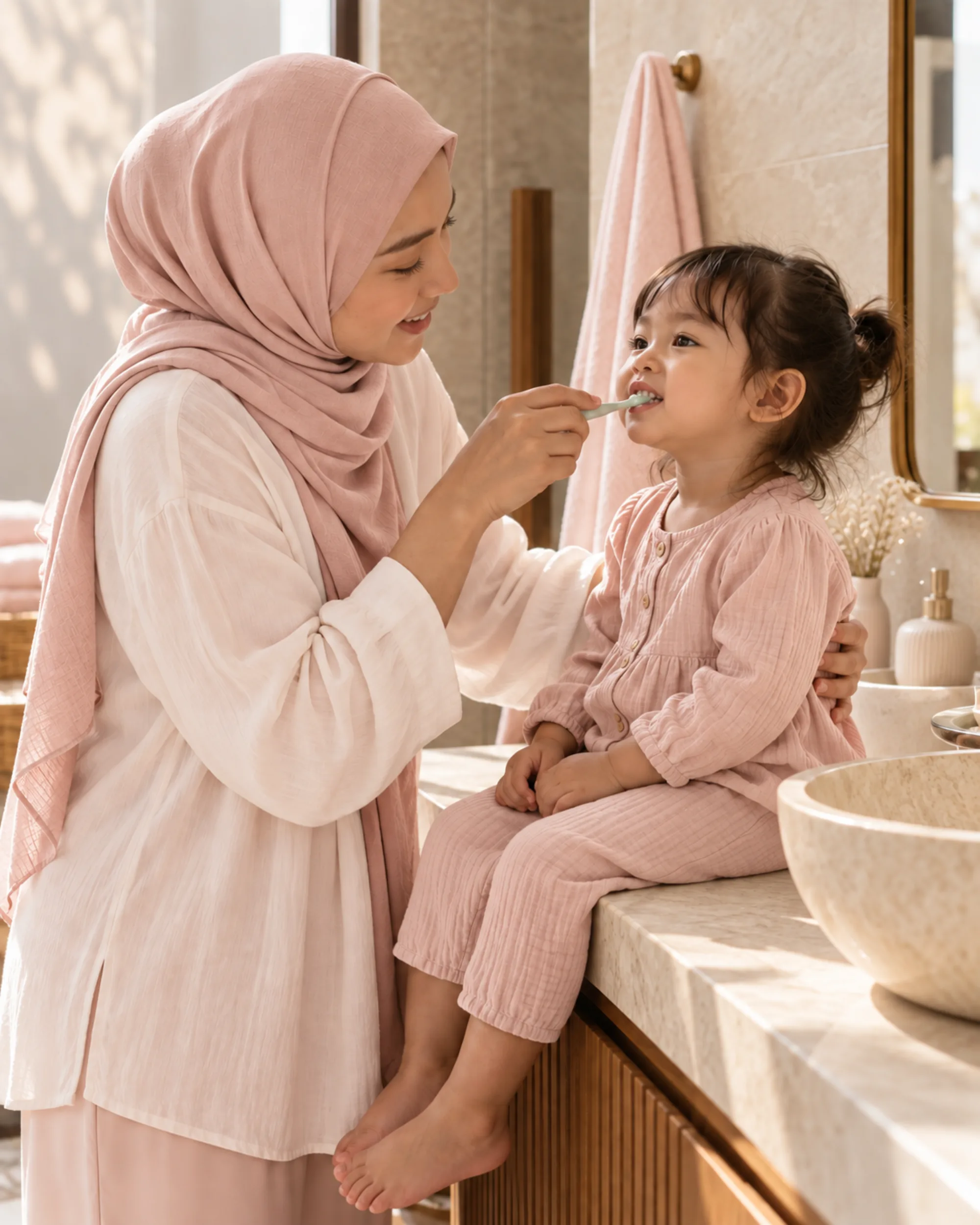
Start brushing that day, twice a day. KKM and most dental bodies recommend a smear of fluoride toothpaste the size of a grain of rice from the first tooth, with you holding the brush. A baby who cannot spit will swallow some, which is why the amount is so small.
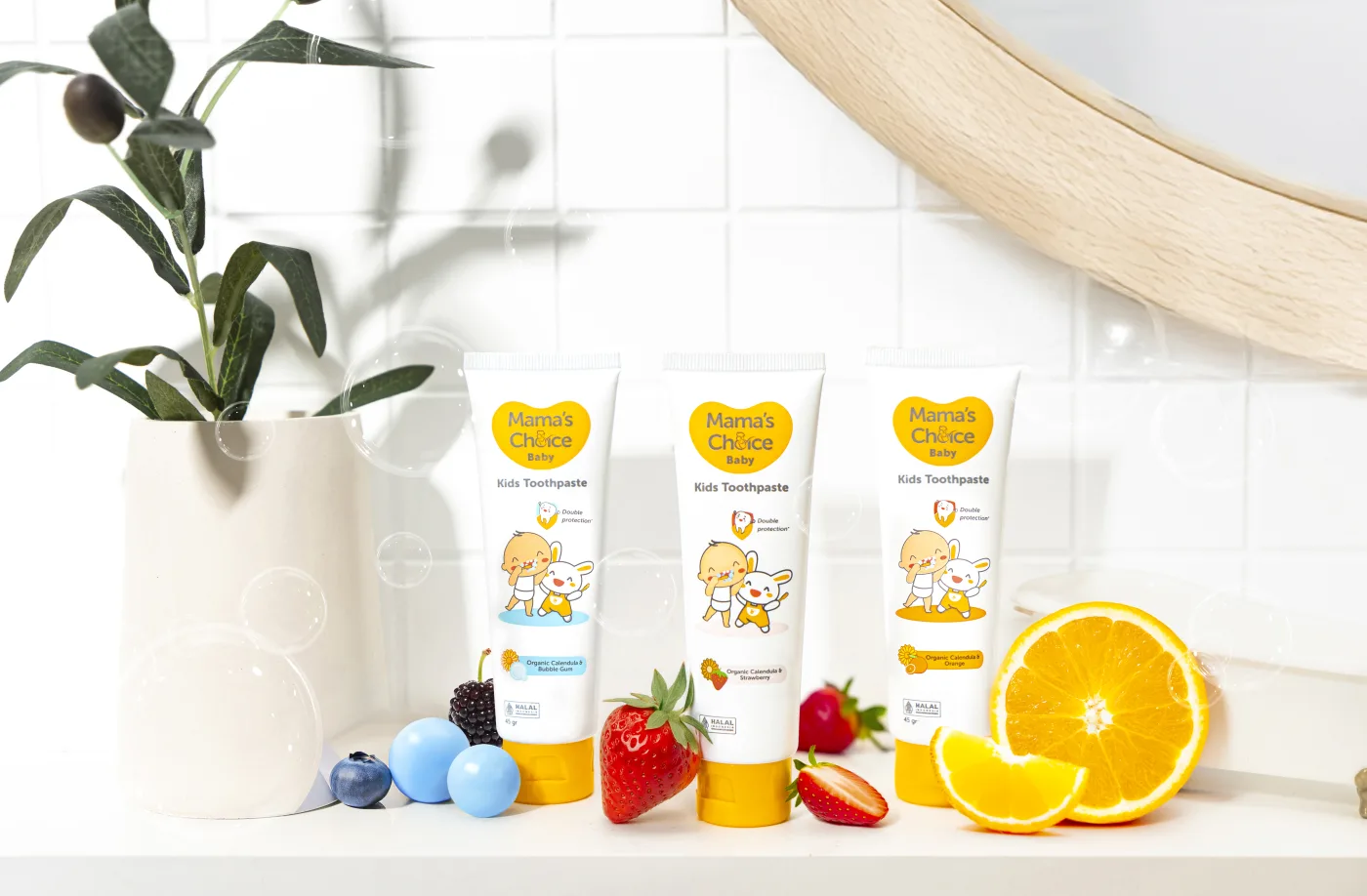
If you prefer a fluoride-free paste for a baby who swallows most of it, choose one made for babies. Our Baby & Kids Toothpaste is for babies from 6 months, with hydroxyapatite and xylitol and no fluoride, sulfates or colourants, in strawberry, orange and bubble gum. It cleans teeth and gums and helps remove plaque, and in a Mama's Choice use test with 28 mothers in Indonesia (2022), 93% agreed their child's teeth and gums felt cleaner. It is halal certified by BPJPH, Indonesia. If your child has had decay or your dentist advises fluoride, follow their advice.
From 12 months, our Baby Silicone Toothbrush gives her a soft brush of her own, with a shield that stops it going too far into the mouth and a suction base so it stands up to dry. You can clean it with hot water or steam.
Milk or juice in a bottle at bedtime pools sugar against the new top front teeth, where early decay often shows first. Finish the feed, brush, then bed.
Her first dental visit belongs around the first birthday, or when the first tooth appears if that is sooner. Government dental clinics see babies that young, and your klinik kesihatan can refer you. Our guide to choosing a kids toothpaste covers the fluoride question in full, and cavities in toddlers explains what early decay looks like.
Frequently asked questions
- What age can a baby use a teether?
- As soon as she can hold an object and bring it to her mouth, which is usually around 3 to 4 months. There is no minimum age printed anywhere, because the limit is her coordination rather than the calendar.
- When does the first tooth come through?
- Usually around 6 months, though the normal range is wide, and the two lower front teeth generally come first. A baby with no teeth by her first birthday is worth mentioning at a routine check, and is often simply late.
- Are amber teething necklaces safe?
- No. The US FDA has warned against teething jewellery because of the risk of choking and strangulation, and there is no evidence that amber eases teething. Nothing should be worn around a baby's neck.
- Can I use a teething gel?
- Not one containing benzocaine or lidocaine. The US FDA has warned against both for teething in young children because of a rare but serious blood disorder. Chilled pressure on the gum works well and carries no such risk.
- Does teething cause fever and diarrhoea?
- Not a real fever, and not diarrhoea. The American Academy of Pediatrics says teething does not cause high fever or diarrhoea, and the NHS mentions at most a slightly raised temperature. A temperature of 38°C or more, or diarrhoea, points to an illness that needs a doctor.
Sources
- NHS: Baby teething symptoms
- NHS: Tips for helping your teething baby
- US FDA: Safety communication on teething jewellery
- US FDA: Benzocaine oral health products for teething
- American Academy of Pediatrics (HealthyChildren): Teething, tips for soothing sore gums
- myHEALTH (Kementerian Kesihatan Malaysia): Oral health for babies and toddlers
Share this article
This article is for information only and is not a substitute for diagnosis or medical advice. Please talk to your doctor about your own situation.