Choosing the best kids toothpaste for your child in Malaysia
How to choose a kids toothpaste, how much to use at each age, what fluoridated tap water changes, and when a fluoride-free paste makes sense.
A good kids toothpaste is one your child will let you use twice a day, in the right amount for their age. That means a smear the size of a grain of rice under 3, and a pea from 3 to 6. Fluoride gives the strongest protection against decay, and much of Malaysia's tap water already supplies some.
That last point changes the sums here, and many toothpaste articles are written for countries where it does not apply.
Does a child in Malaysia need fluoride toothpaste?
Fluoride is the most thoroughly studied way to prevent tooth decay, and nothing on the natural-products shelf matches its evidence. KKM and most dental bodies recommend fluoride toothpaste for children from the first tooth. The NHS asks for a paste with at least 1,000ppm fluoride for children under 3, more than 1,000ppm from 3 to 6, and 1,350 to 1,500ppm from 7.
Malaysia adds a second source. Fluoridating the public water supply has been government policy since 1972, so in most areas a child who drinks tap water, or eats food cooked in it, is already getting some. A child who drinks only bottled or filtered water may not be.
Both things are true at once. Fluoride works, and your child here is probably not starting from zero.
How much to use, by age
| Age | Amount | Who holds the brush |
|---|---|---|
| First tooth to 3 years | A smear, the size of a grain of rice | You do |
| 3 to 6 years | A pea | Your child tries, you finish |
| 7 and over | A pea | Your child does it, you check |
The last column matters most. A child under 6 swallows a good share of whatever is on the brush, and swallowing fluoride paste every day for years is what causes the faint white marks on teeth called dental fluorosis. The small amounts above are what keep that risk low.
Teach spitting early. Rinsing with lots of water afterwards washes the fluoride straight off the teeth, so spit and leave it.
What to look for on the tube
- The fluoride figure in ppm, if you are choosing a fluoride paste. "With fluoride" on its own tells you nothing.
- A flavour your child likes. Strong mint burns a small mouth. A mild fruit flavour or a gentle mint gets used.
- No sodium lauryl sulfate (SLS), if your child seems sensitive to foamy pastes. It is an easy change to try.
- No added sugar.
- A soft, small brush. The brush does more of the work than the paste.
Pharmacies and supermarkets stock a good range, and the fluoride strength is usually in small print on the back.
Does xylitol earn its place?
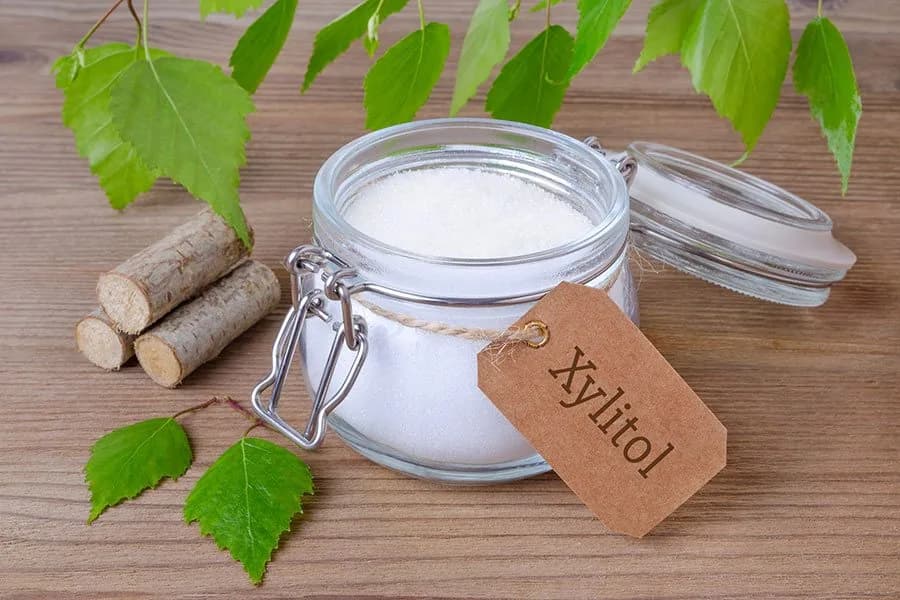
Xylitol is a sugar alcohol that the bacteria behind decay cannot feed on in the way they feed on sugar. That is the reasoning, and it is sound.
The clinical question is whether a xylitol product actually leads to fewer cavities. A Cochrane review of xylitol products for preventing tooth decay rated the available evidence low in quality. Think of it as a sensible sweetener rather than a replacement for fluoride.
When a fluoride-free paste makes sense
Two situations make it a reasonable choice. Neither depends on fluoride being harmful.
A child who swallows instead of spitting. Under about 3, many do. With a fluoride-free paste you stop counting grains. With a fluoride paste you use a rice-grain smear and watch closely. Both are fine, and your dentist can tell you which suits your child.
A child who already gets plenty of fluoride. If your child drinks a lot of tap water, has had fluoride varnish at the dentist or takes a fluoride supplement, cutting one source is a reasonable choice.
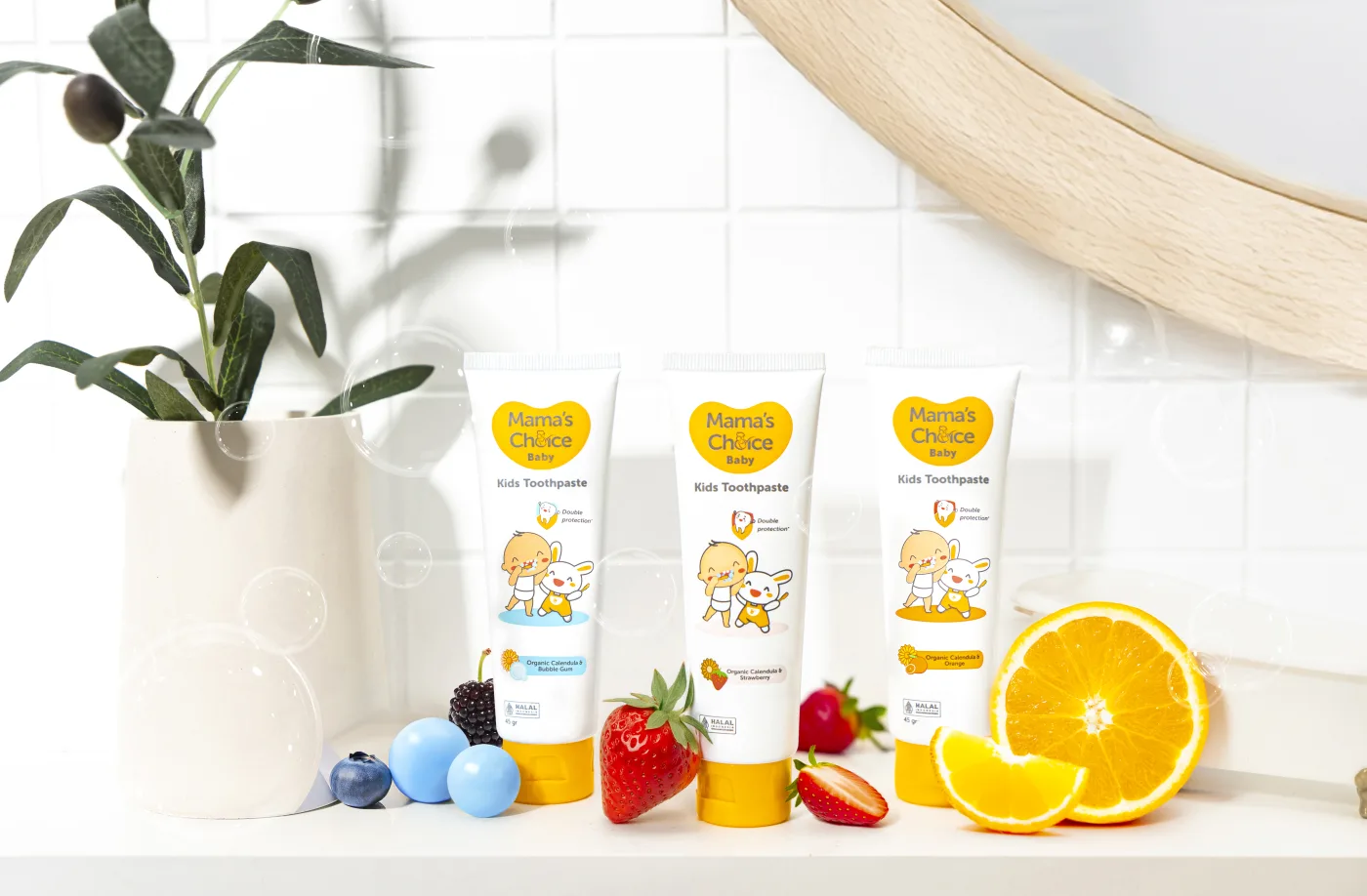
For these families we make our Baby & Kids Toothpaste, a fluoride-free paste for babies from 6 months and children, in strawberry, orange and bubble gum. It contains hydroxyapatite, a form of calcium phosphate, the mineral tooth enamel is mostly made of, and it is sweetened with xylitol and isomalt instead of sugar, with no SLS, colourants or alcohol. It cleans teeth and gums, helps remove plaque and helps fight cavities, and the fruity flavours win over reluctant brushers. In a Mama's Choice use test with 28 mothers in Indonesia (2022), 93% agreed their child's teeth and gums felt cleaner. In a 2023 test with 32 mothers in Indonesia, 91% said they would swap their child's usual toothpaste for it. It is halal certified by BPJPH, Indonesia.
Pair it with our Baby Silicone Toothbrush from 12 months. It is soft silicone with a shield that stops it going too far into the mouth, and a suction base so it stands up to dry.
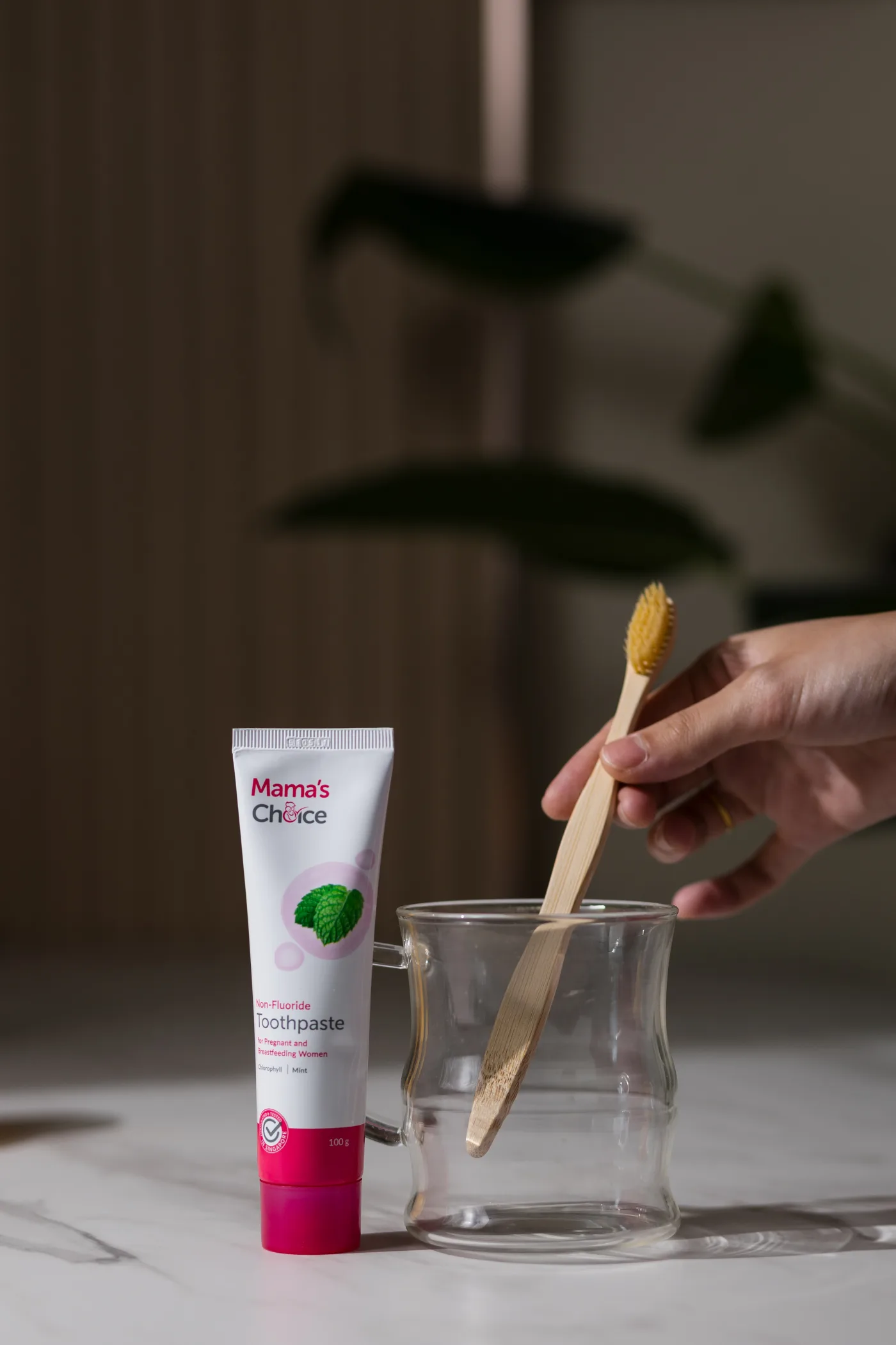
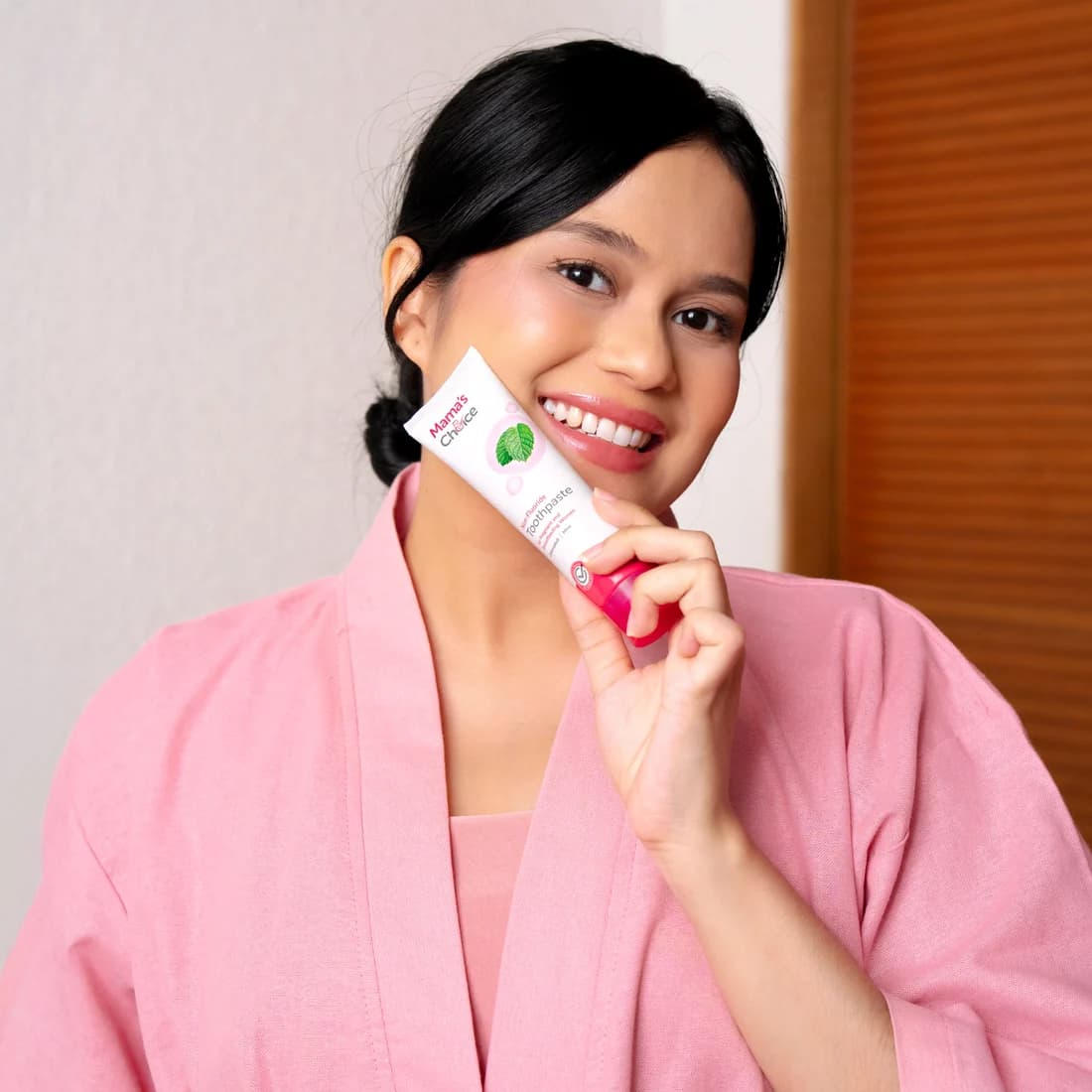
Our Non-Fluoride Toothpaste is the gentle mint paste formulated for pregnancy and breastfeeding, for adults and children over 5, so the whole family can brush together.
When fluoride should stay. If your child has had decay or fillings, if a dentist has spotted white patches on the teeth, or if your dentist advises fluoride, follow their advice. In those cases fluoride's protection is the point.
Making twice a day happen
Start brushing with the first tooth, and wipe the gums before that. The night-time brush counts most, because saliva flow drops during sleep and whatever is left on the teeth stays there.
What tends to work:
- Brush at a fixed point in the routine, after the bath rather than after milk
- Stand behind your child at a mirror and tilt their head back against you
- Give them a brush of their own to chew while you do the real brushing
- Count aloud or sing a song so two minutes has a shape
- Stop milk or juice in bed, since a night bottle pools sugar against the top front teeth, where early decay often shows first
Our guide to cavities in toddlers covers what early decay looks like, and choosing a toothbrush for mother and baby helps with the brush.
When to see a dentist
By the first birthday, or as soon as the first tooth is through. It is that early because decay in milk teeth is common, painless at first and easy for a parent to miss until it is not.
Government dental clinics see young children, and your klinik kesihatan can refer you. Do not wait for the school dental programme to pick your child up. By then several years of brushing habits have already set.
Swelling along the gum, a tooth that has turned grey after a fall, or a child holding one side of their face needs an appointment that week. Our article on teething in babies helps you tell new teeth from something else.
Frequently asked questions
- How much toothpaste should a toddler use?
- A smear the size of a grain of rice for children under 3, and a pea-sized amount from 3 to 6, always with an adult brushing or helping. More paste does not clean better, and a mouthful of foam makes a child more likely to swallow it.
- Does Malaysian tap water contain fluoride?
- Much of it does. KKM has added fluoride to much of the public water supply for decades, so a child who drinks tap water or food cooked in it gets some fluoride without any toothpaste. A child who drinks only bottled or filtered water may get less.
- When should my child first see a dentist?
- By the first birthday, or when the first tooth comes through, whichever comes first. Government dental clinics see young children, and your klinik kesihatan can refer you.
- Is xylitol toothpaste better for children?
- The evidence is thinner than the marketing. A Cochrane review of xylitol products for preventing tooth decay rated the evidence low in quality. Xylitol sweetens without feeding the bacteria behind decay, which is a fair reason to include it, but it is not a stand-in for fluoride.
- My child refuses to brush. What now?
- Change one thing at a time. A softer brush, a milder flavour, brushing in front of a mirror, or letting your child hold a second brush. Two minutes of imperfect brushing beats a nightly fight that ends with none.
Sources
- NHS: Children's teeth
- myHEALTH (Kementerian Kesihatan Malaysia): Fluoride and oral health
- Oral Health Programme, Kementerian Kesihatan Malaysia
- American Academy of Pediatrics (HealthyChildren): Brushing up on oral health
- Cochrane: Xylitol-containing products for preventing dental caries in children and adults
- CDC: Dental fluorosis
Share this article
This article is for information only and is not a substitute for diagnosis or medical advice. Please talk to your doctor about your own situation.