How to prevent cavities in toddlers
Tooth decay is common in young children. How it starts, the habits that keep it away, how much toothpaste to use, and why a hole never closes on its own.

If your toddler has a cavity, you are in very large company. The World Health Organization estimates that around 514 million children worldwide have tooth decay in their milk teeth, which makes it one of the commonest health problems of childhood.
So a cavity does not mean you have failed. It does mean the odds need working on, and everyday habits are what shift them.
How does a hole form?
Bacteria in the mouth feed on sugar and make acid. The acid draws minerals out of the tooth and softens the enamel. Repeat that often enough, for long enough, and the surface gives way.
The important word there is often.
After something sweet, the mouth stays acidic for a while before saliva brings it back to normal. Five small snacks across an afternoon means five acid attacks, which does more harm than one bigger portion eaten at once. How often matters more than how much, and few parents are told this.
What to look for
- Chalky white or brown spots on a tooth, often near the gum. The very first sign of trouble
- Crying, or your child telling you a tooth hurts
- Wincing at something hot, cold or sweet
Genes play a part too. If you have needed a lot of fillings yourself, your child may start at higher risk than friends.
Habits that prevent cavities
Watch how often, not just how much. Sweets are the obvious one. Biscuits, sweetened cereal, fruit juice, sweetened drinks and teh tarik all feed the same process, and so does milk sipped slowly.
A bottle of milk or juice at bedtime is the worst version. The sugar sits against the teeth for hours while saliva slows down in sleep. Finish the feed before teeth are brushed, and settle your child without a bottle.
Avoid sharing spoons. Tasting her food and then feeding her with the same spoon passes your mouth bacteria on to her.
Brush twice a day from the first tooth. Morning and last thing at night, with you doing the brushing.
See a dentist early. By the first birthday, or once the first teeth appear, then as often as the dentist advises. Government dental clinics at klinik kesihatan see young children, so ask at yours.
If there is already a cavity, the dentist will usually fill it to stop it growing. Keeping a milk tooth in place until it is due to fall out matters more than most people expect.
How much toothpaste?
Most dental bodies recommend fluoride toothpaste for children, supervised and in the right amount, because fluoride helps teeth resist acid. The usual guidance, including the AAPD's:
- Under 3: a smear the size of a grain of rice
- 3 to 6: a pea-sized amount
Brush for your child, make sure most of it is not swallowed, and teach her to spit as soon as she can. Too much fluoride swallowed regularly while teeth are forming can cause faint white marks on the permanent teeth, called fluorosis, which is why the amounts are small.
Some families prefer a fluoride-free paste while their child cannot spit yet. That is a choice to make with your dentist, who can look at your child's teeth and risk.
Getting a toddler to let you brush
Expect resistance. She cannot coordinate the movement yet, and some children just dislike the taste.
What helps: the same times every day, letting her hold the brush first before you take over and finish properly, brushing your own teeth beside her, and a flavour she likes.
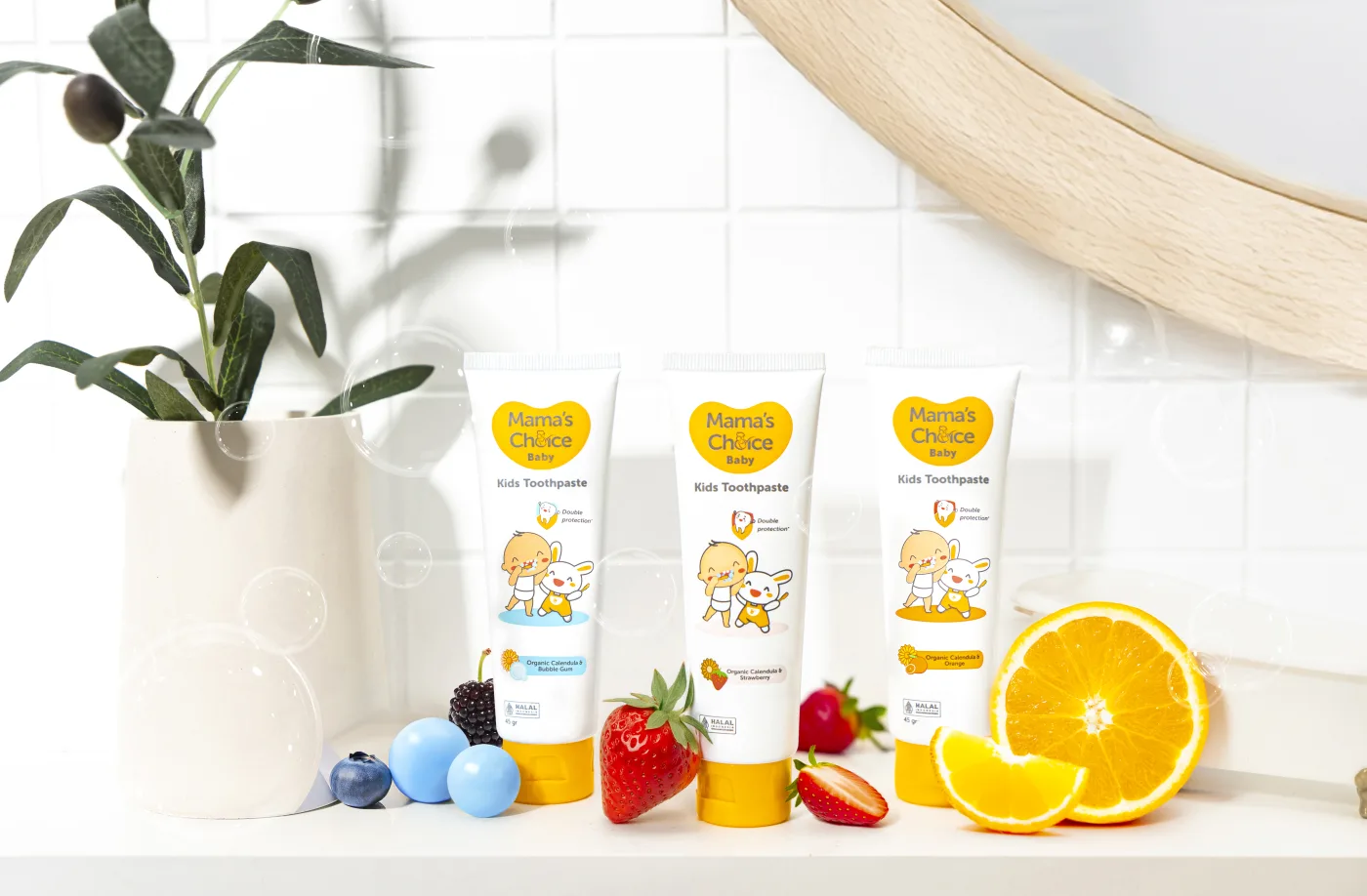
Mama's Choice Baby & Kids Toothpaste comes in strawberry, orange and bubble gum, flavours most children are happy to see on the brush. It is a fluoride-free paste with hydroxyapatite and xylitol that cleans teeth and gums, helps remove plaque and helps fight cavities, and it is sweetened without sugar. In a Mama's Choice use test with 28 mothers in Indonesia (2022), 93% said their child seemed to enjoy brushing more. It suits babies from 6 months and children from 3 years.
For a first brush, the Baby Silicone Toothbrush is soft silicone with a shield that stops it going too far into the mouth, made for children from 12 months.
A cavity will not close on its own
This is the most common misunderstanding: a hole in a child's tooth cannot be closed by brushing or by changing toothpaste.
At the earliest stage, when there is a white spot and no hole yet, the enamel can recover with good brushing and fewer sugary snacks. Once there is a hole, it needs a dentist.
They are only milk teeth, and they still matter
A decayed milk tooth can cause pain and infection, and infection can disturb the adult tooth forming underneath.
Losing a milk tooth early also affects how adult teeth come through, because the milk tooth was holding the space open. Our guide to teething in babies covers the early months.
See a dentist the same day if
- Toothache wakes her at night
- Her face is swollen, or there is pus on the gum
- A tooth has turned grey or dark after a knock
- She will not eat because her mouth hurts
If the swelling spreads, she has a high fever or seems very unwell, go to the emergency department or call 999.
Sources
Share this article
This article is for information only and is not a substitute for diagnosis or medical advice. Please talk to your doctor about your own situation.