Teething in babies, the symptoms and how to soothe sore gums
When teeth arrive, the signs of teething, what is not caused by teething, and gentle ways to soothe your baby, including what to avoid and when to see a doctor.
A grumpy, dribbly baby who wants to chew everything could be teething. It could also be a cold. Knowing the real signs helps you tell the difference, and helps you know when to call a doctor.
Teething is when your baby's first teeth push through the gums. For some babies it passes almost unnoticed. For others it brings sore gums, drool and a few restless nights.
When do baby teeth come through?
Most babies get their first tooth between 4 and 7 months, though some start earlier and a few are born with one. The first teeth are usually the two bottom front teeth (central incisors), followed by the top front teeth. By about two and a half, most children have all 20 milk teeth.
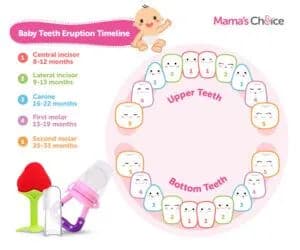
Timing varies a lot, and late teeth are usually nothing to worry about. Babies born early may get teeth a little later. If your baby has no teeth at all by about 12 months, mention it at your next klinik kesihatan visit or to a dentist.
Signs your baby may be teething

- Red, swollen gums where a tooth is coming through
- Lots of drool, sometimes with a red, sore chin or neck
- Chewing and gnawing on fists, toys and anything within reach
- Fussiness and crying
- Rubbing the cheek or pulling the ear on the same side as the tooth
- Disturbed sleep
- Being off their food for a day or two
- A slightly warmer temperature, but not a fever
The signs usually come in the few days before a tooth appears and settle soon after.
What teething does not cause
Teething is easy to blame for everything. A fever of 38°C or above, diarrhoea, vomiting, a cough, a rash on the body or a baby who is floppy or unusually sleepy are not signs of teething. They point to an illness. Ear pulling with fever can be an ear infection.
See a doctor if your baby has a fever of 38°C or more, or is under 3 months with any fever. Go the same day if your baby is drinking much less, has fewer wet diapers, or seems very unwell. In an emergency, call 999.
How to soothe a teething baby
Rub their gums
Wash your hands and gently rub your baby's gum with a clean finger. Many babies love the pressure. A soft silicone finger brush works well too.
Offer something cool to chew
Give your baby a teething ring that has been chilled in the fridge. Do not freeze it, as very cold or hard teethers can hurt the gums. Choose one made in one piece, with no small parts or liquid inside that could leak.
Try cold food, if your baby has started solids
From 6 months, chilled cucumber, apple or melon in a mesh or silicone feeder gives your baby something cool to chew without the risk of choking on pieces. Stay with your baby whenever they eat. Avoid rusks and biscuits, which are often sugary.
Wipe away drool
Wipe your baby's chin and neck gently and often, and pat them dry. A bib helps. A thin layer of a plain barrier cream can protect a sore chin.
Plenty of cuddles
Extra feeds, comfort and attention help more than you might expect. If your baby is breastfeeding and starts to bite, our guide to breastfeeding a teething baby has practical tips.
Medicine, only if needed
If your baby is in pain and simple measures are not enough, infant paracetamol can help. Check the dose for your baby's age and weight with a pharmacist or doctor first, and never give aspirin to children.
What to avoid
- Amber teething necklaces and bracelets. They do not soothe teething, and they carry a real risk of choking and strangulation. The US FDA has warned against them.
- Numbing gels with benzocaine or lidocaine. These are not recommended for young children. Benzocaine has been linked to a rare but dangerous blood condition.
- Herbal teething powders and gels. Some have contained unsafe ingredients. Ask a pharmacist before using any.
- Honey on a dummy or teether. Never give honey to a baby under 1 year old, because of the risk of botulism.
- Teething biscuits with added sugar, which are hard on new teeth.
Looking after the new teeth
Start brushing as soon as the first tooth appears, twice a day. KKM and most dental bodies advise a rice-grain smear of fluoride toothpaste for babies and toddlers, because fluoride gives the strongest protection against decay. Brush for your child until they can do it well, and avoid sugary drinks in the bottle.
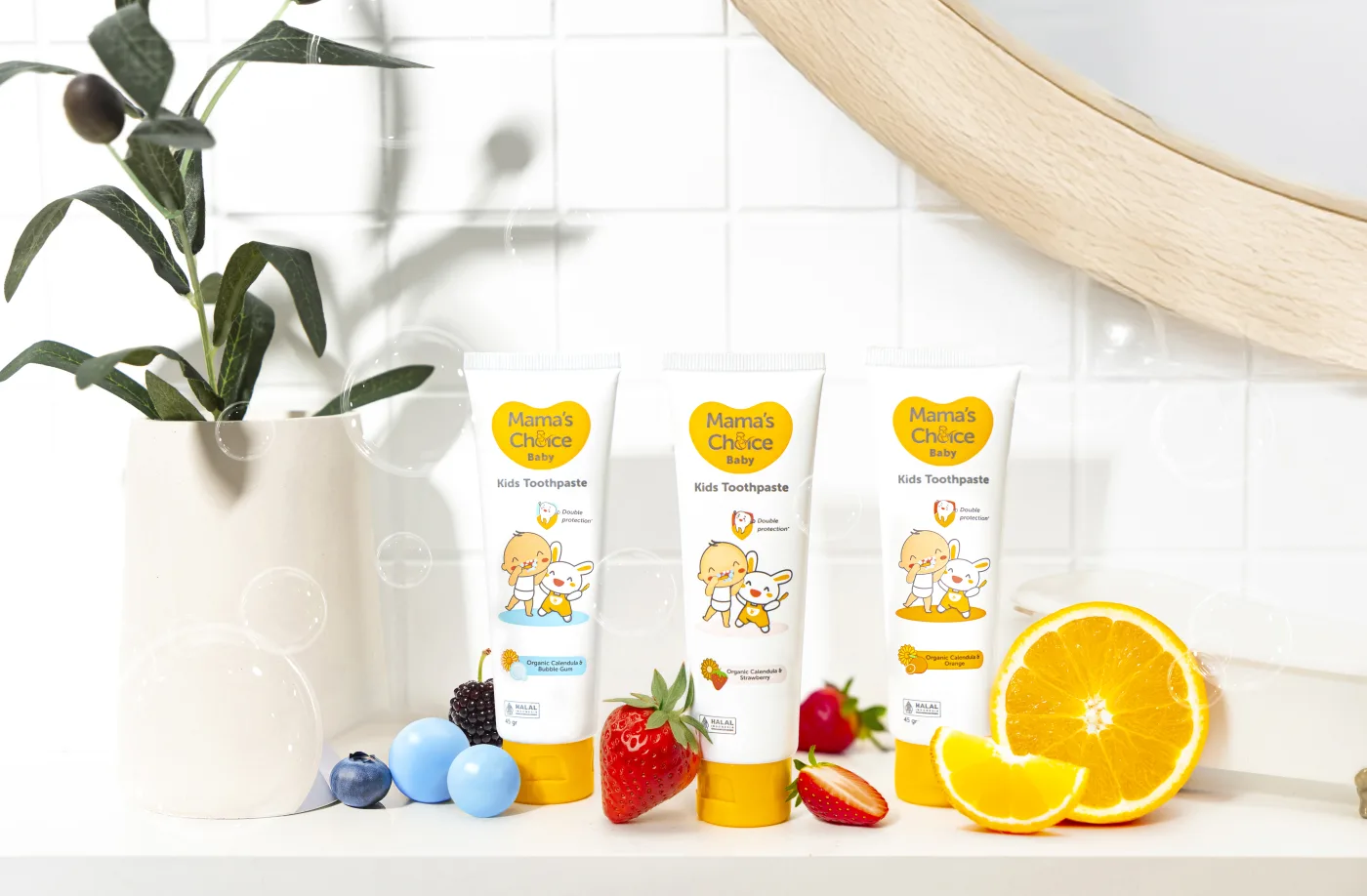
Some parents prefer a fluoride-free paste for a baby who swallows most of it. Our Baby & Kids Toothpaste is made for babies from 6 months, with hydroxyapatite and xylitol and no fluoride, sulfates or colourants. It comes in strawberry, orange and bubble gum. In a Mama's Choice use test with 28 mothers in Indonesia in 2022, 93% agreed their child's teeth and gums felt cleaner. In a 2023 test with 32 mothers in Indonesia, 91% said they would swap their child's current toothpaste for it. It is halal certified by BPJPH, Indonesia. If your child has had decay or your dentist advises fluoride, follow their advice.
From 12 months, our soft silicone Baby Silicone Toothbrush has a shield that stops it going too far into the mouth and a suction base so it stands up to dry.
For first foods, the Jolly Feeding Set has a suction bowl and plate and cutlery sized for small hands.
Take your child to a dentist by their first birthday, or when the first tooth appears. Government dental clinics see young children, and your klinik kesihatan can refer you.
Sources
Share this article
This article is for information only and is not a substitute for diagnosis or medical advice. Please talk to your doctor about your own situation.