Tips to breastfeed your teething baby comfortably
Teeth do not have to mean the end of breastfeeding. How teething changes feeds, what to do about biting, and how to keep your nipples comfortable.

Plenty of mothers dread the first tooth, expecting every feed to hurt. Most babies breastfeed happily right through teething, and a few small changes cover the tricky moments.
Teething usually starts somewhere between 4 and 7 months and carries on, on and off, until about two and a half. Sore gums can make your baby fussy, dribbly and more wakeful at night. None of that means you need to wean.
The reason is in the mouth. When your baby is latched on and feeding properly, their tongue sits over their lower gum and teeth, between the teeth and your nipple. A baby who is actively sucking cannot bite at the same time. Biting tends to happen at the start of a feed, at the end, or when your baby is distracted and only half-feeding.
How teething can change feeds

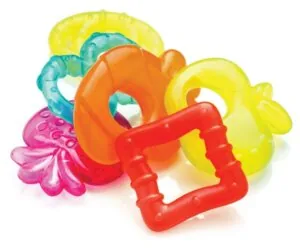
Some babies feed more than usual during a teething spell, because sucking and closeness comfort them. Others become fussy at the breast. They latch and pull off, cry, then want to try again, since sucking can press on sore gums. If that happens, try a different position. A more upright hold sometimes feels better for a baby with tender gums. Offering a cold teether before a feed can help too.
Teething also brings drool, lots of it. Saliva left on your skin can leave it feeling dry or irritated. Your baby's chin and neck can get sore from it as well. Wipe your baby's mouth gently before and after feeds, and pat your own skin dry.
What to do if your baby bites

The first bite is a shock, and most of us yelp. Try to stay calm. A big reaction can startle some babies into refusing the breast for a day or two, and amuse others into trying again.
- Watch for the moment your baby stops swallowing and starts playing with the nipple. That is when to end the feed.
- To unlatch, slide a clean finger into the corner of your baby's mouth to break the suction. Never pull your baby straight off.
- If they bite, bring them in close against your breast for a second. Their nose touches the breast and they open their mouth to breathe, which releases the nipple.
- Say "no biting" calmly, put your baby down for a moment, then offer a teether.
- Praise them when they feed gently.
Most babies learn within a few days.
Keeping your nipples comfortable
Teeth themselves are not usually the cause of sore nipples during this phase. The changes around them are: more frequent feeds, a shallower latch as your baby pulls on and off, and the odd bite. A few habits keep the skin in good shape.
Check the latch
Your baby's mouth should be wide open, with your nipple deep inside and plenty of the areola covered, especially below the nipple. A shallow latch is uncomfortable for you at any age and is more likely to end with a nip.
Get the position right
Try a few holds until you find ones that work for you both. A nursing pillow lifts your baby to breast height, so you are not hunched over with your back, neck and arms aching.
Keep the skin clean and dry

If you leak, change breast pads as soon as they feel damp. Warm, wet skin in Malaysia's humidity can quickly become sore. Wash with plain water rather than soap, which dries the skin, and let your nipples air dry after feeds when you can.
Use your pump gently
Check that the breast shield is the right size and keep the suction at a comfortable level. More suction does not mean more milk. Clean every part of the pump after each use.
Comforting sore nipples

If your nipples feel sore, some simple comforts help.
- A little breast milk. Many mothers dab a few drops of expressed milk on the nipple after a feed and let it air dry. Skip this if you have thrush.
- A warm compress. After a feed, hold a soft cloth dipped in warm water against the nipple for a few minutes, then pat dry.
- A nipple cream. A rich cream keeps the skin moisturised between feeds.
See a doctor if a bite has broken the skin and it is not healing, if you have a red, hot or painful area on the breast, a fever, or shiny, flaky nipples with burning pain that could be thrush. These need proper treatment.
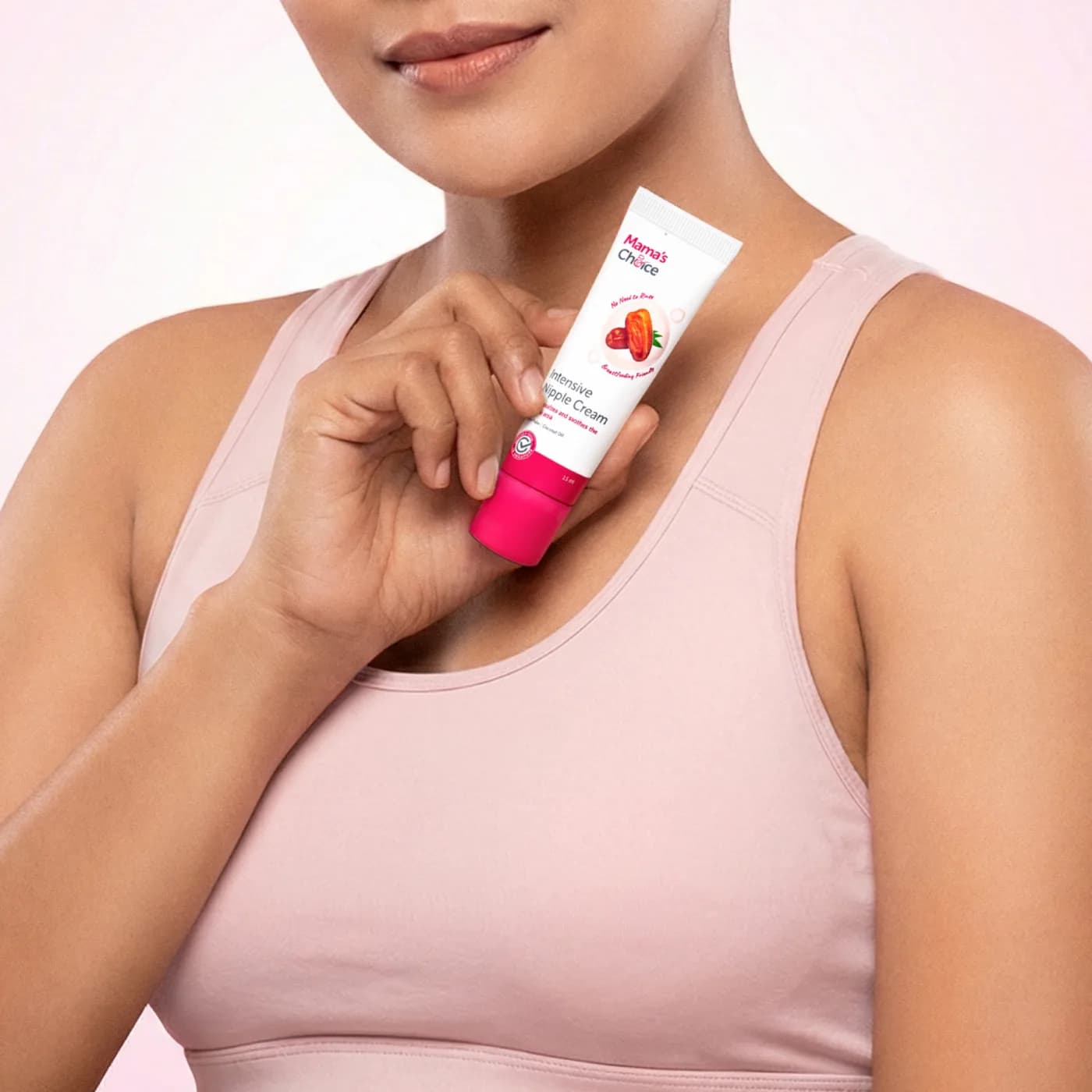
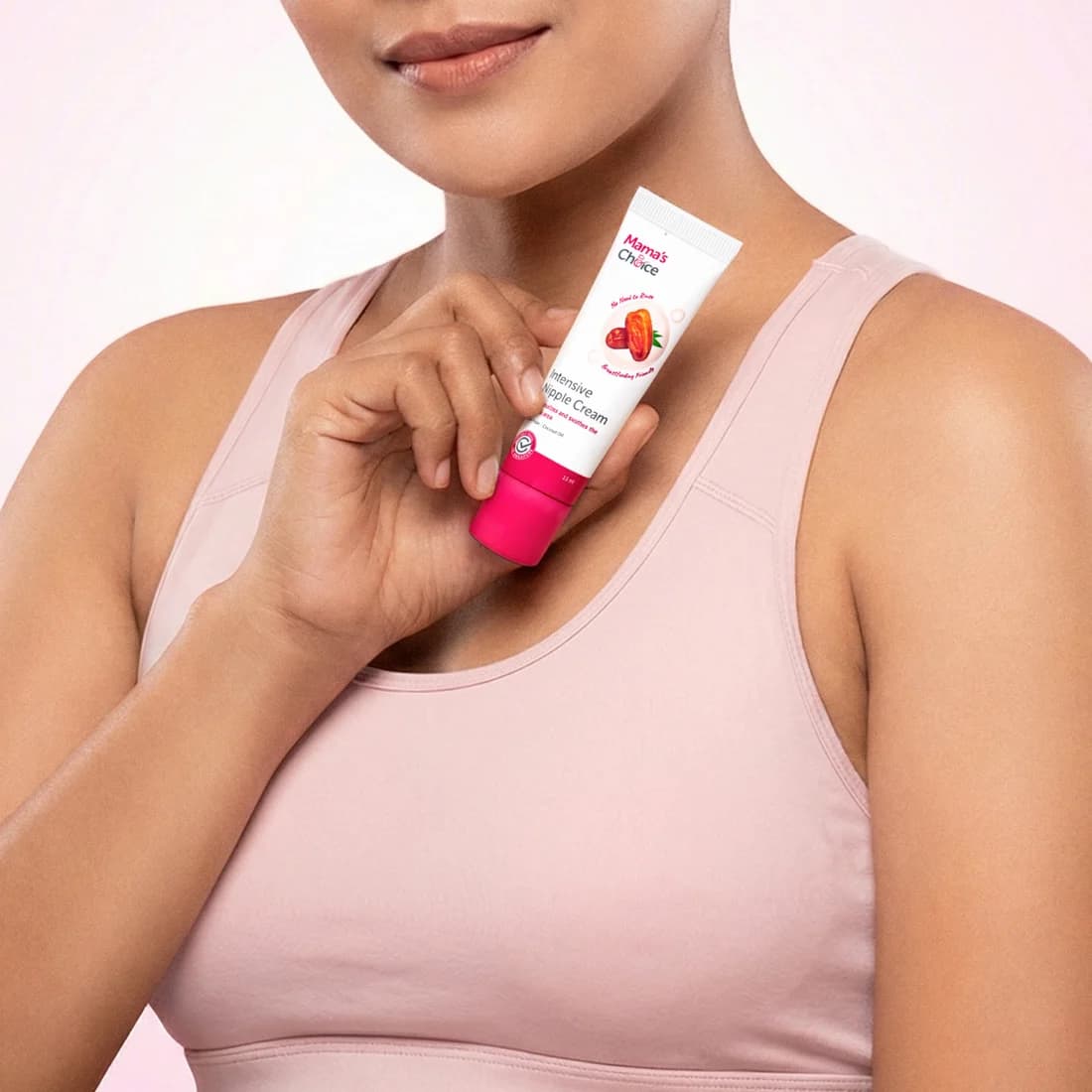
Mama's Choice Intensive Nipple Cream
We made Mama's Choice Intensive Nipple Cream for exactly these weeks. It is a rich, lanolin-based cream with shea butter, coconut oil and date extract that moisturises and protects dry nipple skin and helps prevent cracked nipples. A pea-sized amount is enough, and there is no need to wipe it off before your baby feeds.
In a Mama's Choice satisfaction survey of 74 mums in Indonesia in 2022, 96% felt dry nipple skin became softer and 98% felt the texture was gentle in use. Results differ from person to person. It is made without alcohol or added fragrance and is halal certified by BPJPH, Indonesia.
Find it in our official stores on Shopee and Lazada, where the latest price is shown.
Teething is a phase, and it passes. With a good latch and a little care for your skin, most Mamas keep breastfeeding comfortably right through it.
Sources
Share this article
This article is for information only and is not a substitute for diagnosis or medical advice. Please talk to your doctor about your own situation.