Choosing a toothbrush for you and your baby
Soft bristles, a small head and a handle that suits whoever is holding it. How to choose, when to replace it, and what to do when a toddler refuses.
It is the cheapest thing in your basket, and it does more than most of what is in there.
Choosing well comes down to the bristles, the head and the handle. The brand matters much less.
Soft bristles, always
Soft bristles clean as well as firm ones and do far less damage while they are at it.
Hard bristles wear enamel down over the years. They also push the gums back, exposing the root surface underneath, which is softer and more sensitive than the crown and will remind you every time you drink something cold.
That goes for you as much as for your child. Nobody needs a hard brush, and pregnancy hormones can make gums puffier and quicker to bleed, so a soft brush and a gentle hand make sense for you right now. If your gums bleed often, mention it at your antenatal check or see a dentist; dental check-ups during pregnancy are encouraged.
A small head
A small head reaches the back teeth without setting off your gag reflex. That matters twice over. Your gag reflex can be stronger in the first trimester, and your baby's mouth is tiny.
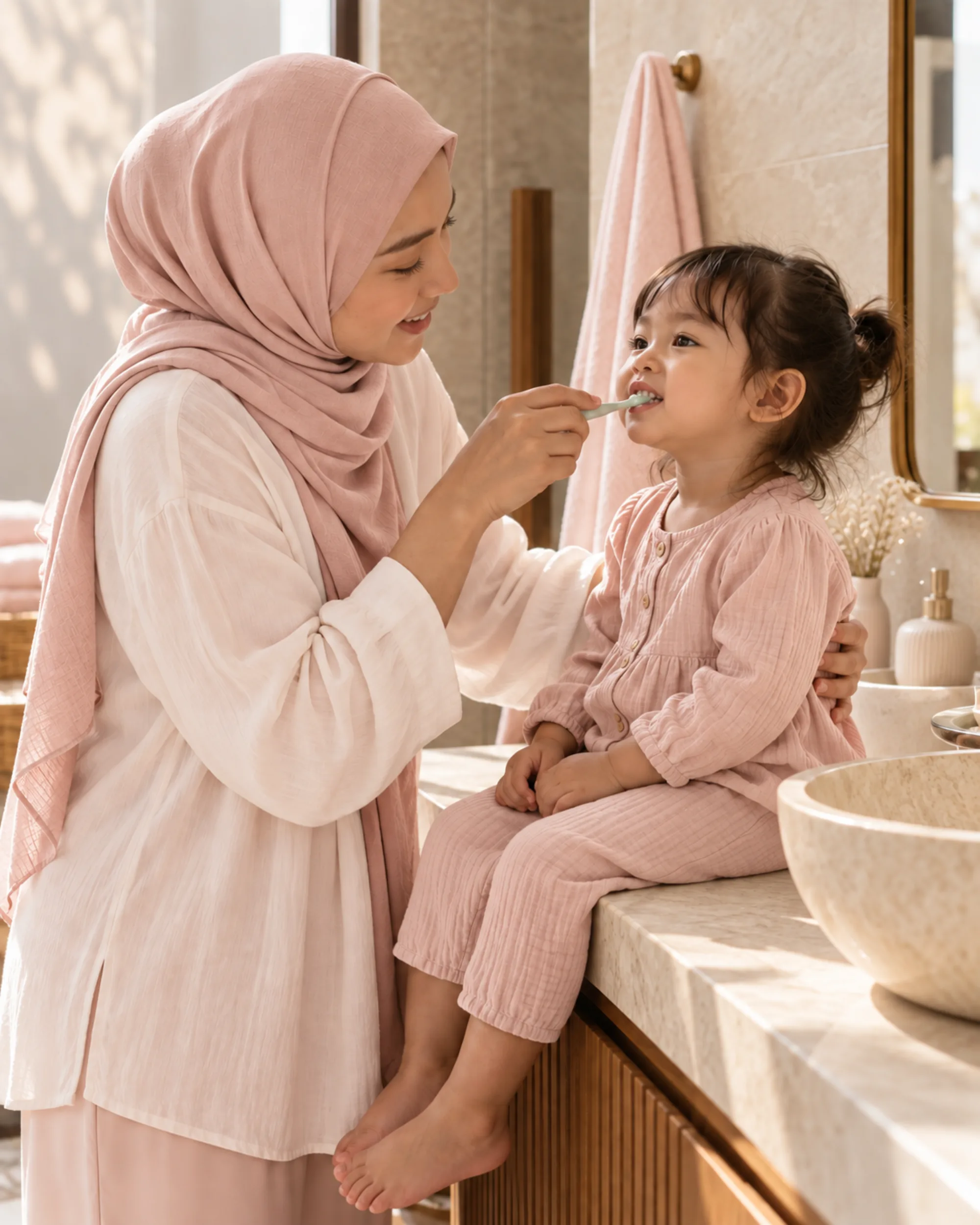
For a baby, start with a finger brush, a soft cloth or a brush with a very small head as soon as the first tooth appears.
A handle that fits whoever is holding it
For a baby or toddler, the person doing the real brushing is you, so the handle needs to suit an adult hand. Chunky handles are for her own practice turns.
Once she starts brushing for herself, a thicker handle helps her grip. Both have a place, in different halves of the same job.
When to replace a toothbrush
Every 3 months, or sooner if the bristles splay.
A splayed brush cleans badly and can irritate gums. If it looks worn at six weeks, replace it at six weeks. Children often chew their brushes, so theirs may go faster.
Replace it after an illness too, so you are not putting germs straight back.
Who does the brushing?
Children need an adult brushing for them until about seven or eight, when their hand control catches up.
What works in most homes: she brushes first, for as long as she likes, then you finish the job properly. She gets her turn, the teeth get cleaned, and nobody has to win.
Positions that make it easier
Stand behind a toddler and tilt her head back gently against you. You get the view a dentist has and much better control than facing her.
For a baby, lay her across your lap with her head towards you. You can see everything and she is steady.
Either beats chasing a standing, wriggling child head-on, which is how most parents start and why many give up.
When she refuses
Refusing is normal at this age, and it passes. What tends to help:
- Change the timing, so you are not brushing when she is already overtired
- Let her hold her own brush while you use a second one
- Brush your teeth at the same time, in front of a mirror
- A song or a short story about brushing
- Keep it short and consistent
Never use brushing as a threat or a punishment. A habit built on that rarely lasts.
Looking after the brush
- Rinse it well after use
- Store it upright in the open air, not shut in a closed case
- Keep brushes in a shared cup from touching
- Never share a toothbrush
Sharing spoons, blowing on food and kissing on the lips can all pass on Streptococcus mutans, the bacterium most linked to tooth decay.
Our brushes and pastes
Mama's Choice Baby Silicone Toothbrush is made for a first brush, from 12 months. It is soft silicone that is gentle on new teeth and gums, with a shield that stops it going too far into the mouth and a suction base so it stands up to dry. It withstands temperatures from -20°C to 110°C, so you can clean it with hot water or steam. It comes in pink and green.
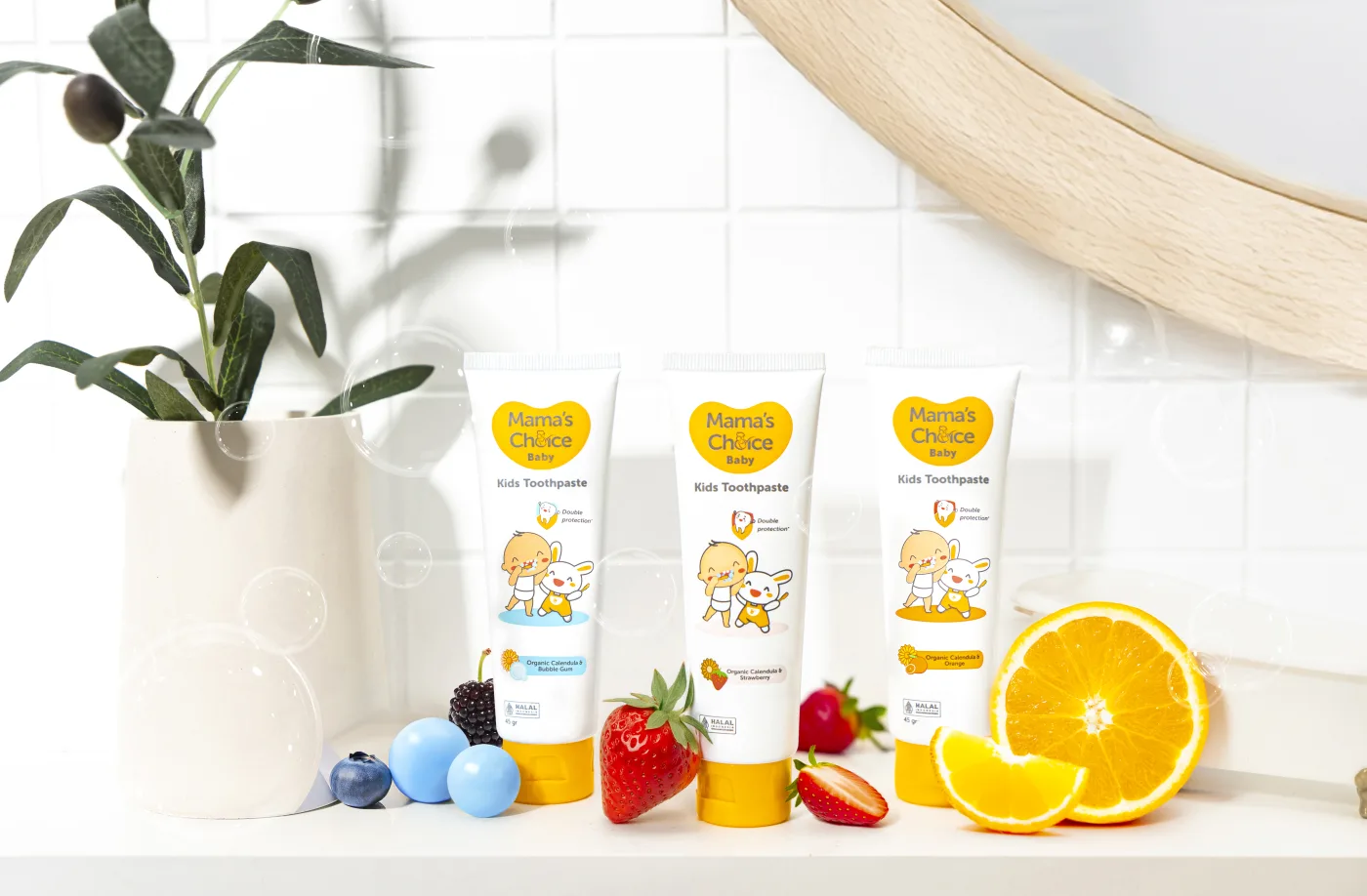
Baby & Kids Toothpaste comes in strawberry, orange and bubble gum. It is fluoride-free and sulfate-free, with hydroxyapatite and xylitol, and it cleans teeth and gums, helps remove plaque and helps fight cavities.
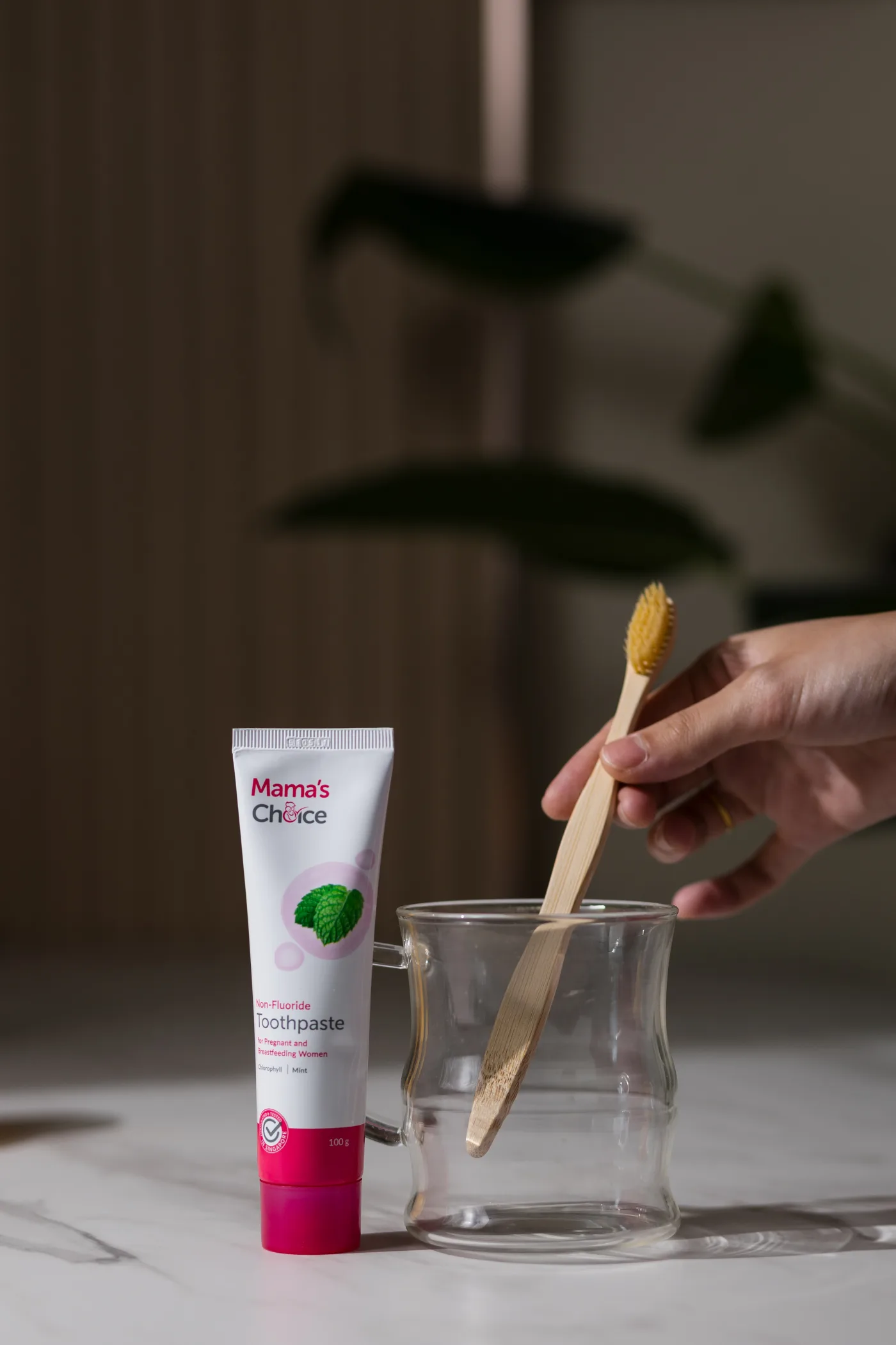
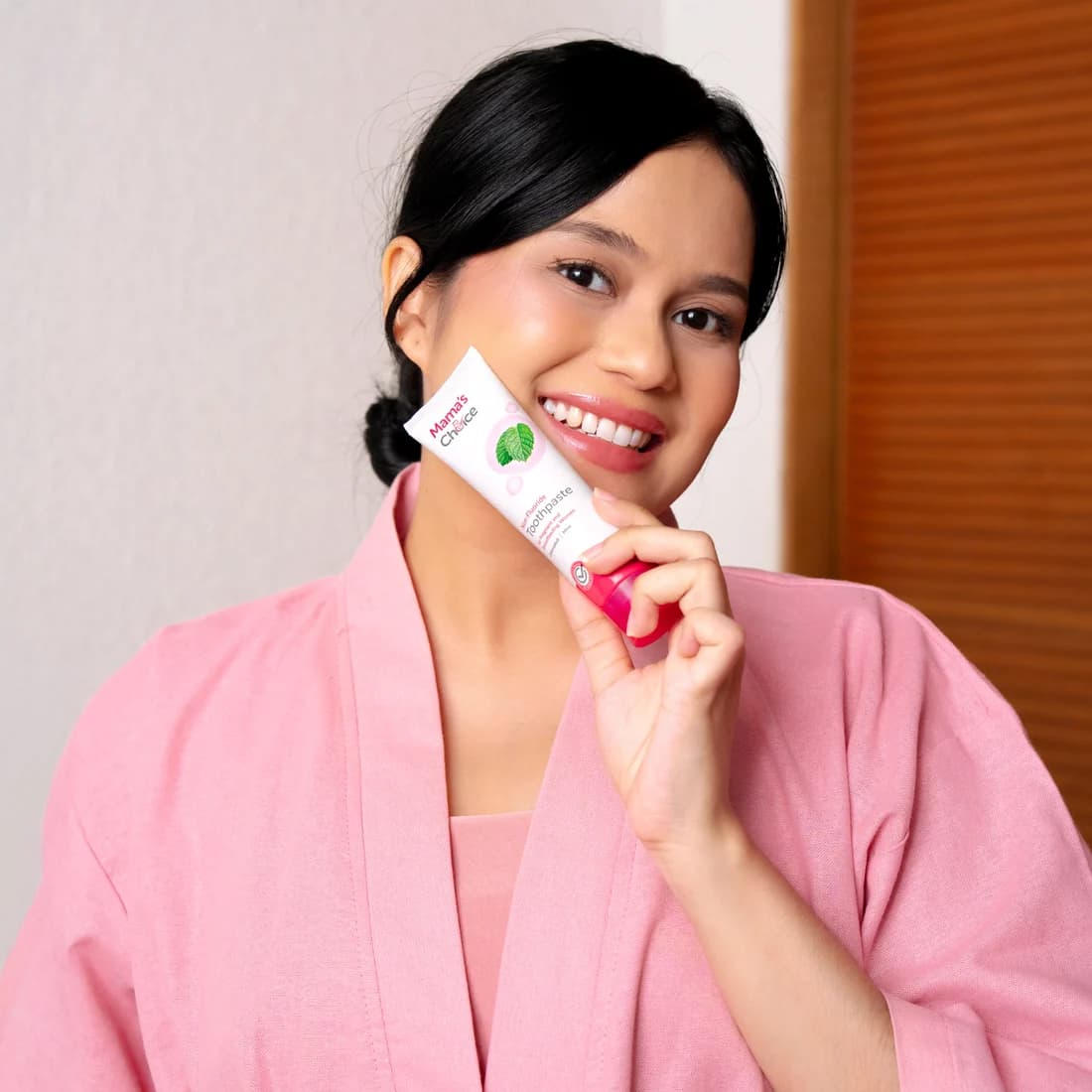
For you, Non-Fluoride Toothpaste has a gentle mint taste made for pregnancy, and is made without fluoride, SLS or triclosan. In a Mama's Choice satisfaction survey of 62 mothers in Indonesia (2022), 93% felt comfortable using it with no nausea. You can find it on Shopee.
How much toothpaste?
Whichever paste you use: a smear the size of a grain of rice under 3, and a pea-sized amount from 3 to 6. Fluoride toothpaste, in the right amount and with an adult supervising, is what most dental bodies recommend for children. A fluoride-free paste is a choice some families make while their child cannot spit yet; talk it over with your dentist, who knows your child's teeth.
Our guide to cavities in toddlers explains how decay starts, and pregnancy-safe toothpaste covers your own brushing while you are expecting.
Sources
Share this article
This article is for information only and is not a substitute for diagnosis or medical advice. Please talk to your doctor about your own situation.