Giving birth during Ramadan: what to know
Nifas and missed fasts after childbirth, breastfeeding through Ramadan in Malaysia, and how to plan food, rest and visitors around your confinement.
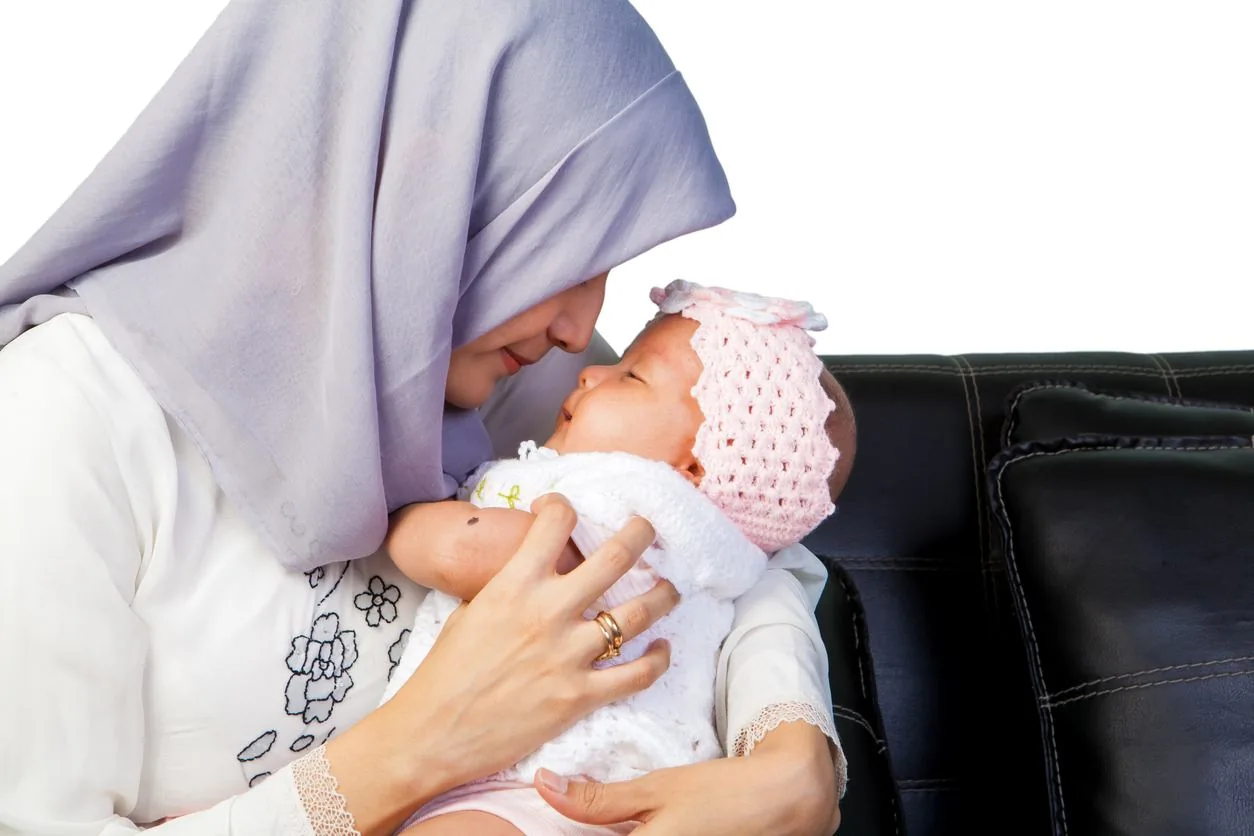
Your baby is due in Ramadan, and somewhere under all the planning there is a quieter worry about whether you will be able to keep the month the way you want to.
The practical answers are more settled than most women expect, and the people around you will mostly be glad to carry more of the load.
You do not fast during nifas
A woman in nifas, the bleeding after childbirth, does not fast, and the missed days are made up later. In the Shafi'i school followed by most Malaysian Muslims, nifas ends when the bleeding stops, often around 40 days, and it does not run beyond 60.
This is a recognised part of the rules, written for a body recovering from birth while feeding a newborn.
Making the days up
Fast on other days once you are able. They do not need to be in a row, and many women spread them across the year.
Fidyah may also apply in some situations, for example when a breastfeeding mother misses fasts out of concern for her baby. The rate is set by your state religious authority and is usually paid through the state zakat centre.
Which applies to you depends on your circumstances. Your local religious office or a qualified ustazah can advise you properly, which an article cannot.
Fasting while breastfeeding
Once nifas has ended, some mothers want to fast while still breastfeeding. The practical picture:
Breastfeeding is more resilient than many people expect once it is established, and the make-up of your milk stays fairly stable.
Dehydration is the real risk. Malaysia sits near the equator, so the fast lasts roughly 13 to 14 hours whatever the month, and the heat makes those hours thirsty ones.
A newborn is very different from a nine-month-old. In the first weeks, while feeding is still settling and feeds come constantly, fasting is far harder.
If you do fast, drink generously between iftar and sahur, eat protein and slow-release carbohydrates, and watch for fewer wet diapers in your baby or dizziness in yourself. Either one means break the fast. That is the right response.
Getting ready for the month
Ask for help with cooking early. Ramadan usually brings more cooking, and a few weeks after giving birth you should not be the one doing it. Your mother, mother-in-law or confinement lady may already be planning pantang meals; fold the iftar and sahur plans into the same list.
Make food filling instead of large. Two meals have to do the work of four. Rice or bread with eggs, fish or chicken, dhal, vegetables and fruit at sahur will carry you further than kuih alone.
Keep sahur simple. It is the meal most likely to be skipped when you have been up feeding at 2am. Have something ready the night before: overnight oats, bread and eggs, dates and a glass of milk.
A warm drink for the quiet hours. Mama's Choice Almond Boost is a chocolate or matcha almond drink made for breastfeeding mothers, with almond, dates, fenugreek, katuk leaf and banana blossom. Each 30 g sachet is measured out, so a cup takes a minute to make at sahur or after iftar, and it is halal certified by JAKIM.
Rest is part of the month too
The pressure to take part fully, in fasting, in terawih, in hosting the family for buka puasa, lands hardest on new mothers.
A body a few weeks past birth, feeding every two or three hours, cannot do all of it. Resting is not falling short, and someone should tell you that out loud.
Recovering while the house is at its busiest
- Say yes to the food that arrives. Ramadan is one of the few times people bring meals without being asked
- Keep visits short. A newborn does not need a full room, and neither do you, especially as Hari Raya approaches
- Sleep when the house goes quiet, which in Ramadan is often mid-afternoon
- Let go of what you can. Hosting, cooking and the Raya preparations can wait a year
Feeding through the long days
Newborns feed 8 to 12 times in 24 hours, whatever the calendar says, and that will not rearrange itself around fasting hours.
- Feed when your baby shows hunger cues, instead of trying to cluster feeds around iftar
- Keep water wherever you feed at night
- Expect the evening to be the busiest feeding stretch, just as the household is busiest too
If night feeds and night prayers compete, many scholars are clear that caring for your baby comes first. Ask your religious adviser if you want guidance for your own situation.
Break the fast and see a doctor if
- You feel dizzy, faint or have headaches that will not go away
- Your baby has fewer wet diapers than usual or seems unusually sleepy
- You are too weak to look after your baby
- Your bleeding gets heavier instead of settling
The weeks after birth have their own warning signs whatever the month: heavy bleeding, fever, severe pain, or low mood that does not lift. Go to your klinik kesihatan or hospital, and call 999 in an emergency. Talian Kasih (15999) is there if you need someone to talk to.
Sources
Share this article
This article is for information only and is not a substitute for diagnosis or medical advice. Please talk to your doctor about your own situation.