How to choose a mouthwash during pregnancy
Can you use mouthwash while pregnant? What to look for on the label, why alcohol-free is gentler, what a rinse can and cannot do, and when to see a dentist.
Pregnancy is hard on your mouth. Hormones make your gums react more strongly to plaque, so they swell and bleed more easily. Morning sickness brings acid up against your teeth, and many women notice bad breath or a metallic taste that will not go away.
Can you use mouthwash while pregnant?
Yes. Mouthwash is fine to use in pregnancy, and the American Academy of Pediatric Dentistry's guidance on oral health care for pregnant women includes an alcohol-free rinse as one option alongside brushing and flossing. Dental care itself is safe in pregnancy too, and the second trimester is often the most comfortable time for a check-up.
A mouthwash is an extra, though. Brushing twice a day and cleaning between your teeth do most of the work.
What to look for on the label
Alcohol-free
Many mouthwashes contain ethanol. You spit it out rather than swallow it, so it is not the same as drinking alcohol, which the CDC warns against at any point in pregnancy. The reason to choose alcohol-free is comfort. Alcohol stings tender gums and can leave your mouth feeling dry, and an alcohol-free rinse is gentler on a sensitive pregnancy mouth.
No triclosan
Triclosan is an antibacterial ingredient that has been used in some oral care and soap products. A study of pregnant women found that higher triclosan exposure was linked to changes in thyroid hormone levels, which matter for a baby's development. The evidence is not settled. Few mouthwashes contain it today, and checking the label takes seconds.
A mild flavour
A strong, burning mint can set off gagging when you have morning sickness. A light mint or a gentle citrus is often easier.
Colour
Some people react to certain synthetic dyes, such as tartrazine. Most people do not. If you have had reactions to food colourings before, a colourless rinse or one coloured with plant pigments such as chlorophyll is a sensible choice.
After vomiting
Do not brush straight after being sick. Stomach acid softens enamel for a while, and brushing can wear it away. Rinse with plain water or a mild, alcohol-free mouthwash instead, then brush about half an hour later.
When to see a dentist
See a dentist if your gums bleed heavily or for weeks, if they are very swollen or painful, if a tooth feels loose, or if you notice a lump on the gum. Government dental clinics in Malaysia see expectant mothers, so ask at your klinik kesihatan.
Make brushing easier
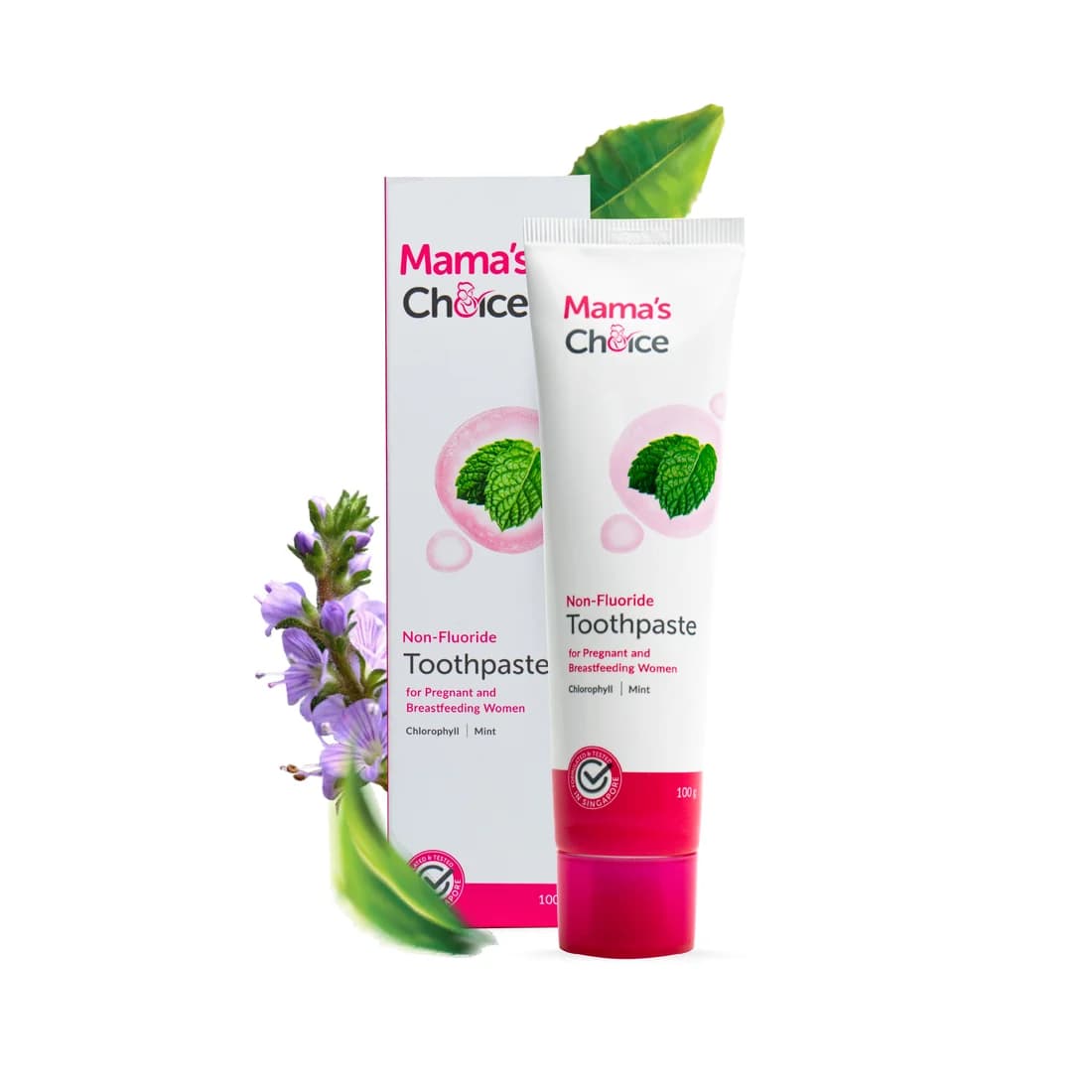
We do not sell a mouthwash in Malaysia. If brushing is the hard part of your day, our Non-Fluoride Toothpaste may help. It is formulated for pregnancy and breastfeeding, with miswak, allantoin and a gentle mint, and is made without SLS, triclosan or fluoride. In a Mama's Choice satisfaction survey of 62 mothers in Indonesia (2022), 93% felt comfortable using it with no nausea, and 89% felt the mint was just right. It is halal certified by BPJPH, Indonesia.
Fluoride toothpaste is what dentists generally recommend for preventing tooth decay. If you choose a fluoride-free paste, ask your dentist how to keep your teeth protected. Find the toothpaste and its latest price on Shopee.
Sources
Share this article
This article is for information only and is not a substitute for diagnosis or medical advice. Please talk to your doctor about your own situation.