
Prenatal massage you can do gently at home
How prenatal massage differs from a regular massage, safe positions for each trimester, a simple routine your partner can do at home, and when to skip it.
An aching back, swollen ankles, tight shoulders and broken sleep. A gentle massage at the end of the day can feel like the kindest thing anyone has done for you all week.
Back pain is very common in pregnancy, especially in the second half, as your bump grows, your posture shifts and pregnancy hormones loosen the ligaments around your pelvis. Walking, gentle exercise and good posture help. A massage can be a lovely addition, and it does not need to happen in a spa.
How prenatal massage differs from a regular massage
The strokes are mostly the same. The differences are in pressure, position and where you avoid.
- Lighter pressure. Firm, deep pressure is not needed and can be uncomfortable when ligaments are already loose.
- Different positions. Lying on your front is uncomfortable once the bump grows. After about 20 weeks, lying flat on your back for long can press on a large vein and make you dizzy or sick. Side-lying or sitting positions work better.
- Care with the bump. The belly can be stroked lightly, but deep abdominal massage is not recommended in pregnancy.
- Legs need a light touch. Pregnancy raises the risk of blood clots in the legs. Avoid deep pressure on the calves and inner thighs, and never massage a leg that is red, hot, swollen or painful on one side. See a doctor about that instead.
Studies of massage in pregnancy are small, but they suggest it can ease anxiety, help with back and leg aches, and improve sleep. Many women simply find it relaxing, and that has value too.
When is it a good time for a massage?
Many therapists prefer to wait until after the first trimester, partly because nausea and tiredness make it unpleasant and partly as a precaution. There is no good evidence that gentle massage causes miscarriage. A light shoulder or foot rub at home is fine at any stage if it feels good.
From the second trimester onwards, most women in a healthy pregnancy can enjoy massage right up to the birth. Some areas are often said to bring on contractions, such as points on the ankles and the web between the thumb and finger. The evidence for this is weak, but if you are unsure, keep pressure there light.
Ask your doctor before massage if you have bleeding, placenta praevia, pre-eclampsia, high blood pressure, a history of blood clots, or have been told your pregnancy is high risk.
Traditional urut
Many Malaysian families turn to a bidan or tukang urut during pregnancy and after birth. If you do, tell them how many weeks pregnant you are, ask them to keep pressure gentle, and do not let anyone press deeply on your belly or try to turn your baby. Turning a baby that is in the wrong position is a medical procedure for a doctor to decide on.
A simple massage your partner can do at home
Your partner does not need training. Slow, gentle and attentive is enough, and a massage from someone who loves you is good for both of you.
Get comfortable first
Choose one of these positions, with plenty of pillows:
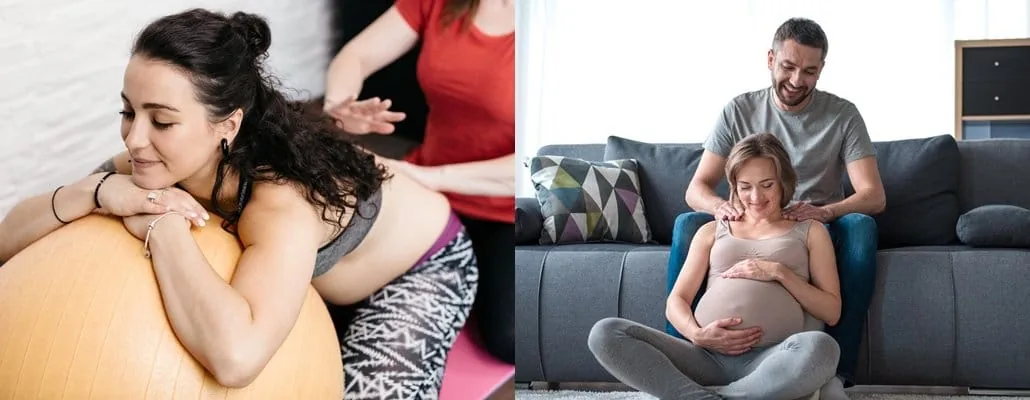
- Sitting. Sit facing the back of a chair or straddling it, with a pillow between your bump and the chair back. This is good for neck, shoulders and back.
- Side-lying. Lie on your left side, with a pillow under your head, one between your knees and one supporting your bump. This works for the back, hips and legs.
- Leaning forward. Kneel on a cushion and lean onto a birthing ball or a stack of pillows on the sofa.
Keep the room cool and have water nearby.
Start the massage
Warm a little oil or lotion in the hands first. A plain, unscented oil such as coconut or sweet almond oil is fine. Use long, slow strokes either side of the spine, never pressing on the spine itself. Knead the shoulders gently, rub small circles over the lower back and hips, and stroke the feet and lower legs with light pressure towards the heart.
Ten to fifteen minutes is plenty. Check in often. "Is that OK?" is the most useful thing your partner can say.
A note on essential oils
Essential oils are concentrated and some are not recommended during pregnancy, including clary sage, rosemary and pennyroyal among others. If you would like a scent, ask a pharmacist, use only a drop or two well diluted in a carrier oil, and skip them in the first trimester. Our article on prenatal massage oil has more.
Patch test anything new on your inner arm first, as pregnancy can make skin more sensitive.
When to stop and call your doctor
Stop the massage and get medical advice if you feel dizzy, have contractions or cramping, bleeding, leaking fluid, sudden swelling of the face or hands, or a painful, swollen leg. In an emergency, call 999.
Avoid combining massage with heat treatments such as saunas, steam rooms or hot tubs during pregnancy, because overheating is not good for your baby.
Making it a ritual
A massage does not have to fix anything. Ten minutes before bed, with the lights low and your phone away, is a good way to wind down and to give your partner a way to help. If you would like something more thorough, look for a spa or therapist trained in prenatal massage.
Sources
Share this article
This article is for information only and is not a substitute for diagnosis or medical advice. Please talk to your doctor about your own situation.