Best food to prevent stretch marks: what diet can and cannot do
Which foods support healthy skin in pregnancy, what the evidence says about diet and stretch marks, and what else helps your skin as your bump grows.
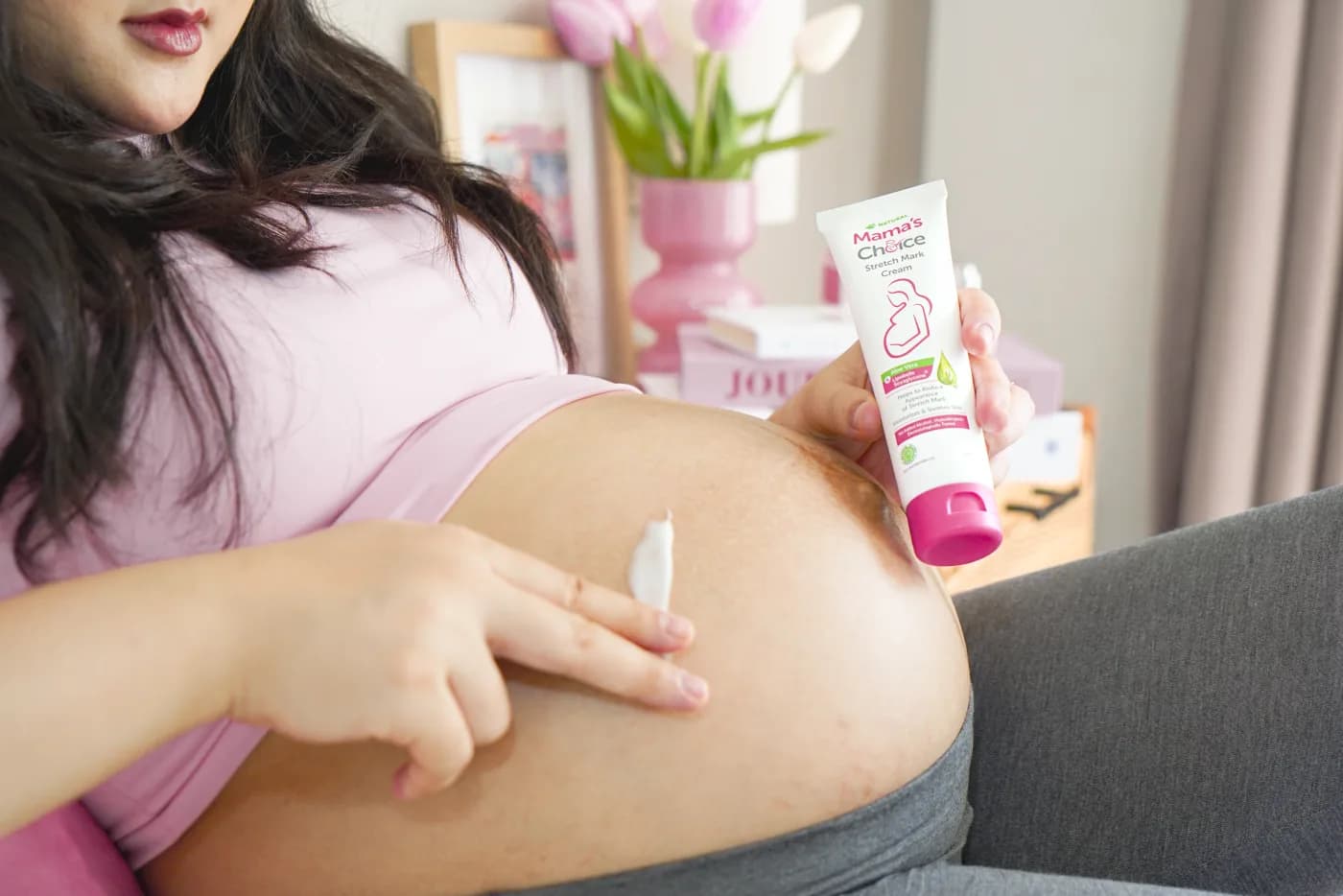
Stretch marks form when skin stretches faster than it can adapt. The supporting fibres in the deeper layer of skin, collagen and elastin, are pulled apart, and lines appear. They start out pink, red or purple and slowly fade to a silvery colour. They are harmless, very common in pregnancy, and partly down to your genes.
Can food help? A balanced diet keeps your skin in good condition, and that is worth having. No single food or vitamin has been shown to prevent stretch marks, though, so read the list below as good eating for pregnancy. It will not work miracles.
Foods that support healthy skin
Vitamin C
Your body needs vitamin C to make collagen, the protein that gives skin its strength. Guava, oranges, papaya, strawberries, kiwi, broccoli and capsicum are all good sources. Fresh fruit and vegetables every day easily cover your needs.
Protein
Collagen is built from protein. Eggs, fish, chicken, lean meat, tofu, tempeh, lentils and dhal help you meet the higher protein needs of pregnancy.
Vitamin E
Vitamin E is an antioxidant found in almonds, peanuts, sunflower seeds, avocado and vegetable oils. A handful of nuts makes a good snack.
Vitamin A, from food
Carrots, sweet potato, spinach, mango and papaya contain beta-carotene, which your body turns into vitamin A as it needs it. Food is the right way to get it in pregnancy. Avoid liver and liver products, and do not take high-dose vitamin A or fish liver oil supplements. Too much of the retinol form can harm a developing baby. Retinoid skin creams, often sold for stretch marks, should also be avoided while you are pregnant.
Omega-3 fats
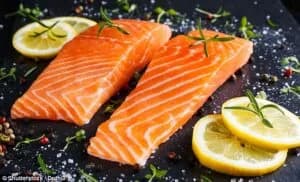
Oily fish such as salmon, sardines and mackerel (kembung) provide omega-3 fats, which are part of every cell membrane, including your skin's. Aim for two portions of fish a week. Choose low-mercury fish and avoid shark, swordfish and king mackerel. Walnuts, flaxseed and chia seeds are plant sources.
Other things that help
Gain weight steadily
Rapid weight gain stretches skin faster, so steady gain is kinder to your skin and better for your health. How much to gain depends on your weight before pregnancy. The widely used Institute of Medicine ranges are:
- Underweight before pregnancy: 12.5–18 kg
- Healthy weight: 11.5–16 kg
- Overweight: 7–11.5 kg
- Obese: 5–9 kg
Your doctor or klinik kesihatan will advise on your own target, and on the range for twins.
Drink enough water

Staying hydrated matters more in pregnancy and in our heat. Water alone will not stop stretch marks. Well-hydrated skin does feel more comfortable as it stretches. Keep a water bottle with you and drink to thirst, more on hot days.
Moisturise your skin every day
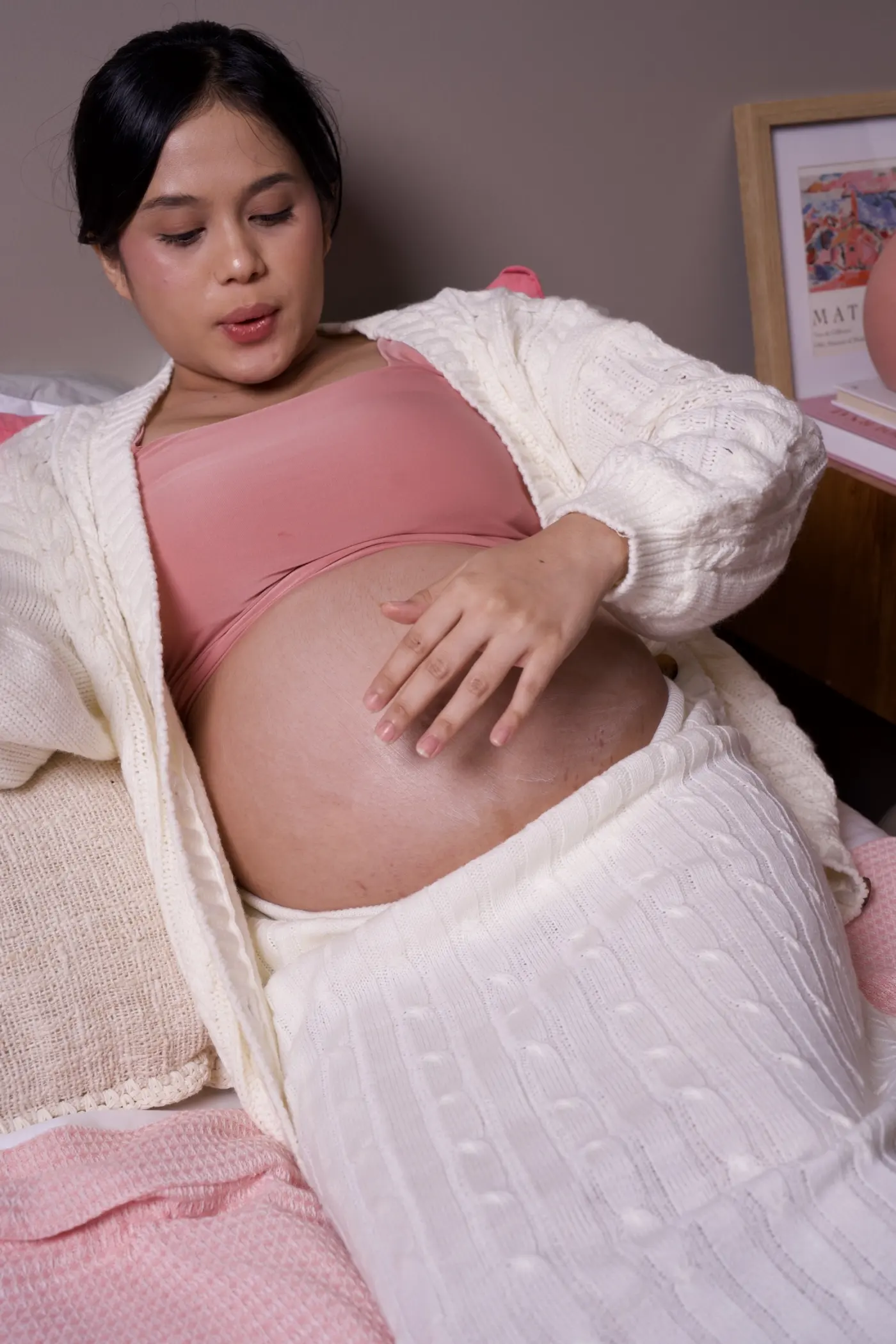
Stretching skin often feels dry, tight and itchy. Massaging in a cream twice a day keeps it soft and supple and eases that tight feeling.
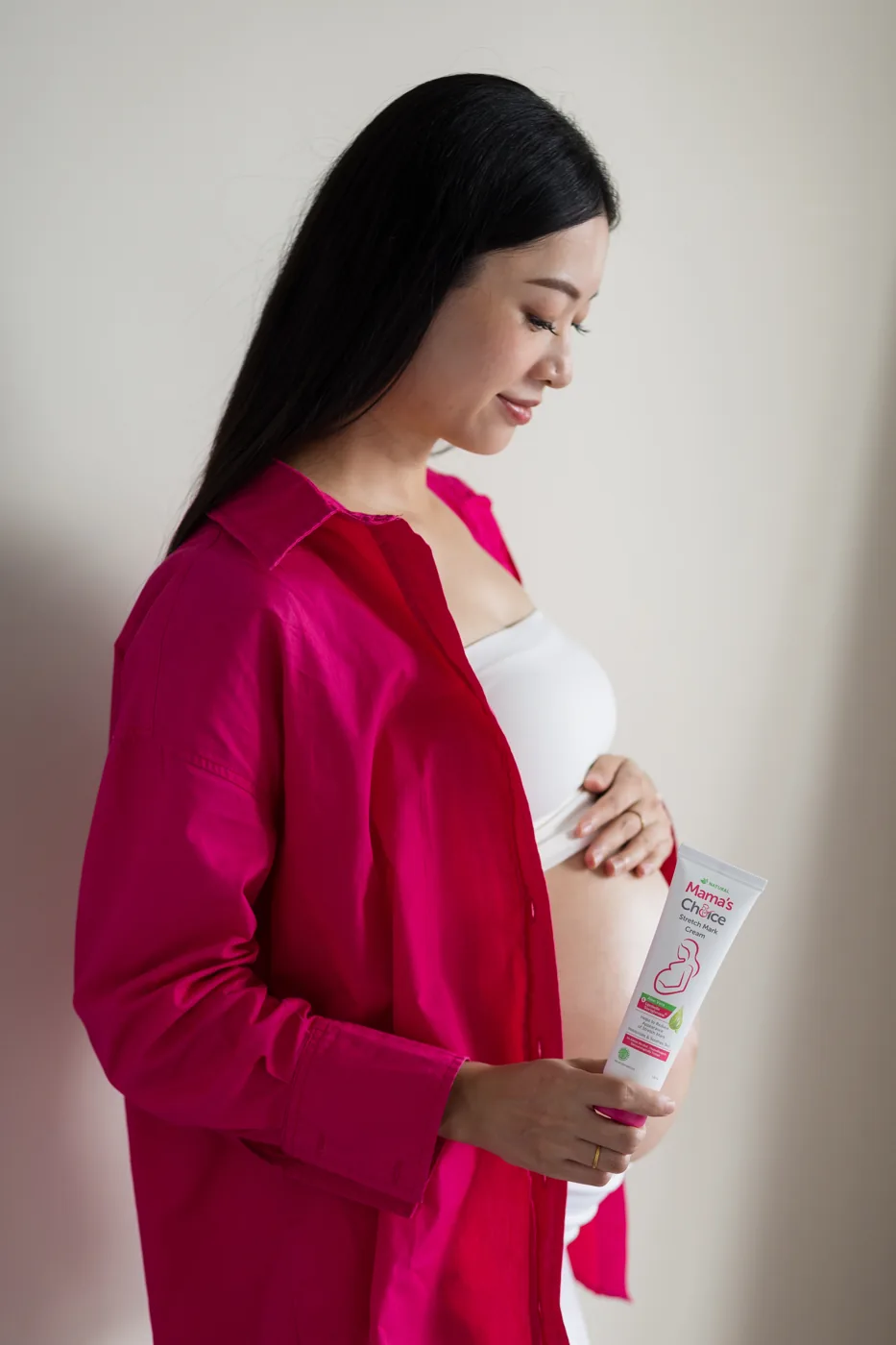
Our Stretch Mark Cream is made for exactly this. It deeply moisturises skin as it stretches and helps prevent stretch marks, with aloe vera, Lipobelle Soyaglycone, shea butter, olive oil and jojoba oil. It feels cool and absorbs quickly. In a Mama's Choice satisfaction survey of 78 mothers in Indonesia (2022), 91% felt their stretch marks looked less visible and 88% felt fewer new stretch marks appeared while they used it. Results vary from person to person.
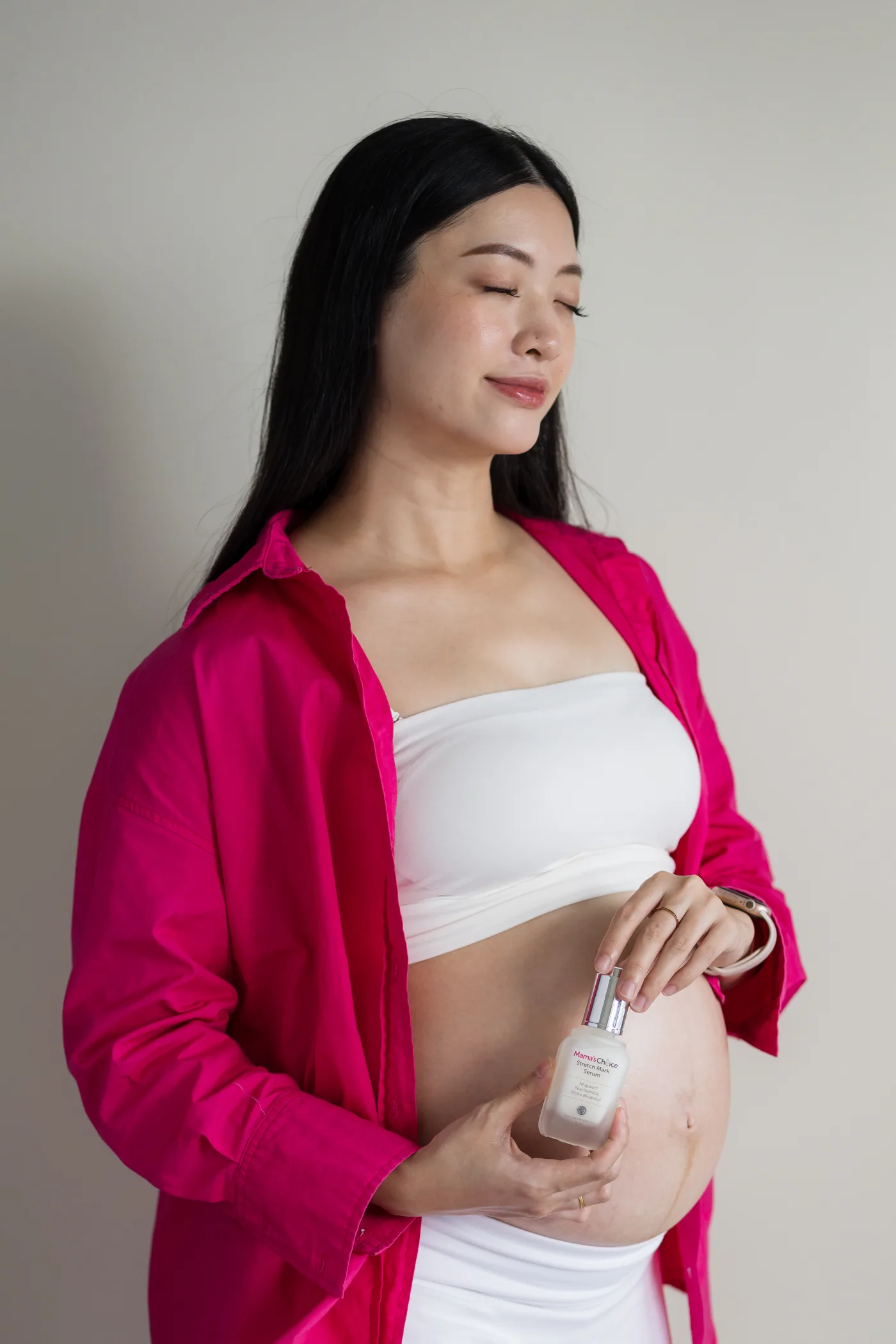
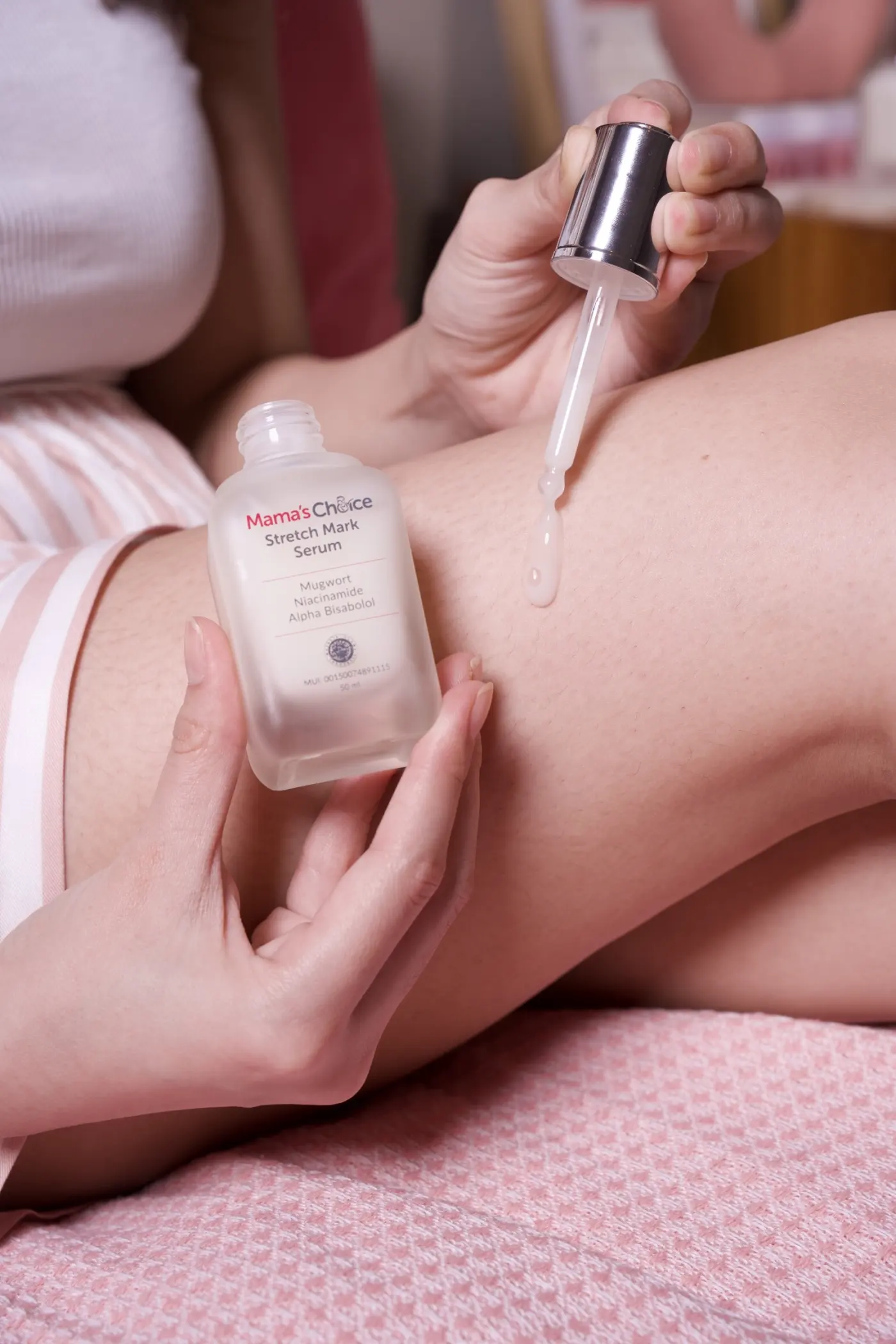
For a two-step routine, apply the Stretch Mark Serum first. Its niacinamide helps reduce the look of stretch marks and dark spots. Both are formulated for pregnancy and breastfeeding and halal certified by BPJPH, Indonesia, and you can buy them together as the Stretch Mark Cream and Serum bundle.
Start early, from the second trimester, and keep going after birth while your skin settles. See the latest price on Shopee.
When to see a doctor
Stretch marks are not a medical problem. See your doctor if itching is intense, especially on your palms and soles, as that can be a sign of a liver condition of pregnancy called obstetric cholestasis.
Sources
Share this article
This article is for information only and is not a substitute for diagnosis or medical advice. Please talk to your doctor about your own situation.