Choosing a deodorant for pregnancy
Which deodorant ingredients are worth skipping in pregnancy, which warnings are overstated, and what to look for in the Malaysian heat.
You sweat more now, and you notice your own smell from further away. Both are pregnancy at work, and on a humid Malaysian afternoon most women go looking for a new deodorant somewhere in the second trimester.
Lists of ingredients to avoid vary a lot in quality. We have sorted the usual suspects by what the evidence supports.
Which ingredients are worth avoiding?
Phthalates. The strongest argument of the group. Exposure before birth has been studied for effects on hormone development, and phthalates rarely appear by name on a label; they can sit inside the single word "fragrance". If you want to avoid them, fragrance-free products are the simplest route.
Triclosan. An antibacterial that has been largely phased out of consumer washes after a review by the US FDA. The fair word for it on skin is irritant. Skipping it makes sense if your skin has turned reactive, and you do not need a scarier reason than that.
Aluminium. The active ingredient in most antiperspirants, which plugs sweat ducts for a while. The breast cancer story has circulated for years. Cancer Research UK states that there is no good evidence linking deodorant or antiperspirant use to breast cancer. Plenty of mothers still prefer to go without aluminium during pregnancy and breastfeeding, and that is a reasonable choice when good alternatives exist. It is a preference, and it is worth keeping it separate from any idea that aluminium is harmful.
Parabens. Preservatives. The FDA says there is no evidence that parabens at the levels used in cosmetics affect health. Choosing products without them in pregnancy is a precaution, which is a perfectly legitimate thing to want.
Propylene glycol and PEGs. Carriers that help a product spread. They can sting on freshly shaved or broken skin. That is worth knowing if something burns, and it is not a pregnancy issue beyond that.
Deodorant or antiperspirant?
This decides what you can expect from what you buy.
A deodorant works on odour. Sweat itself barely smells; the smell comes when skin bacteria break it down, and a deodorant keeps that in check.
An antiperspirant reduces how much you sweat, classically with aluminium salts.
Products without aluminium are mostly deodorants. Some use other minerals to help underarms feel drier as well, which is the approach we took.
What to look for
- A scent you are happy with, or none at all. Your sense of smell is sharper now, and a strong perfume can turn your stomach in the first trimester.
- No drying alcohol, which stings after shaving.
- An ingredient list you can read without a search engine.
- A texture you will use every day. A formula only helps if it actually goes on.
Our Dry Serum Deodorant
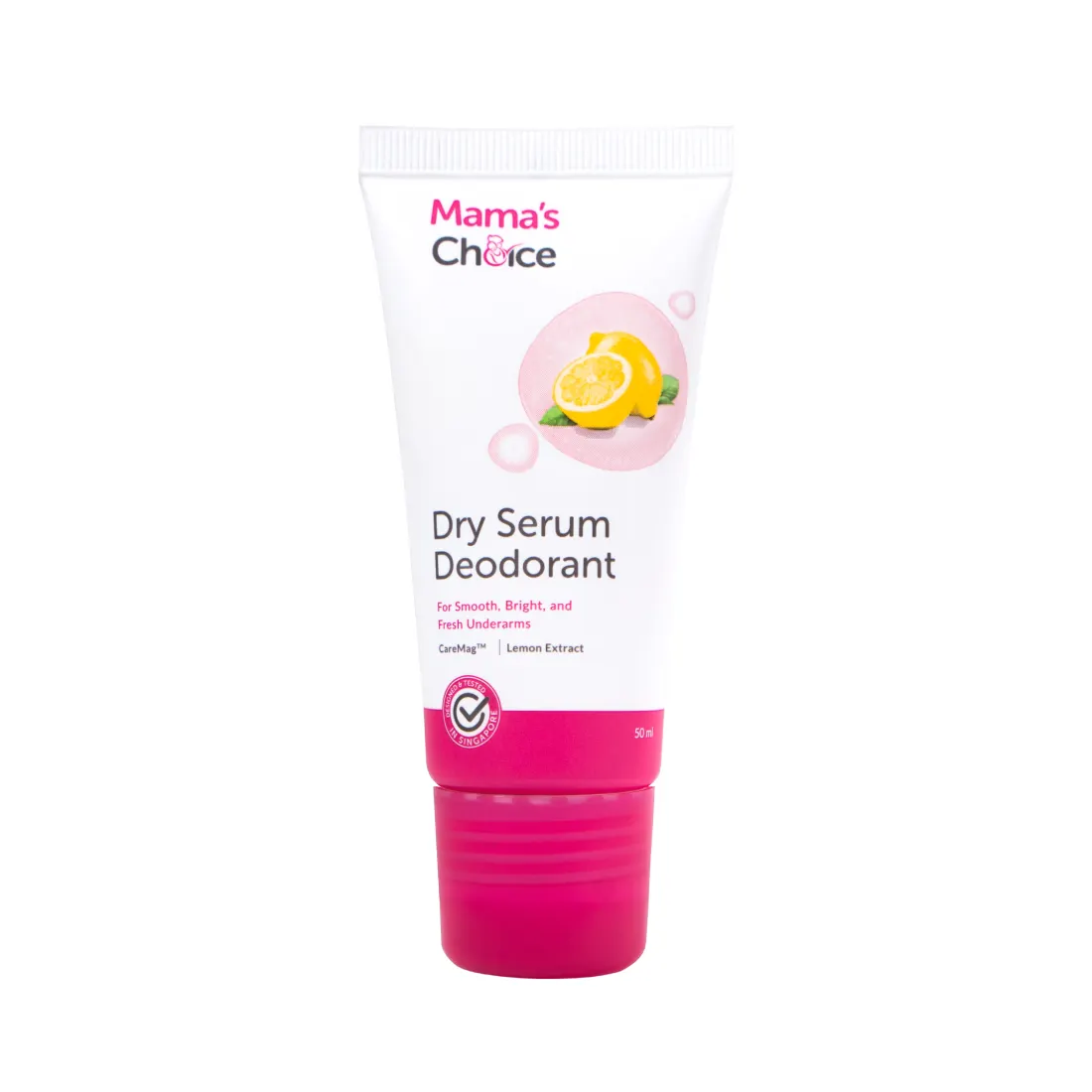
Mama's Choice Dry Serum Deodorant is a light roll-on serum made for women who are pregnant or breastfeeding. Magnesium minerals from the Dead Sea help control body odour and help reduce sweating, and niacinamide helps brighten the look of underarms with regular use. It is made without aluminium, alcohol or parabens, and it is halal certified by BPJPH, Indonesia.
It feels dry within a minute or two, so you can dress straight away, and it has a fresh scent. In a Mama's Choice home-use test with 30 mothers in Indonesia (2023), 97% felt underarm odour was reduced while they used it, and 80% felt their underarms stayed fresh through the day.
The niacinamide is there because underarms often darken in pregnancy, from the same hormonal pigment change that draws the dark line down your belly. The full ingredient list is in our ingredient dictionary.
Getting the most out of it
- Apply to clean, completely dry skin
- Wait a while after shaving
- Let it dry before you dress
- Reapply after a shower rather than layering over this morning's product
If the skin goes red or itchy, stop for a few days. Underarm skin is thin and reacts more easily during pregnancy.
What else affects the smell?
Your clothes. Synthetic fabrics hold on to sweat far longer than cotton. If the smell is back within hours of a shower, look at the blouse before you blame yourself. Loose cotton baju is the comfortable answer to a Malaysian afternoon for a reason.
Your hair. Underarm hair holds sweat against the skin.
Your food. Red meat, seafood, onions and garlic are linked to stronger odour in some people.
Your water intake, which matters less than you would think. Drink when you are thirsty, especially in this heat, but extra water does not reduce sweat. Sweating is triggered by your core temperature.
Our article on body odour during pregnancy goes into why the change happens.
When to mention it to a doctor
- Sweating heavy enough to disrupt your day
- Underarm skin that stays red, sore or broken
- A sudden change in smell along with other symptoms
- Fever, unusual tiredness or losing weight without trying
Your klinik kesihatan can check any of these at a routine antenatal visit. After the birth, hormones settle, and sweating usually goes back to what it was before.
Sources
Share this article
This article is for information only and is not a substitute for diagnosis or medical advice. Please talk to your doctor about your own situation.