Dry skin in babies and what to do about it
Why baby skin dries out even in Malaysian humidity, how to tell dryness from eczema, what helps at bath time, and where a baby body cream fits in.
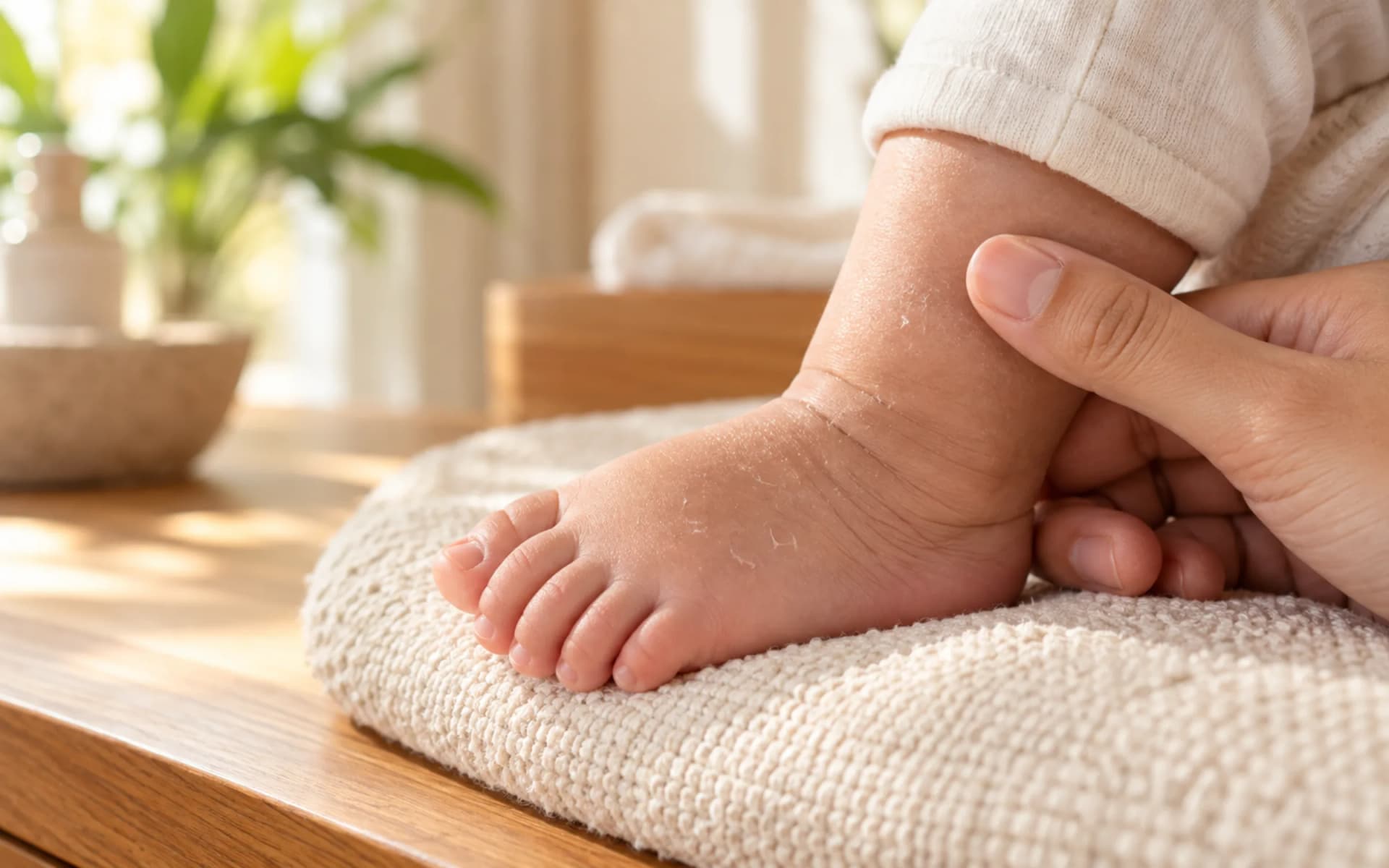
Her cheeks feel papery, there are flakes on her shins, and you have started wondering what you did wrong.
Nothing. Baby skin is thinner than yours and loses water faster. Even in a humid country it dries out, mostly indoors, where the air-conditioning runs for hours.
Most dryness in babies is ordinary and easy to fix. A smaller share is eczema, which is a different problem, and knowing which one you are looking at is the useful first step.
Why does baby skin get dry?
Newborn peeling is something else entirely. Your baby arrived coated in vernix, the waxy layer that protected the skin in the womb. As it wears off, the skin underneath flakes, especially on the hands and feet. It settles within a few weeks and needs nothing from you.
Air-conditioning is the usual ongoing cause in Malaysian homes. Cooled air is dry air, and a baby sleeping under the aircon all night loses water from her skin for hours.
Long or hot baths strip the skin's natural oils faster than they are replaced.
Strongly scented soaps and detergents, on her skin or on her clothes.
What does it look like?
Rough or scaly patches, a dull look, peeling, chapped cheeks, or redness on the face, neck, knees, elbows or ankles.
When it is eczema instead
Eczema itches. That is the clearest difference.
It comes in patches with blurry edges, usually on the cheeks and scalp in young babies and in the creases of the elbows and knees later. It flares and settles instead of steadily improving, and your baby will rub or scratch at it.
Plain dryness usually improves within days of regular moisturising. Eczema needs a doctor, and often a prescribed cream, because a moisturiser alone will not keep it under control. Your klinik kesihatan or GP can tell the two apart.
What helps
Shorter baths. About 10 minutes, in warm water. Pat dry gently instead of rubbing.
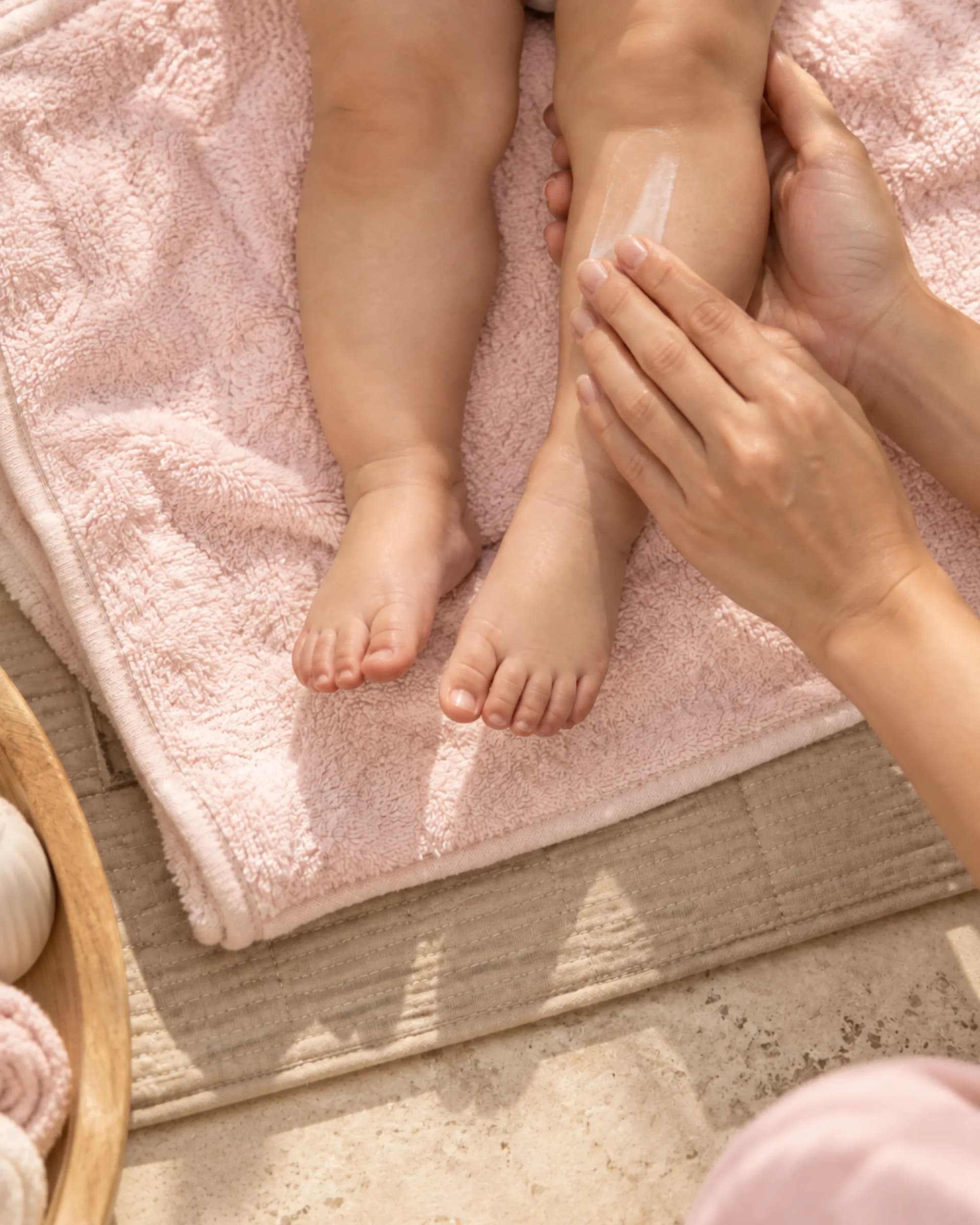
Moisturise while she is still slightly damp. Within a few minutes of the bath. That locks in the water already in the skin, which is most of what a moisturiser does.
Fewer drying ingredients. Look for a short ingredient list and no drying alcohol. "Natural" does not automatically mean gentler; several plant extracts are common irritants, so patch test anything new.
Change the air, not her drink. Babies under 6 months should not be given water. Breast milk or formula covers all their fluid needs, even in hot weather, and extra water can fill a small tummy and displace feeds. Small sips of water come in alongside solid food from around 6 months. Dry skin is about the air, the bath and the moisturiser. If the aircon runs all night, set it a little warmer, or use a fan.
Choosing a cream
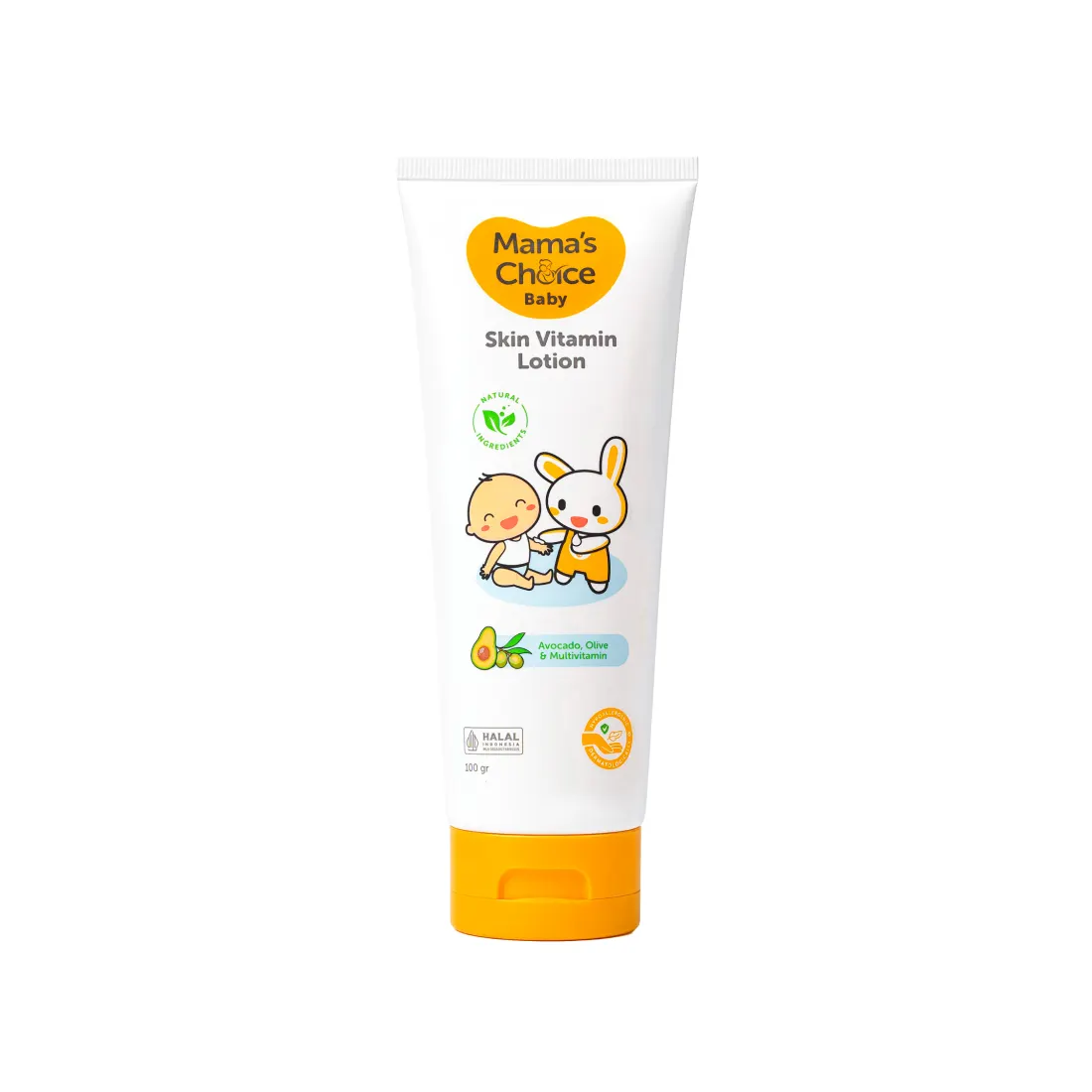
Mama's Choice Baby Body Cream moisturises and softens your baby's skin and helps protect it from dryness, after a bath, a swim or a night in air-conditioning. It is made with avocado, olive and sweet almond oils, shea butter, niacinamide and vitamin E, and absorbs quickly without feeling greasy. In a Mama's Choice use test with 29 mothers in Indonesia (2022), all 29 agreed it helps moisturise their baby's skin, and 97% said it felt softer.
It is dermatologically tested and made without parabens or drying alcohol. It has a light scent from sweet orange peel oil, so if your baby's skin reacts easily, patch test it first.
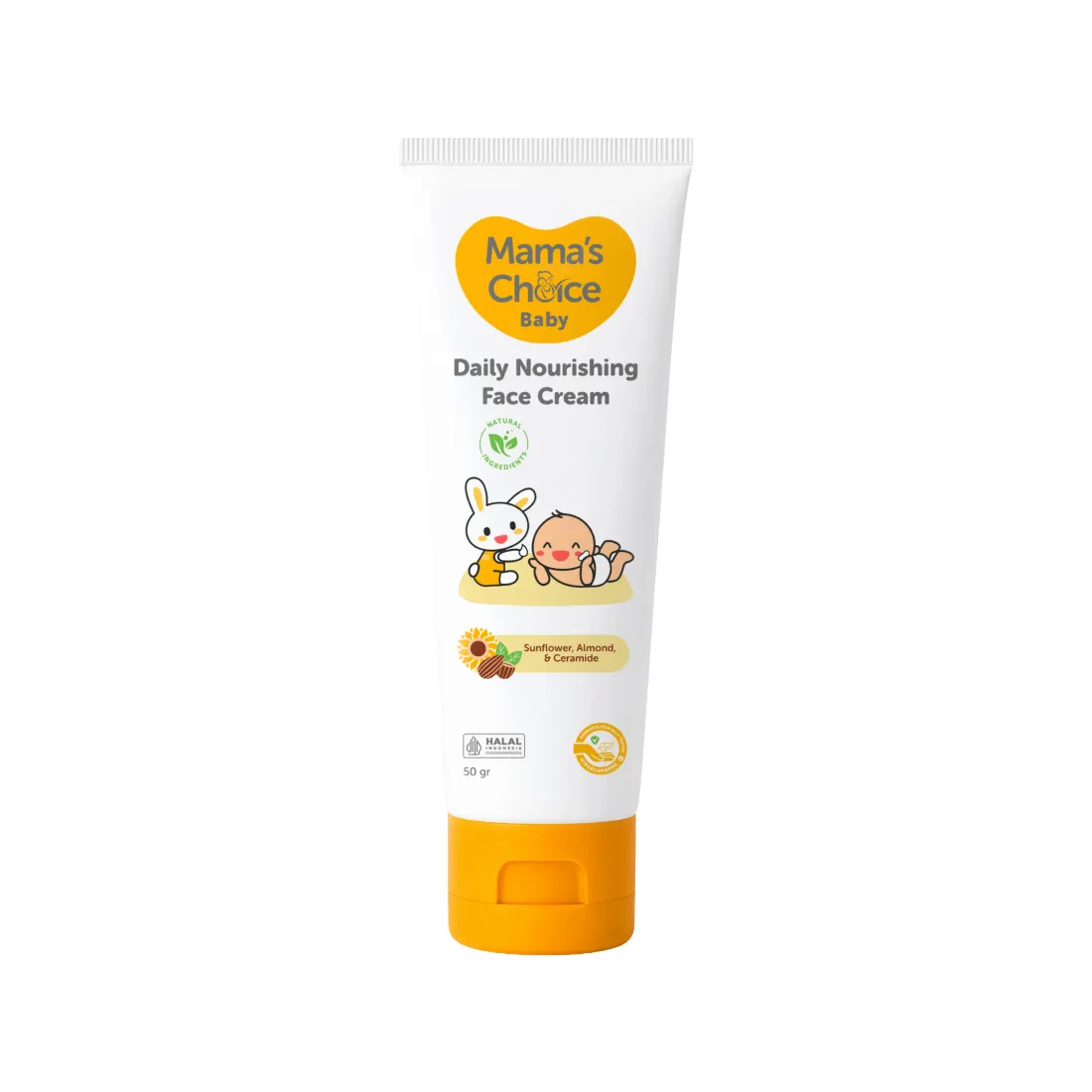
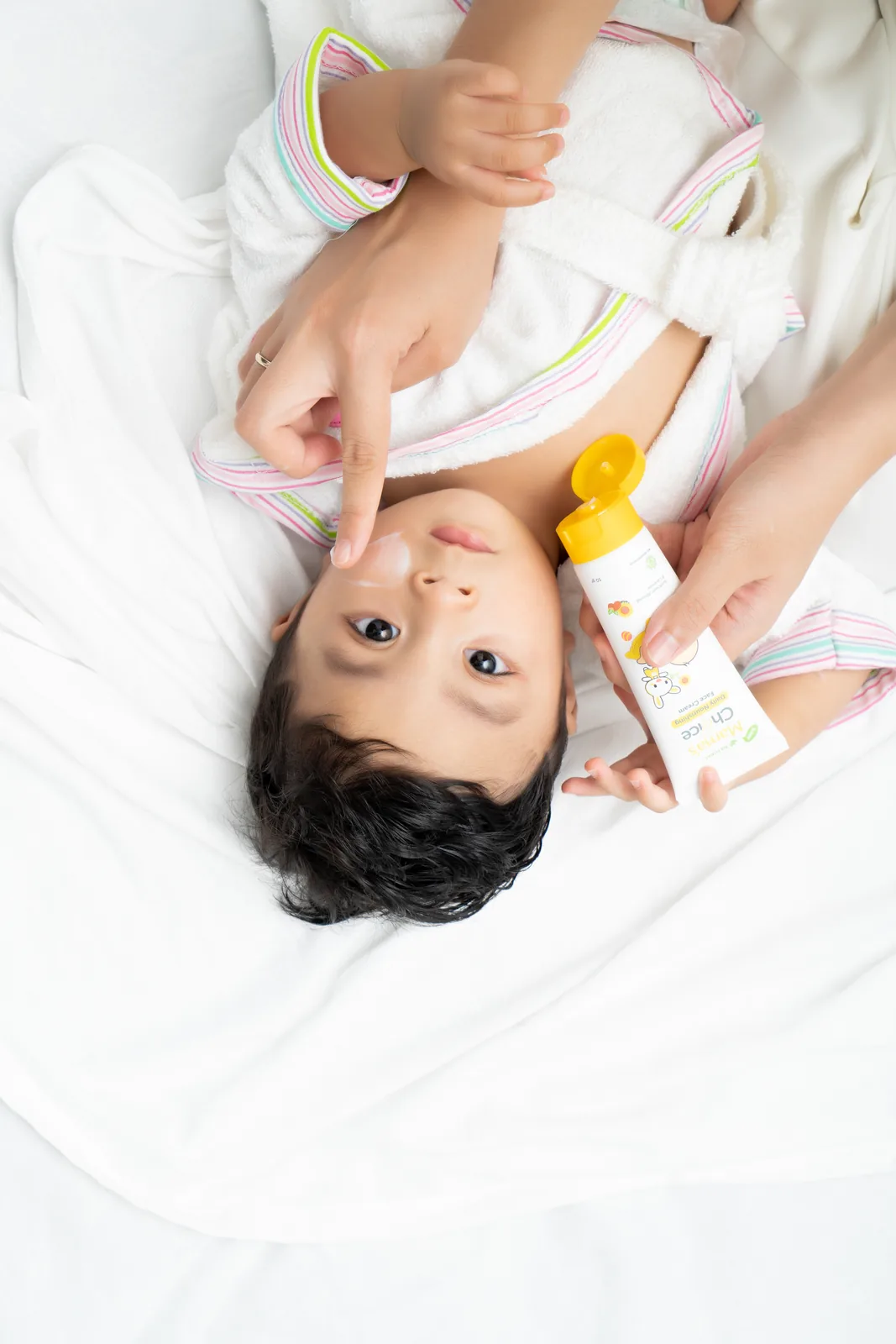
Use it twice a day over the arms, body and legs. For the face, Mama's Choice Daily Nourishing Face Cream moisturises dry, rough cheeks, with ceramide and centella asiatica to help maintain the skin's moisture barrier.
Patch test first
Anything new goes on a small patch of the inner arm and waits a day or two before it goes anywhere else. That includes our creams.
Bathing without drying her out
The bath is where most dryness starts, and where it is easiest to fix.
Warm, never hot. Test the water with your elbow or the inside of your wrist, which are more sensitive than your hand.
About ten minutes is plenty. Longer, and the water starts drawing oils out.
Plain water is often enough for a newborn. A mild baby wash a few times a week does the rest.
Skip bubble bath. Foaming cleansers sitting against the skin for ten minutes dry it out, whatever the label says.
Pat, then moisturise straight away, while she is still slightly damp.
What about oils?
Coconut, olive and almond oils are all handed down for baby skin, and they behave differently.
Oil seals the surface. It adds no water. Oil on its own over dry skin does less than you expect; a cream on damp skin does more.
Some research suggests that neat olive oil, rubbed on alone, may weaken the skin barrier in babies instead of supporting it. If you like using an oil for massage, put it over a moisturiser, and patch test first.
When to see a doctor
- No better after a week or two of regular moisturising
- Itchy enough to wake her
- Cracks that weep, bleed or crust yellow
- Redness that spreads, or skin that feels hot
- A rash with a fever, or with poor feeding
Any of these is worth a visit to your klinik kesihatan or GP. For bath time itself, see our guide to bathing a newborn.
Sources
Share this article
This article is for information only and is not a substitute for diagnosis or medical advice. Please talk to your doctor about your own situation.