Can you use a face serum during pregnancy?
Yes, with a short list of ingredients to leave out. Which ones doctors advise against, which are only precautions, and what to reach for instead.
Yes, you can keep using a serum. You just need to read the back of the bottle now.
The list of ingredients worth leaving out is shorter than most people think, and it is not quite the list going round on social media.
Why your skin has changed
Pregnancy hormones, extra blood flow and changes in your immune system all show up on your face. Breakouts and darker patches are the most common.
For most women both are temporary and settle after the birth. That makes caring for them a matter of comfort rather than urgency, which is worth remembering when a product promises to fix everything by next week.
Ingredients doctors advise leaving out
Retinoids and retinol. These vitamin A ingredients are popular for breakouts and fine lines. Isotretinoin tablets cause birth defects and are never used in pregnancy. Creams are absorbed far less, but ACOG and most doctors still advise stopping them while you are pregnant, as a precaution. On a label, look for retinol, retinyl palmitate, retinaldehyde, tretinoin and adapalene.
This is the firmest advice on this page.
High-strength salicylic acid. Small amounts in a cleanser you rinse off are generally considered fine. Leave out leave-on products above 2%, and peels.
Phthalates. Chemicals used to carry scent in fragrance blends, sometimes named as diethyl phthalate or dibutyl phthalate, though usually hidden inside the word "fragrance". Exposure before birth has been linked to effects on hormone development, which is a good argument for fragrance-free.
Hydroquinone. Used to lighten dark patches. There is no clear evidence that it harms a baby, but Bozzo and colleagues note that 35% to 45% of it is absorbed through the skin. That absorption is why doctors usually say leave it until afterwards. In Malaysia hydroquinone and tretinoin are not allowed in cosmetics at all, and NPRA has cancelled the notification of creams found to contain them. Be wary of "brightening" creams sold without a clear label.
Ingredients that are only a precaution
Parabens, alcohol and mineral oil come up on almost every avoid-list.
At the levels allowed in cosmetics they have not been shown to be harmful. Many mothers leave them out anyway, which is a reasonable personal choice while the evidence is still being gathered. It belongs in a different category from retinoids, though, and mixing the two makes the whole list harder to take seriously.
What to use instead
Niacinamide, a form of vitamin B3, is the usual stand-in for retinol. It helps skin look more even and brighter and is generally considered fine in pregnancy.
Hyaluronic acid holds water in the skin and is well tolerated.
Bisabolol, from chamomile, helps skin that has turned reactive feel calm and comfortable.
Vitamin C helps skin look brighter and is a gentler choice than the stronger lightening ingredients.
Introducing a new serum
Your skin is more reactive now, so reactions are more common than they used to be.
- Patch test on your inner arm for a day or two
- Add one new product at a time
- Apply to clean, slightly damp skin
- Follow with moisturiser, and sun protection in the morning
- Stop if redness, heat or itching appears
Cleanser and sun protection come first
A serum sits between two steps that matter more. A gentle cleanse keeps reactive skin calm, and daily sun protection keeps dark patches from deepening. No serum keeps up with dark patches if your skin meets the Malaysian sun unprotected every day.
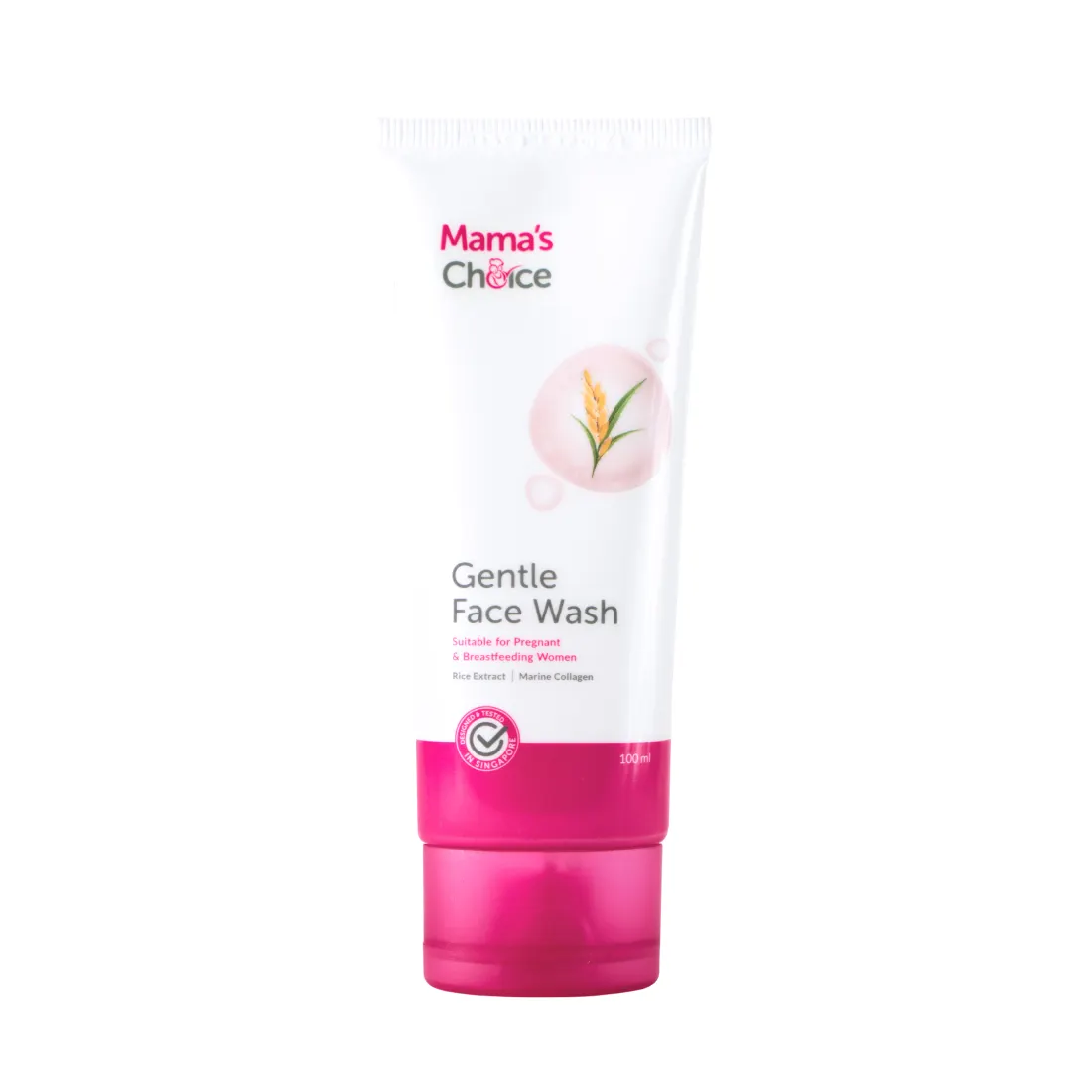
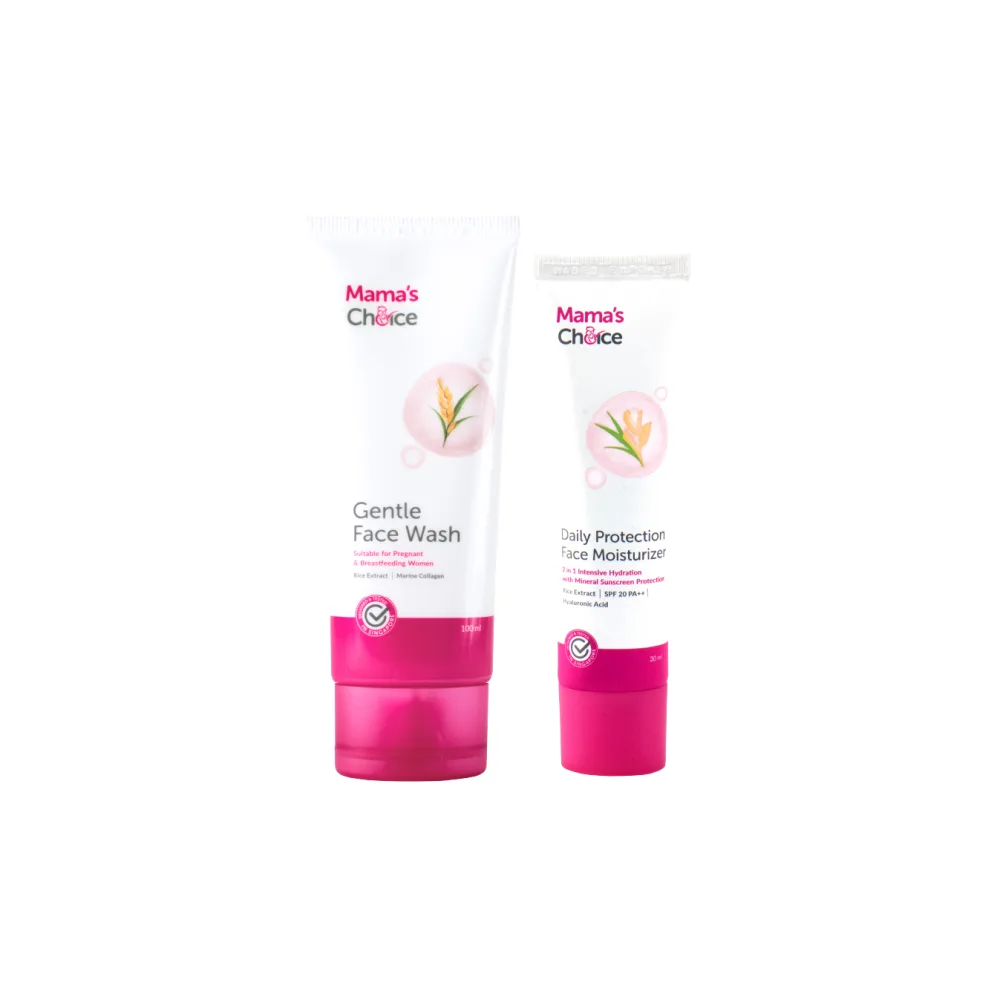
Mama's Choice Gentle Face Wash already contains niacinamide, along with rice extract and hydrolysed collagen, in a soft gel made without sulfates or fragrance. It leaves your face clean, soft and comfortable. In a Mama's Choice satisfaction survey of 128 mothers in Indonesia (2022), 96% said their skin felt more moisturised and softer, and 83% said it looked brighter.
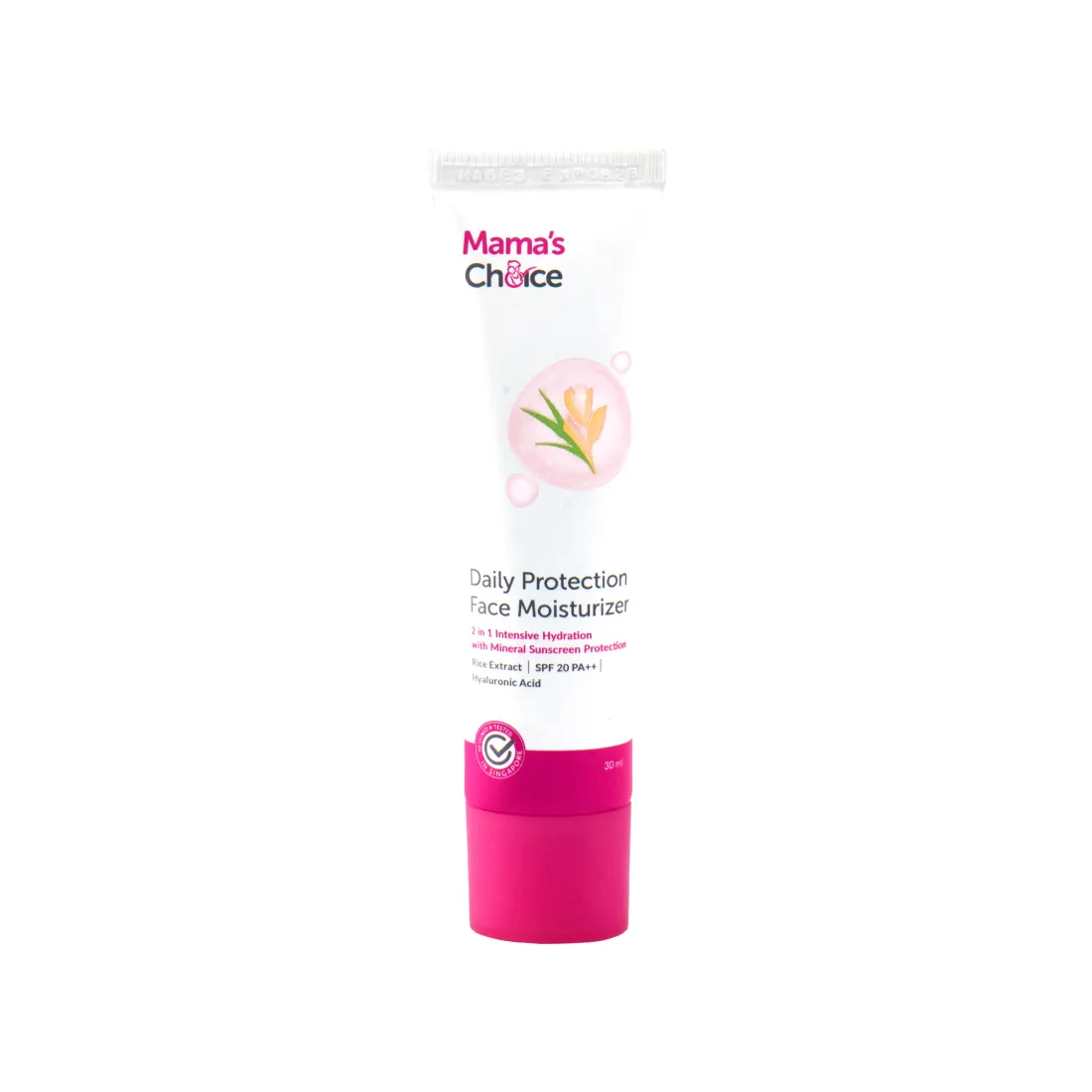
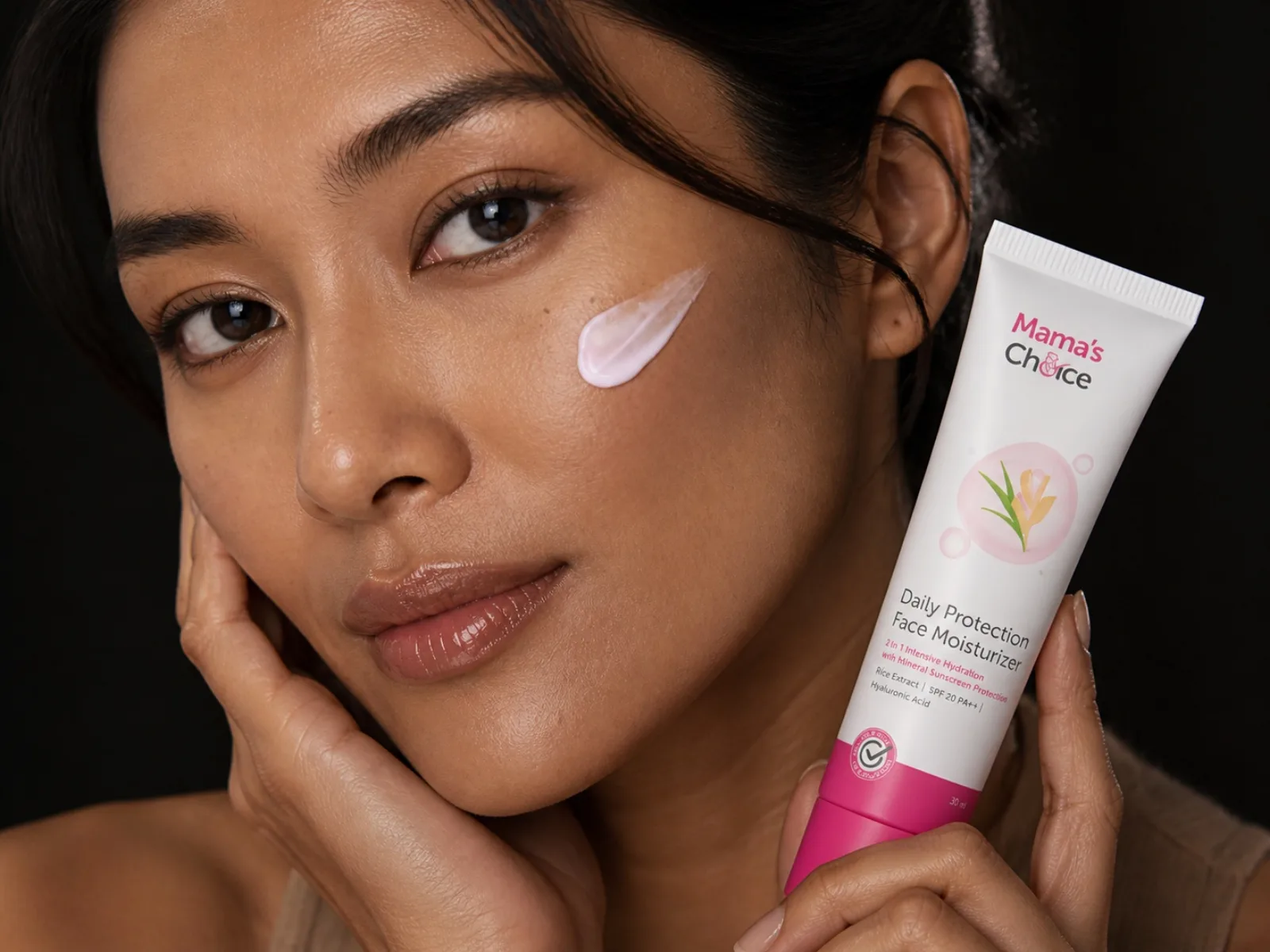
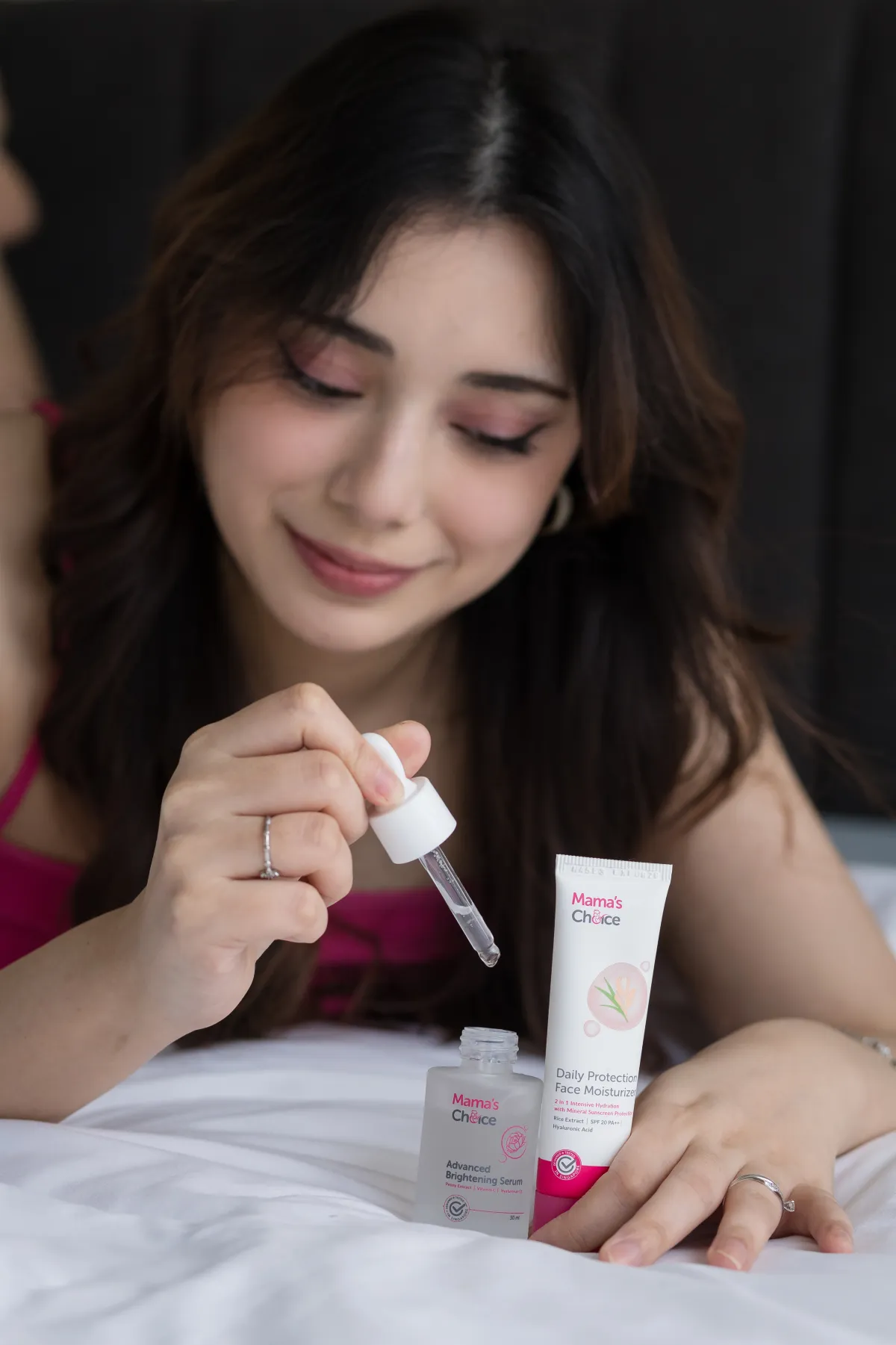
Daily Protection Face Moisturizer SPF 20 PA++ moisturises with hyaluronic acid and rice extract and helps protect skin against UVA and UVB with zinc oxide and titanium dioxide. Apply it after your serum in the morning. SPF 20 PA++ is medium protection, so reapply when you are out, and do not stay too long in the sun even while using a sunscreen product.
Both are formulated for pregnancy and breastfeeding and halal certified by BPJPH, Indonesia. Together they make the 2 in 1 Face Care Package. Full ingredient lists are in our ingredient dictionary.
Ask a doctor rather than a label
- If your acne is bad enough that you would want a prescription
- If you were using a prescribed skin cream before pregnancy and are unsure about carrying on
- If a rash is spreading or itching intensely
- If you have severe itching with no rash, especially on your palms and soles. It can be a sign of intrahepatic cholestasis of pregnancy and needs checking the same day at your klinik kesihatan or hospital
Stopping a prescribed medicine without asking can cause problems of its own. That question belongs with the doctor who prescribed it.
Sources
Share this article
This article is for information only and is not a substitute for diagnosis or medical advice. Please talk to your doctor about your own situation.