
Hair care under a hijab and how to avoid breakage
Covered hair spends Malaysian days warm and often damp. What that does to hair and scalp, how to reduce breakage, and the habits that matter most.
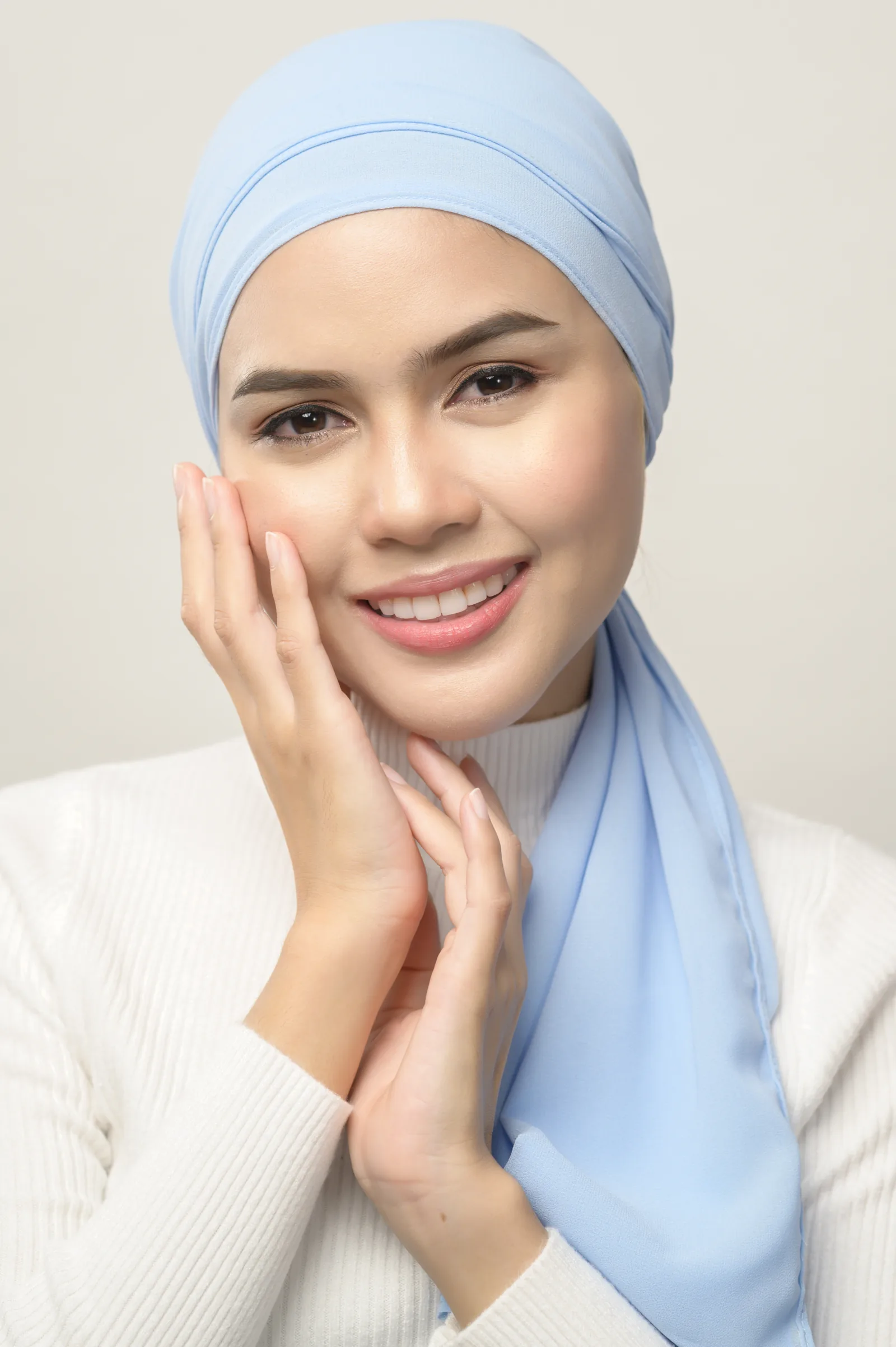
Under a tudung, your hair spends most of a Malaysian day warm, still and sometimes not quite dry.
None of that damages hair by itself. It does make a few everyday habits matter much more than they otherwise would.
What actually causes the damage?
Tying it too tightly. The most common cause and the easiest to avoid. Constant pulling on the hairline can lead to traction alopecia, hair loss from tension. Caught early it usually recovers; left for years it can become permanent.
Covering damp hair. Hair is at its weakest when wet, and a warm, damp scalp under fabric all day is where itching, flaking and fungal problems start. In this humidity, hair also takes longer to dry on its own.
Friction. Fabric rubbing the same section again and again roughens the outer layer of the hair, and that is what makes lengths snap.
Heat. Mostly from the hairdryer you use to get dry quickly before covering, more than from the tudung itself.
Notice what is missing from that list: covering your hair. Hair does not need daylight or a breeze to be healthy.
Habits that help
Loosen how you tie it. A low, loose bun or a soft plait, held with a fabric scrunchie instead of a tight elastic. Move where the tie sits from day to day so the same patch is not always under strain. A headache when you take your hair down means it was too tight.
Dry it fully before covering. The single most useful habit here. If you are short of time in the morning, dry the roots on a cool setting. That beats covering damp hair.
Choose gentle products. A mild shampoo that does not leave your scalp tight, and conditioner on the lengths only. Strong perfume can be hard to bear in the first trimester, when your sense of smell is sharper. Shampoo on the scalp and conditioner on the ends does more than which brand is on the bottle.
Use less heat. Lower setting, start earlier, and let the last bit dry in the air at home when you can.
Inner caps, fabrics and layers
Breathable inner caps. A cotton or bamboo anak tudung absorbs moisture. A tight synthetic one holds it against your scalp.
Satin or silk linings reduce friction on the lengths, which helps with breakage even though it does nothing for the scalp.
Fewer layers on hot days. A sweaty scalp under two synthetic layers is where the itching begins.
Swap and wash inner caps often. They hold sweat and oil, so treat them like underwear and wash them after each long day.
Breakage or shedding?
They are two different problems with two different answers.
Breakage happens along the hair shaft, from tension, friction and dryness. The broken pieces are short, often with blunt or split ends. Everyday hair care can help with breakage.
Shedding from the root after having a baby is driven by hormones. It usually starts a couple of months after the birth, peaks around four months and settles by itself within the first year. Your hair is not falling out for good; it is catching up on the shedding that pregnancy delayed. Our article on postpartum hair loss explains more.
If the thinning sits along your hairline instead of across your whole scalp, that points to traction, and loosening your styles is the fix.
Scalp care
- Wash often enough that sweat and oil do not build up. In Malaysian heat, that may mean more often than you were used to
- Massage gently with your fingertips while washing to lift residue
- Dry thoroughly, especially at the nape, where damp lingers
- Let your scalp breathe at home when you can
Itching, flaking or soreness that keeps coming back is worth showing to a doctor before you try yet another shampoo.
When to see a doctor
- Thinning along the hairline
- Round bald patches instead of even thinning
- A scalp that is red, scaly, sore or oozing
- Heavy shedding that continues a year after the birth
- Hair changes along with heavy tiredness, palpitations or unexplained weight change, which can point to thyroid problems or anaemia
Your klinik kesihatan or GP can check these, and refer you to a dermatologist if needed. Traction alopecia responds well to changes made early and much less well once the hair roots are damaged, so the hairline is the part to keep an eye on.
Sources
Share this article
This article is for information only and is not a substitute for diagnosis or medical advice. Please talk to your doctor about your own situation.