Nine skin changes in pregnancy and what to do about them
Stretch marks, dark patches, breakouts, veins, itching and the linea nigra. What each skin change in pregnancy is, and which ones need a doctor.
Nobody hands you the list, so you find each change in the mirror and wonder whether it is normal.
Almost all of it is, and most settles after the birth. A few changes are worth acting on, and a small number are not about your skin at all.
The nine
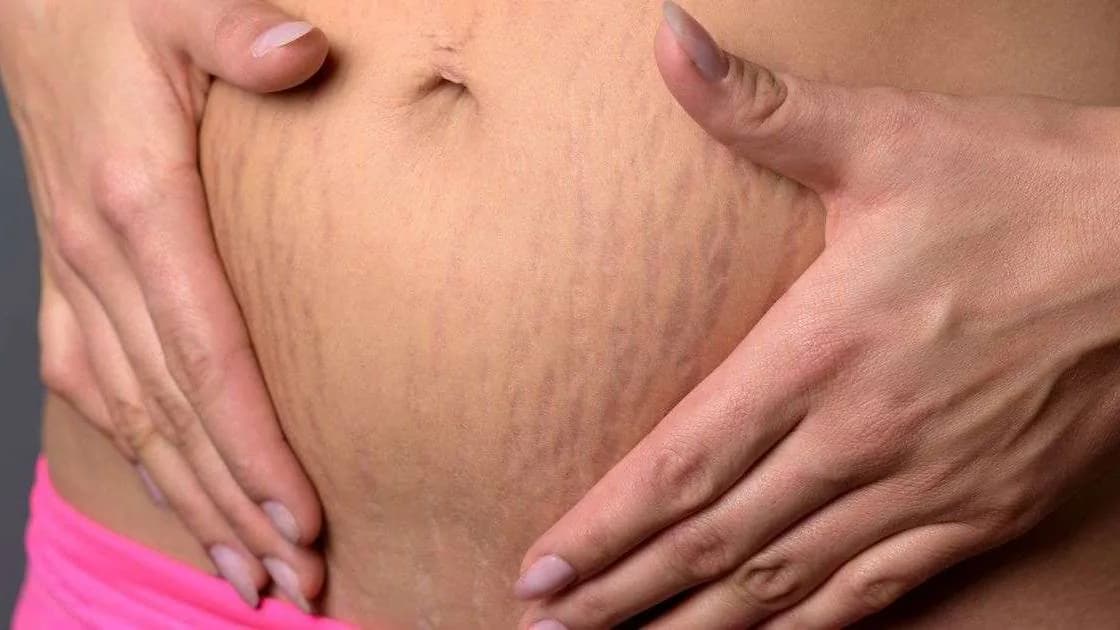
Stretch marks. Lines where skin stretched faster than it could adapt, affecting around 8 in 10 pregnant women according to the NHS. Red or purple at first, fading to silvery white over six to twelve months. Daily moisturising keeps the skin soft and comfortable, though your genes decide a lot.
Dark patches on the face. Uneven brown patches on the forehead, cheeks and upper lip, often called the mask of pregnancy (melasma). Sun is what deepens them, so daily sun protection matters. Most fade after the birth.
The glow. More blood flow and more oil, and some women really do look radiant. Enjoy it, and know that women who feel dull and tired instead are just as normal.
Breakouts. More oil and more sensitive skin. Wash gently twice a day. Niacinamide and azelaic acid are generally considered fine. Leave out retinoids and high-strength salicylic acid.
Varicose veins. Swollen, twisted veins, usually in the legs, from the extra blood volume and the pressure of your womb on the veins. Keep moving, avoid standing still for long, rest with your legs raised, and ask your doctor about compression stockings.
Spider veins. Fine red lines just under the skin of your face, neck or legs, from the same extra blood flow in smaller vessels. Harmless, and they usually fade.
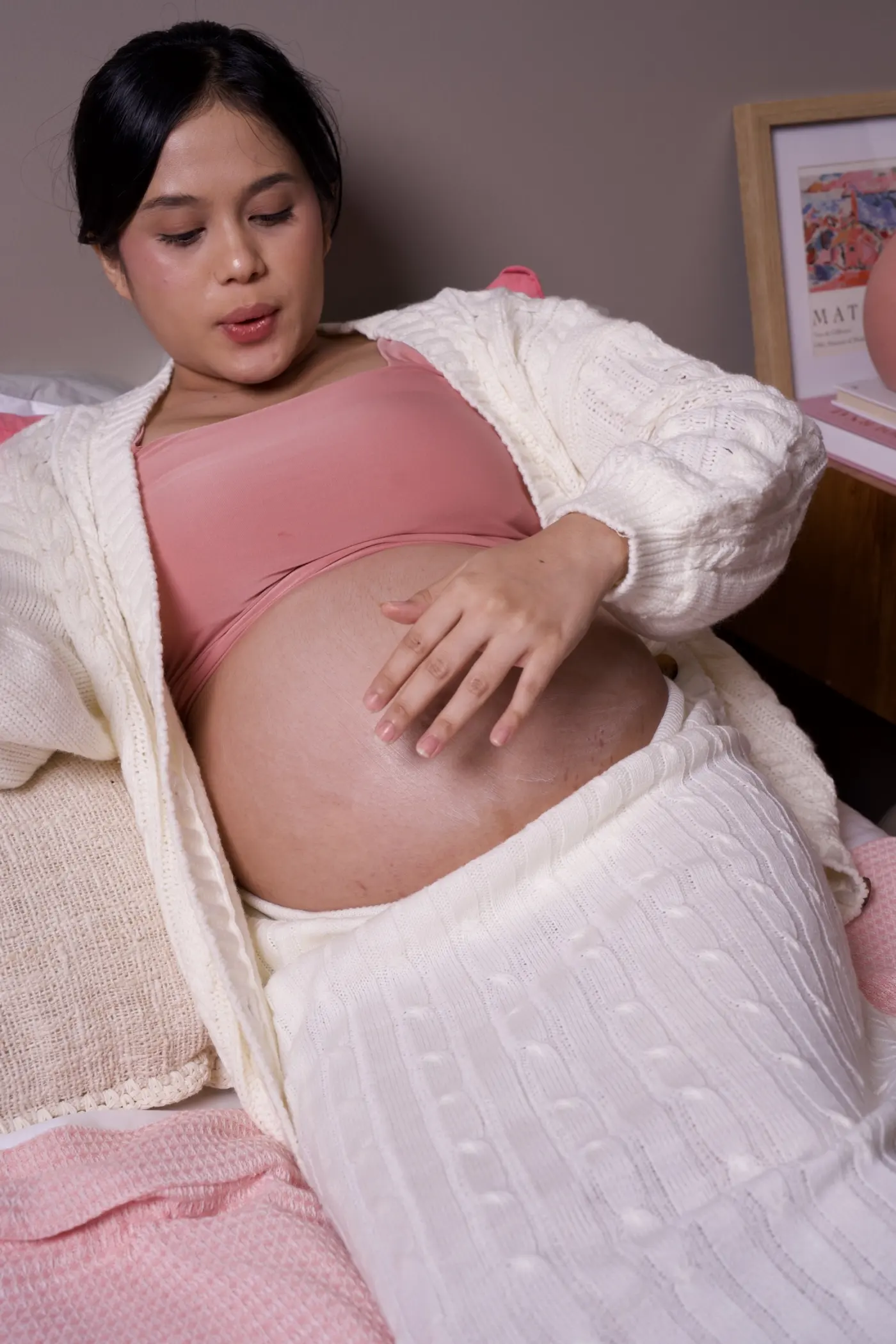
An itchy belly. Stretching skin plus dryness, made worse by heat and sweat. Moisturise while your skin is still damp, wear loose cotton, and try not to scratch.
Linea nigra. The dark line down the middle of your belly, from the same pigment change as the patches on your face. Harmless, it fades after the birth, and no, it does not predict your baby's sex. More in our guide to linea nigra.
Darker spots and areas. Moles and freckles darkening, along with your nipples, underarms and inner thighs. Sun protection helps here too.
When each one tends to start
| Change | Usually starts |
|---|---|
| Breakouts | First trimester, with the earliest hormone shifts |
| Dark patches on the face | Second trimester, deepening with sun |
| Linea nigra | Around 20 weeks |
| Stretch marks | Second and third trimesters |
| Varicose and spider veins | From the second trimester, as blood volume rises |
| Itching | Third trimester, as the bump grows fastest |
Knowing roughly when something is due makes it easier to tell an ordinary change from one worth asking about at your next klinik kesihatan visit.
What settles, and what does not
Goes on its own: dark patches on the face, the linea nigra, spider veins, pregnancy breakouts, and the itch once the stretching stops.
Goes partly: stretch marks fade from red to silver but rarely vanish. Varicose veins usually improve a lot without disappearing.
Often stays: nipples and areolas tend to stay darker, and hair texture sometimes changes for good after the shedding that follows birth.
None of the lasting changes needs fixing. It is simply what a body looks like after carrying a baby.
A routine that covers most of it
Sun protection every morning. This is the most useful step for every colour change on this list, and in Malaysia it applies all year.
Moisturiser on damp skin, morning and night, on your belly, breasts, hips and thighs.
Movement and rest with your legs raised, which is what veins respond to.
What to keep at home
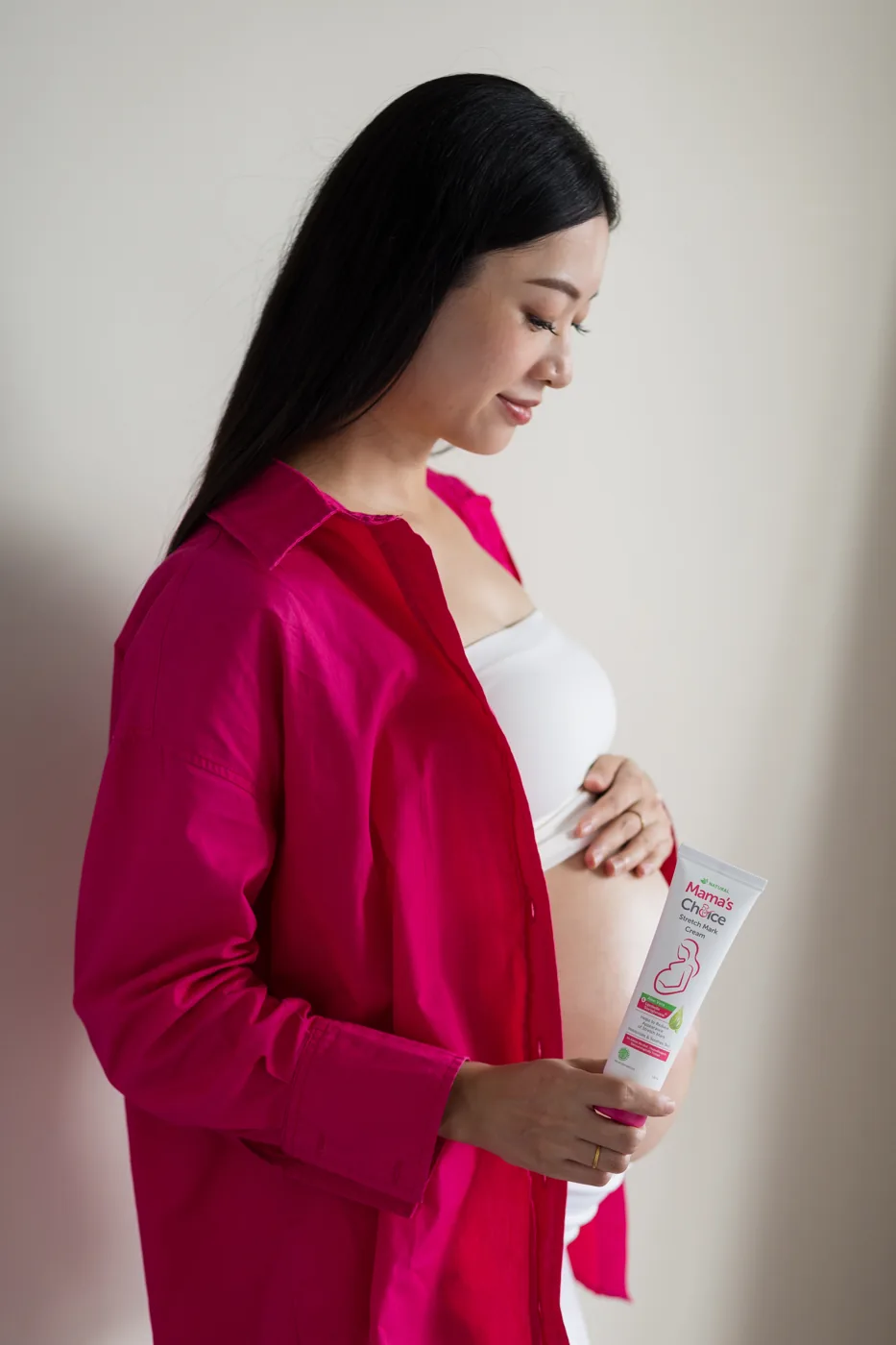
Mama's Choice Stretch Mark Cream for your belly, breasts, hips and thighs. It deeply moisturises, soothes the dry, tight feel of a growing bump and helps prevent stretch marks. It feels cool and sinks in quickly, which makes it easy to keep up in the heat.
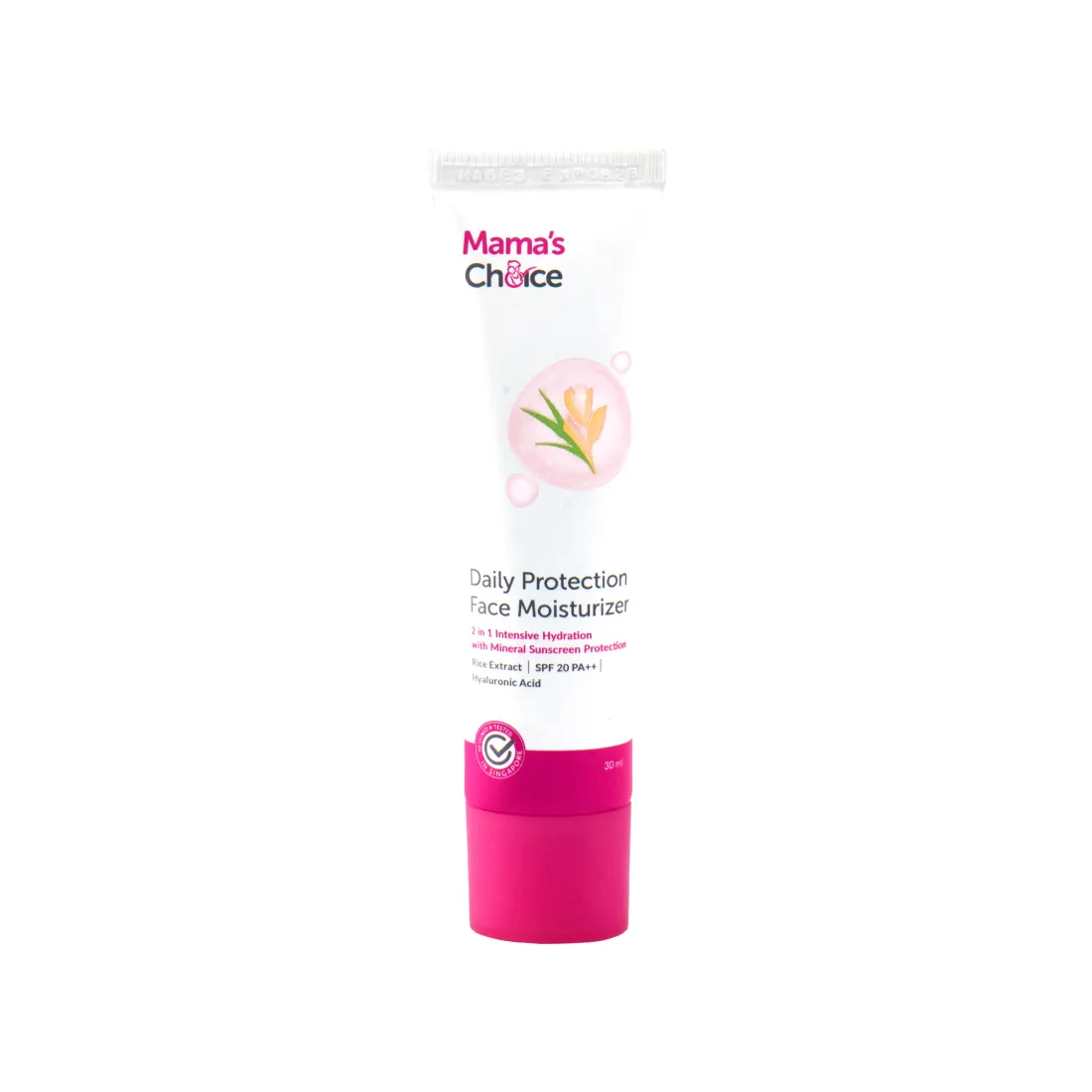
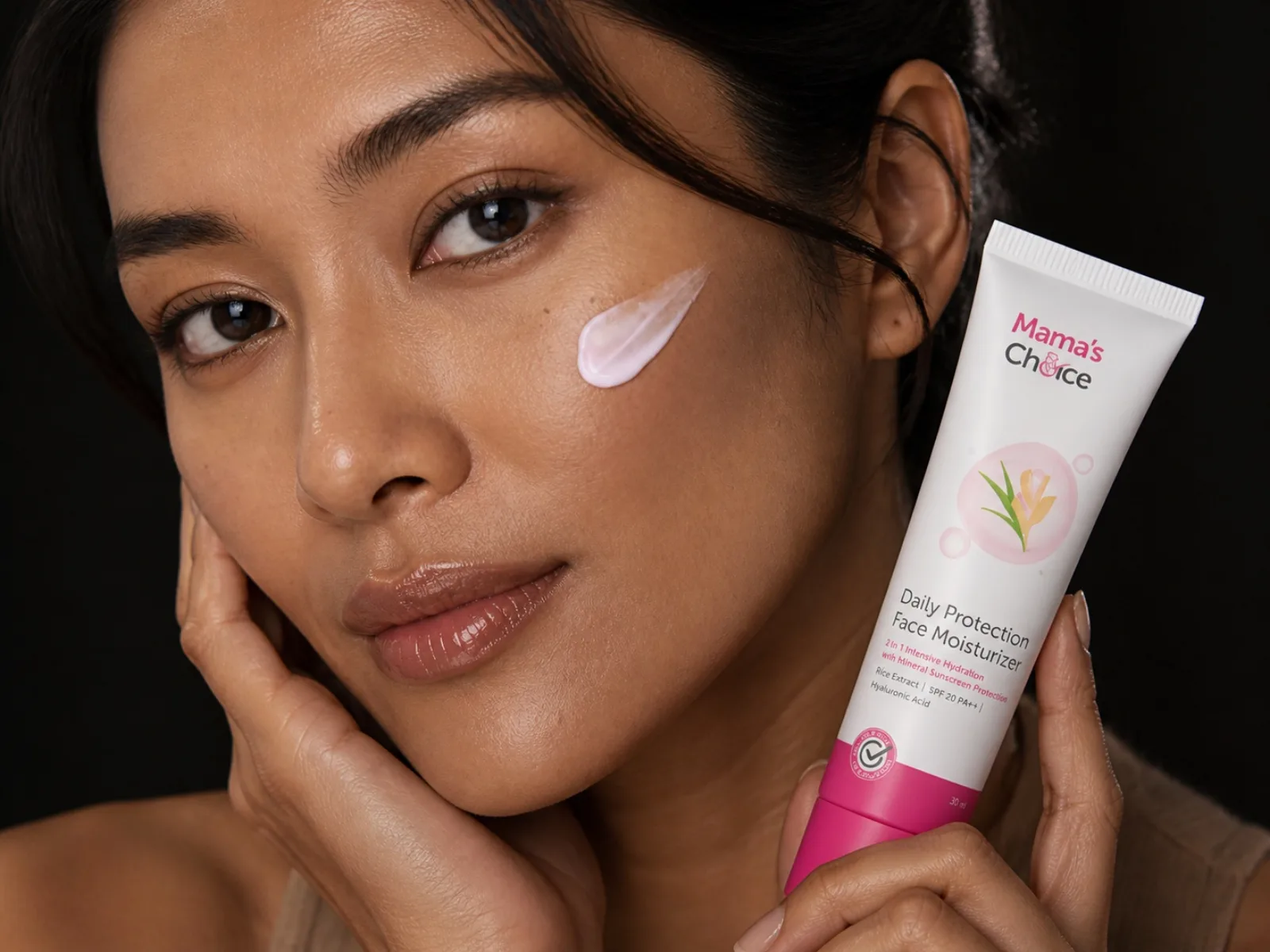
Daily Protection Face Moisturizer SPF 20 PA++ for your face, a moisturiser and mineral sun protection in one morning step. In a Mama's Choice satisfaction survey of 103 mothers in Indonesia (2022), 95% said their skin felt more moisturised and softer. SPF 20 PA++ is medium protection, so reapply when you are out, and do not stay too long in the sun even while using a sunscreen product.
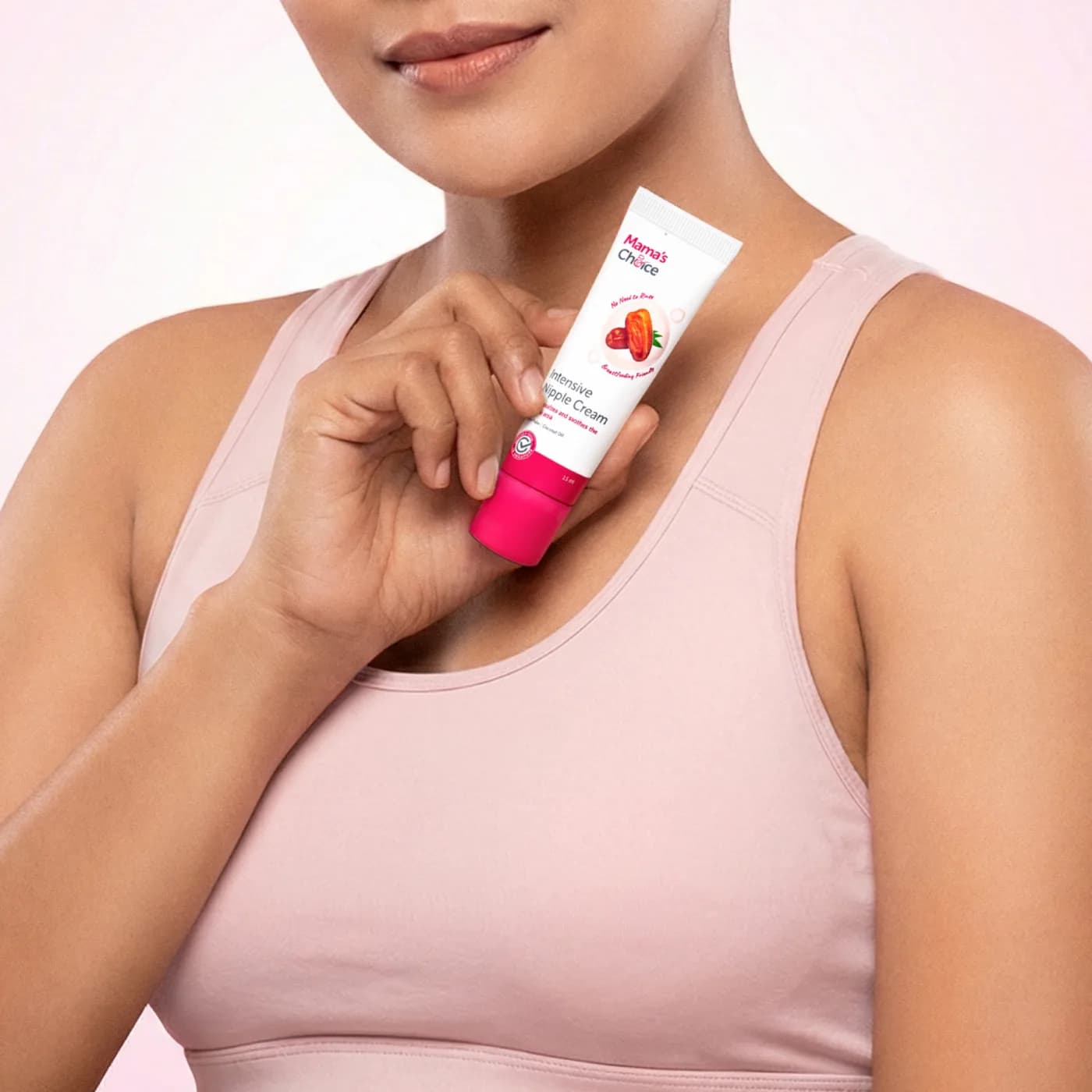
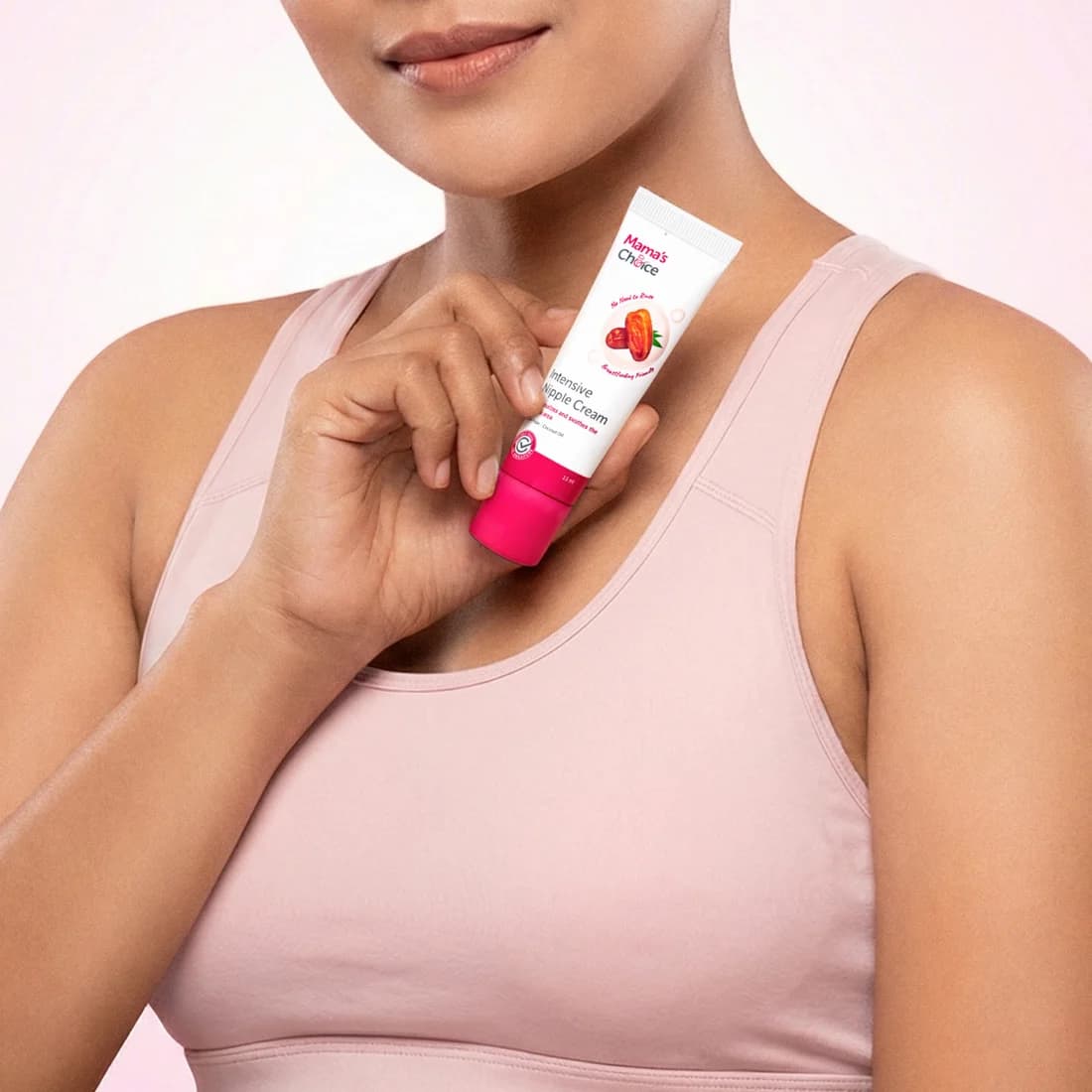
Intensive Nipple Cream for later, when your nipples become the part that needs looking after. It moisturises and protects nipple skin, and you do not need to wipe it off before a feed.
Each is formulated for pregnancy and breastfeeding and halal certified by BPJPH, Indonesia.
The ones that are not about your skin
Most of this page is about comfort. These are not:
- Severe itching with no rash, especially on your palms and soles and worse at night
- A vein in your leg that is hard, hot, red or painful, or a leg that is suddenly swollen
- Swelling of your face and hands with a severe headache, problems with your vision, or pain just below your ribs
The first can be intrahepatic cholestasis of pregnancy. The second can be a blood clot. The last can be pre-eclampsia. Each needs to be seen the same day at your klinik kesihatan or hospital. If you feel very unwell, call 999.
Sources
Share this article
This article is for information only and is not a substitute for diagnosis or medical advice. Please talk to your doctor about your own situation.