Nipple care while breastfeeding in the early weeks
Sore nipples in the early weeks are common and usually mean the latch needs adjusting. Daily care, what to avoid, and when to get help in Malaysia.
Some tenderness in the first few days is normal. Pain that lasts through every feed is different. It is telling you something specific, and it is fixable.
What is the pain telling you?
The most common cause of sore nipples is a shallow latch.
A baby who takes only the nipple, instead of a big mouthful of breast and areola, squeezes it against the hard palate. That hurts, and it moves less milk, so your baby feeds for longer and the soreness builds.
Signs the latch needs work:
- Pain right through the feed, beyond the first few seconds
- A nipple that comes out flattened, creased or shaped like a new lipstick
- Clicking sounds while your baby feeds
- Long feeds with a baby who never seems satisfied
One session with a lactation consultant sorts out most of this. Many government hospitals in Malaysia have a lactation or breastfeeding clinic, your klinik kesihatan nurses can watch a feed, and there are private certified lactation consultants (IBCLC) in most cities. Waiting rarely helps, and damaged skin makes each feed harder than the last.
Daily care
Water only. Your nipples do not need soap. The small Montgomery glands around the areola make an oil that cleans and protects the skin, and soap strips it away.
Let a few drops of milk dry on the nipple after a feed.
Pat dry before your bra goes back on. Damp skin under fabric is where irritation starts, and in Malaysian humidity it stays damp for a long time.
Change breast pads as soon as they are damp, for the same reason.
Let the air get to them when you can, at home with the fan on.
Using a nipple cream
A good nipple cream keeps the skin soft and moisturised so it copes better with eight to twelve feeds a day.
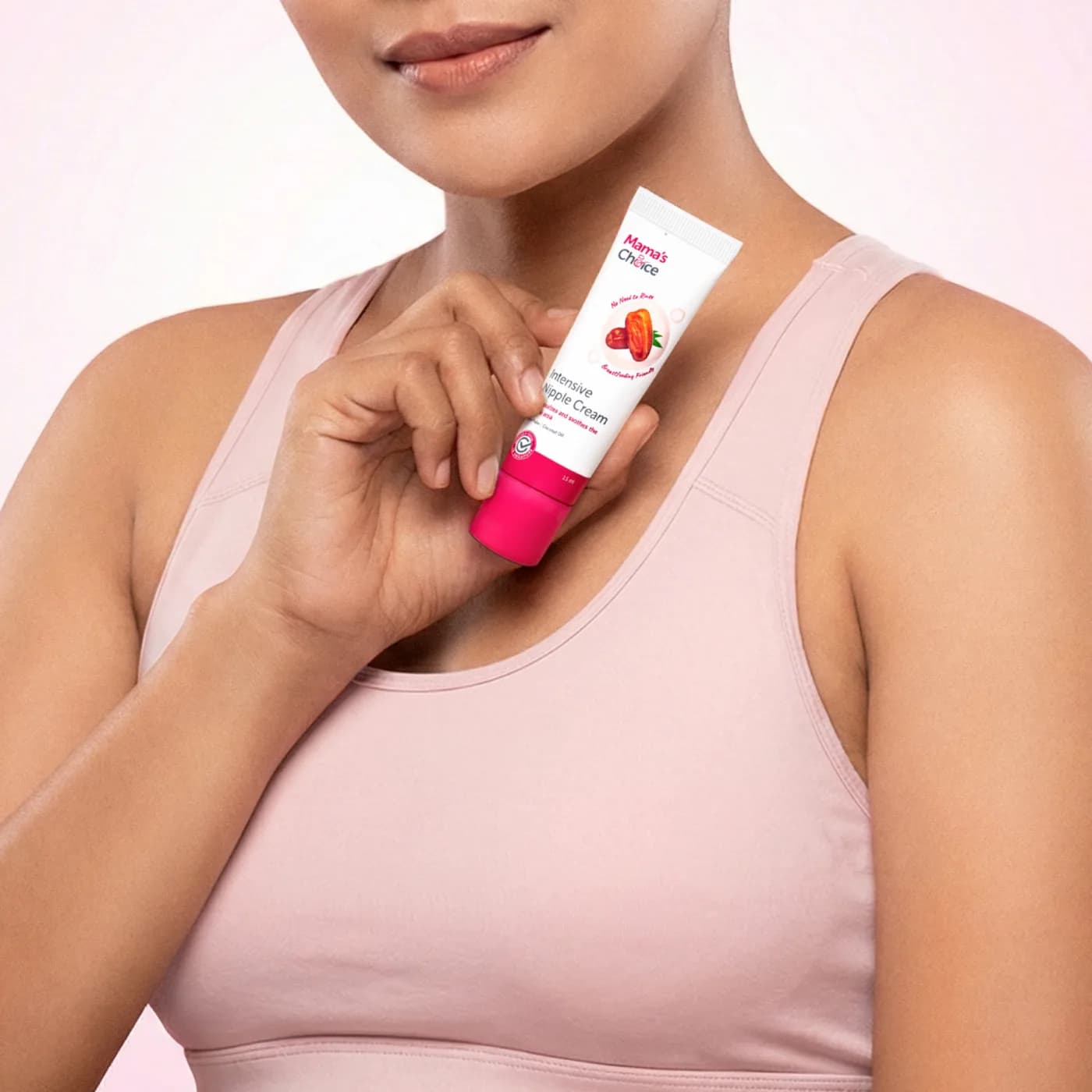
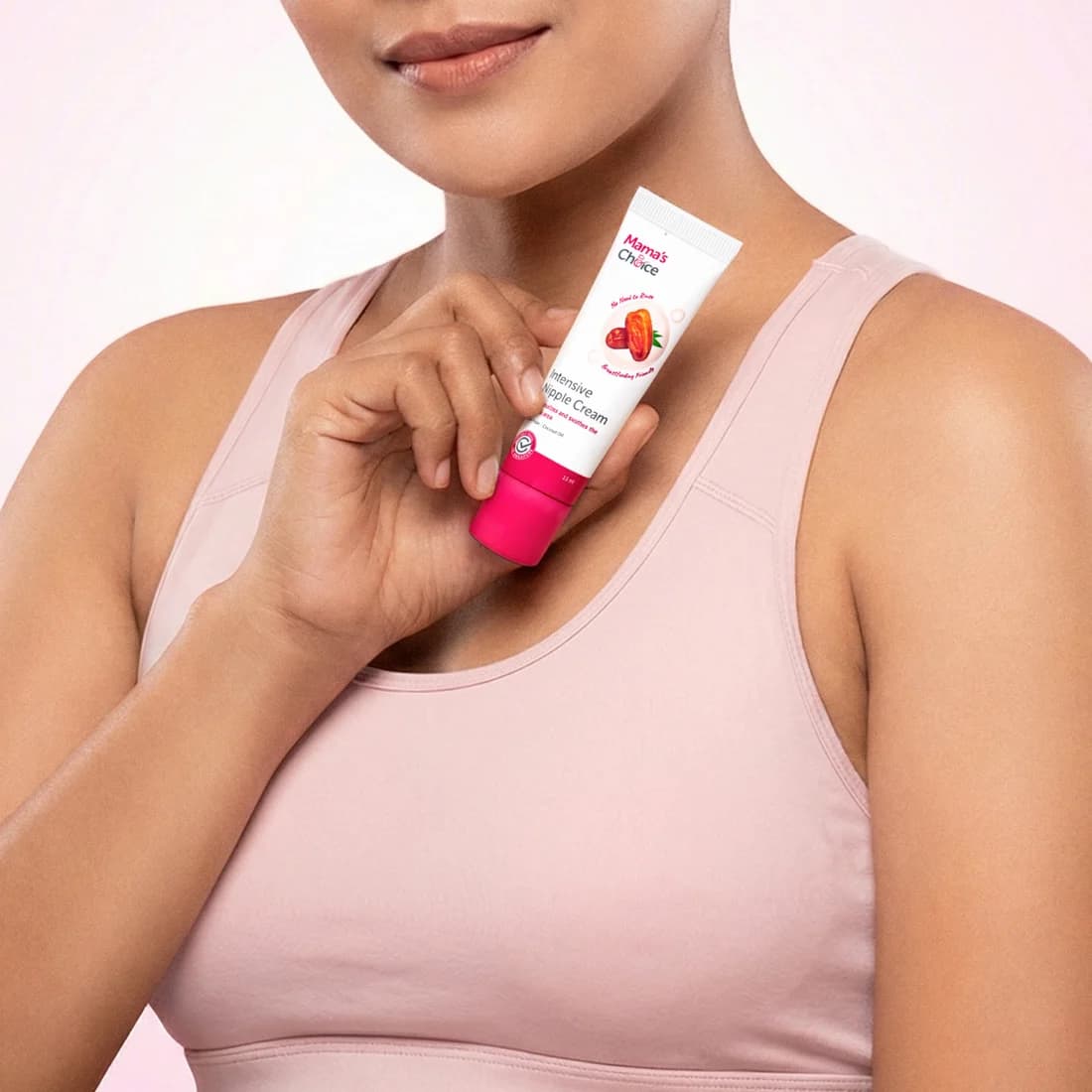
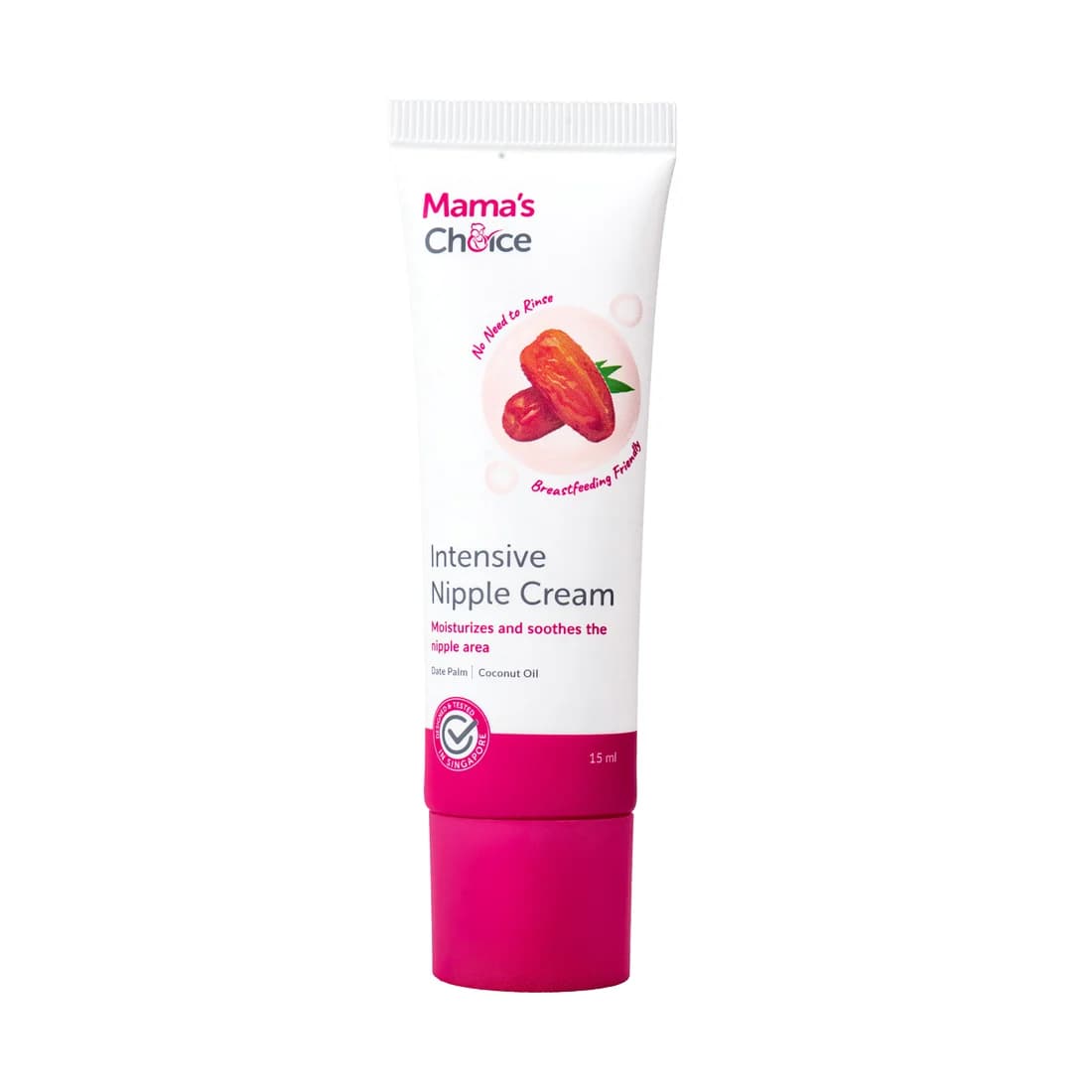
Mama's Choice Intensive Nipple Cream is a rich balm of lanolin, shea butter, coconut oil, vitamin E and date fruit extract. It moisturises and protects nipple and areola skin, helps prevent dryness and helps prevent cracked nipples. There is no need to wipe it off before your baby latches, which matters at 3am. It has no fragrance and no alcohol.
In a Mama's Choice satisfaction survey of 74 mothers in Indonesia (2022), 96% felt dry nipple skin became softer and 92% felt more comfortable while breastfeeding. You can buy it on Shopee.
Smooth a bean-sized amount over the nipple and areola after a feed, and whenever the skin feels dry. It contains lanolin, which comes from sheep's wool, so skip it if you know you react to wool or lanolin. Skin that is already broken or bleeding needs a health professional to look at it and at the latch.
What to avoid
Soap and alcohol-based products on the nipple.
Rubbing dry with a rough towel.
Waiting for broken skin to sort itself out. It usually needs the latch fixed first.
A bra that presses. A cup that is too small squeezes breast tissue all day, and an underwire in the wrong place can sit on a milk duct. A soft, wire-free nursing bra with cups that unclip one-handed makes the whole day easier.
When it is not the latch
Thrush. Burning or shooting pain during and after feeds, sometimes with shiny or flaky skin on the nipple and white patches in your baby's mouth. You and your baby both need treatment at the same time, so see a doctor.
Vasospasm. The nipple turns white after a feed and then throbs. Warmth helps, and it is worth mentioning to your doctor.
Tongue-tie. A tight band under the tongue can stop a deep latch however good the position. A doctor or lactation consultant needs to assess it in person.
A blocked duct. A tender lump that keeps coming back in the same spot, often from a tight bra or a bag strap. Our guide to clearing a clogged milk duct covers what to do.
When to get help
- Cracked or bleeding nipples
- Pain right through every feed
- Burning or shooting pain after feeds
- A breast that is red, hot and painful, with a fever or flu-like aches. See a doctor the same day
- A tender lump that does not clear after a feed
- Your baby is not gaining weight as expected at the klinik kesihatan weigh-ins
Mastitis moves quickly, and the sooner it is treated the shorter it lasts. If you feel very unwell, go to the emergency department or call 999.
Why this matters beyond the pain
Sore nipples are one of the most common reasons mothers stop breastfeeding sooner than they meant to.
The pain itself is rarely unbearable. What it does is turn feeds into something you dread. Dread leads to stretched-out or skipped feeds, and that brings problems of its own. Getting the latch checked early stops that chain before it starts. For more on easing a sore start, see our guide to easing breastfeeding pain.
Sources
Share this article
This article is for information only and is not a substitute for diagnosis or medical advice. Please talk to your doctor about your own situation.