Red and white stretch marks: what the colour tells you
Red stretch marks are new and respond better to care; white ones have matured. What the colour means, what brings marks on and what care can do.
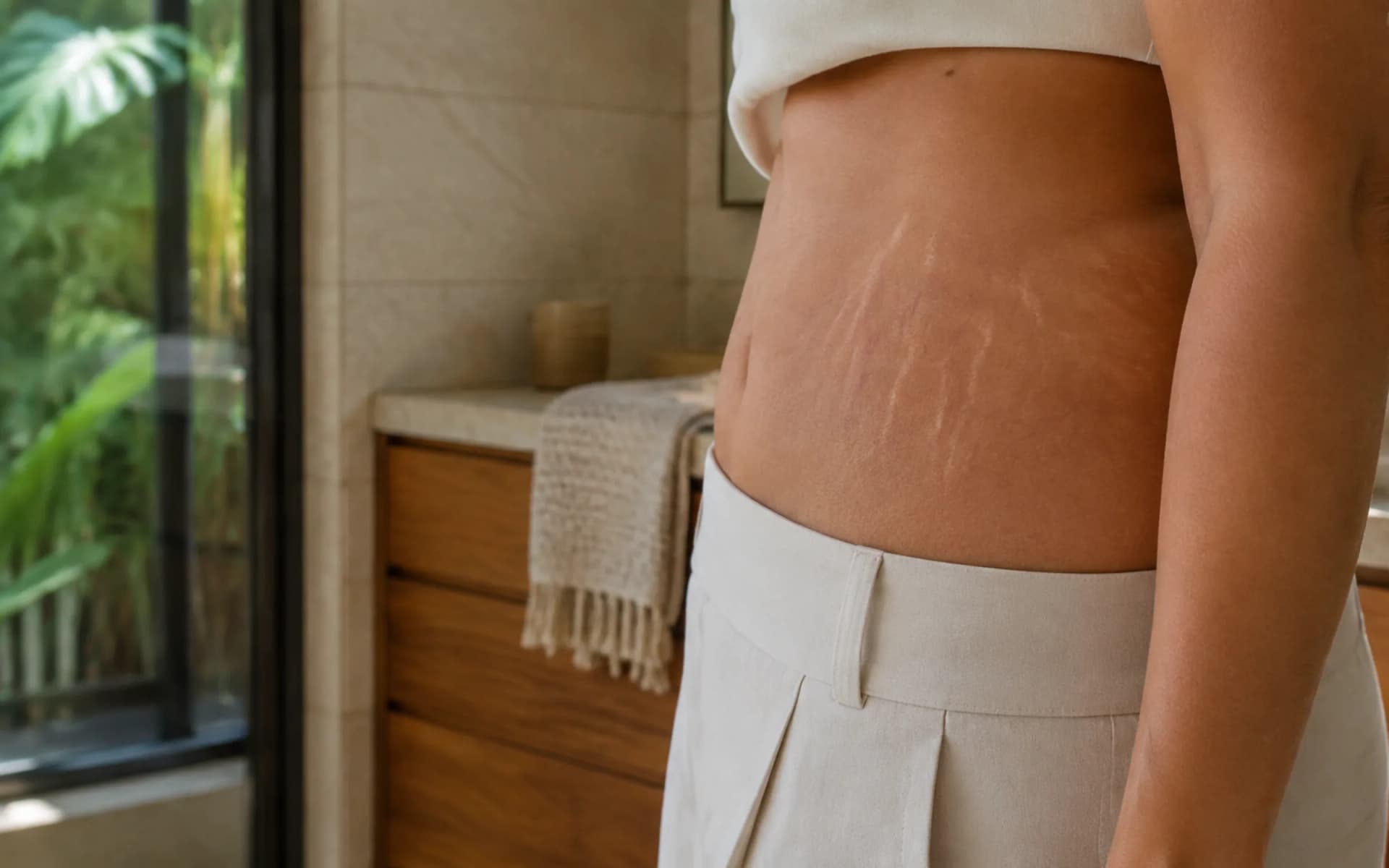
The colour of a stretch mark is more than a detail. It tells you roughly how old the mark is, and how much it can still change.
Few people explain this, yet it shapes everything you might do about them.
The two stages
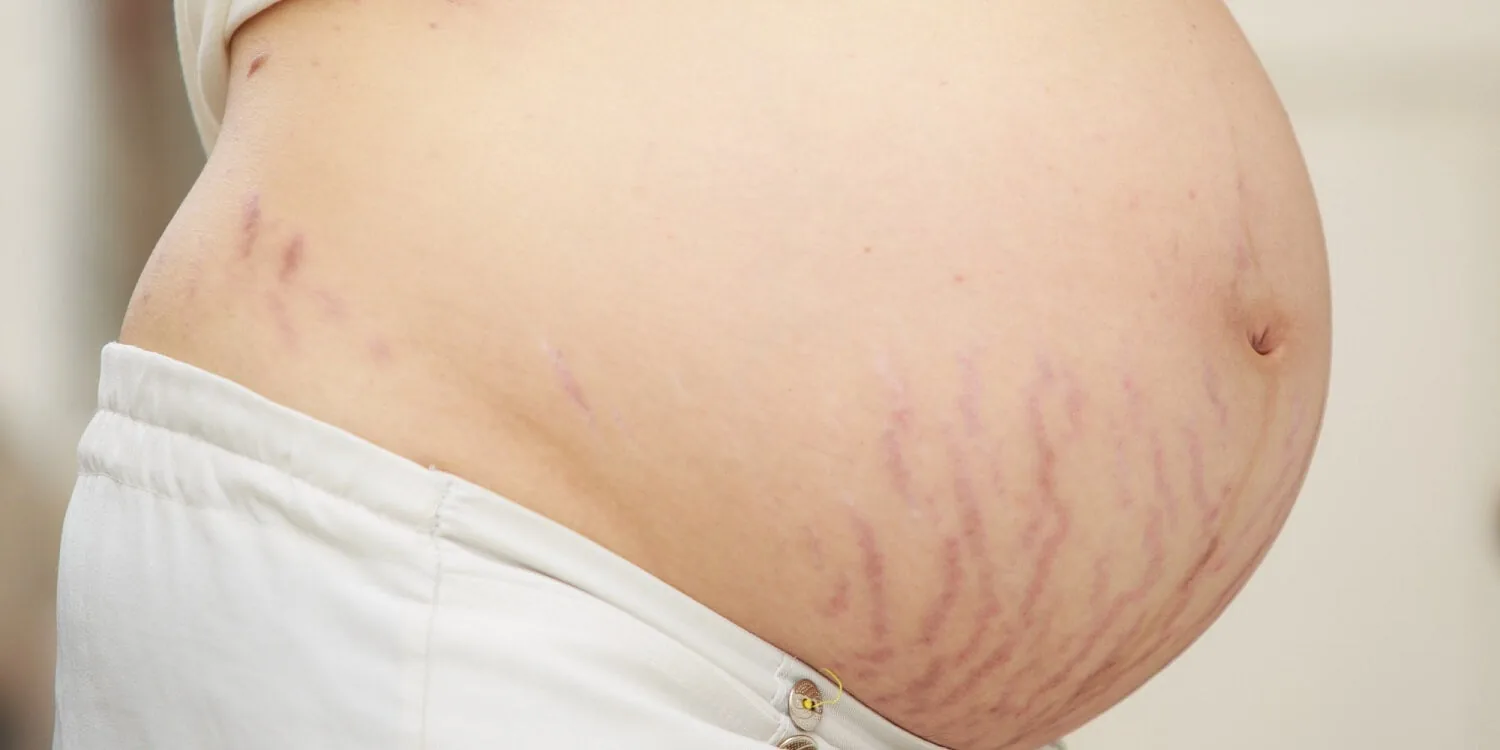
Red marks, called striae rubra, are new. Small blood vessels are still active under the skin, and that is where the pink, red or purple comes from. On deeper skin tones, new marks can look dark brown instead.
White marks, called striae alba, have matured. The vessels have narrowed, the mark has paled to silver or white, and it sits flatter.
Why the colour changes
When skin is stretched quickly, the fibres in its middle layer tear. At first the area still has a good blood supply, so it looks red.
Over a few months the vessels narrow, the tissue settles and the mark turns pale. This is a natural process and it takes most of a year. Nobody can stop it, and that is fine, because the paler stage is also the less visible one. What care can influence is how soft and noticeable the final mark looks.
What brings them on
The common thread is your body changing size quickly, in either direction.
Pregnancy. Your bump grows fastest in the second and third trimesters, stretching the skin over your belly, hips, thighs and breasts. Skin that is left dry and itchy, then scratched, tends to look worse.
Puberty. DermNet notes that around 70% of teenage girls and 40% of teenage boys get stretch marks, often on the hips, thighs and breasts.
Building muscle fast. Skin stretched over quickly growing muscle can mark too.
Other causes. Family history matters a great deal. Long-term steroid creams or tablets, and conditions such as Cushing's syndrome, also make marks more likely.
While they are still red
This is the stage when care gives you the most back, so it is a good time to start.
The NHS notes there is little evidence that any cream reliably stops marks from forming, because your genes and how fast you grow count for so much. What daily moisturising gives you is comfort: less dryness and less itch while your skin stretches, and softer-looking marks over time.
What is worth doing:
- Moisturise twice a day, morning and night, from the second trimester
- Drink plenty of water, more on hot days or if you sweat a lot
- Try not to scratch an itchy bump. Pat or press instead, and moisturise
- Keep new marks out of strong midday sun, which can deepen the contrast
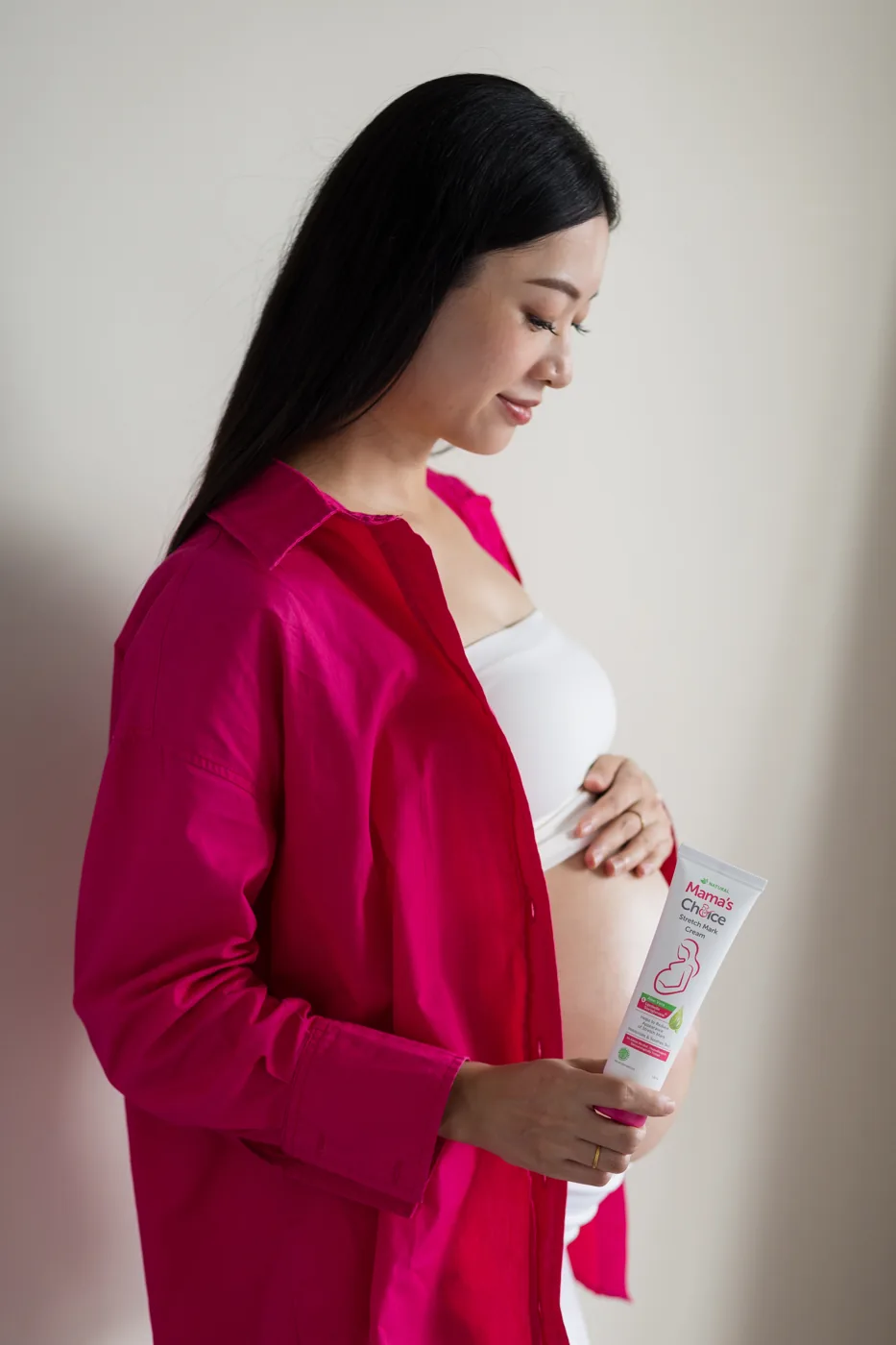
Mama's Choice Stretch Mark Cream is light and non-sticky, which helps in humid weather. It deeply moisturises stretching skin, keeps it supple and helps prevent stretch marks, with Lipobelle Soyaglycone, aloe vera, shea butter and jojoba oil. The cool feel on application is what many mothers like most about it. In a Mama's Choice satisfaction survey of 78 mothers in Indonesia (2022), 88% felt fewer new stretch marks appeared while they used it.
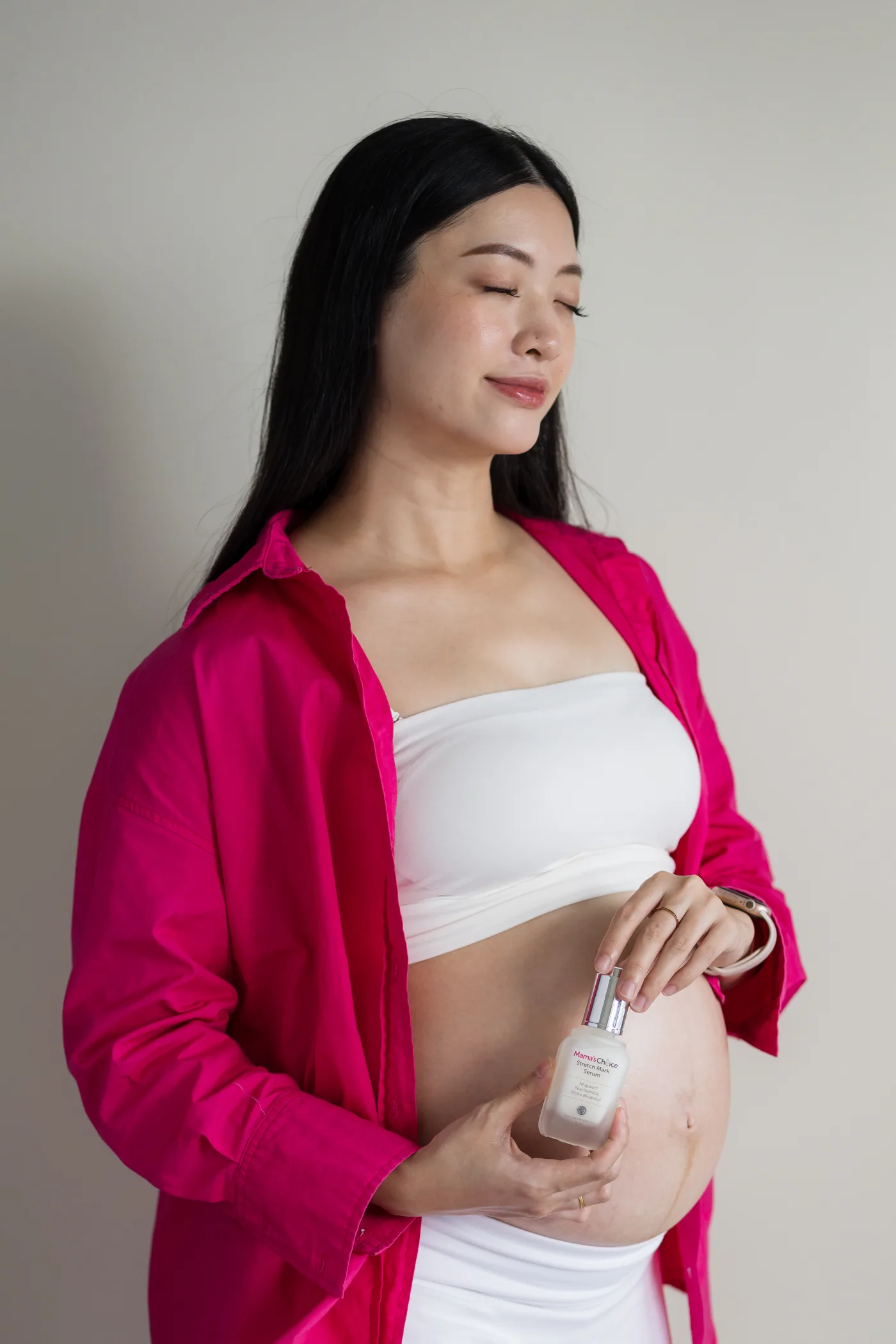
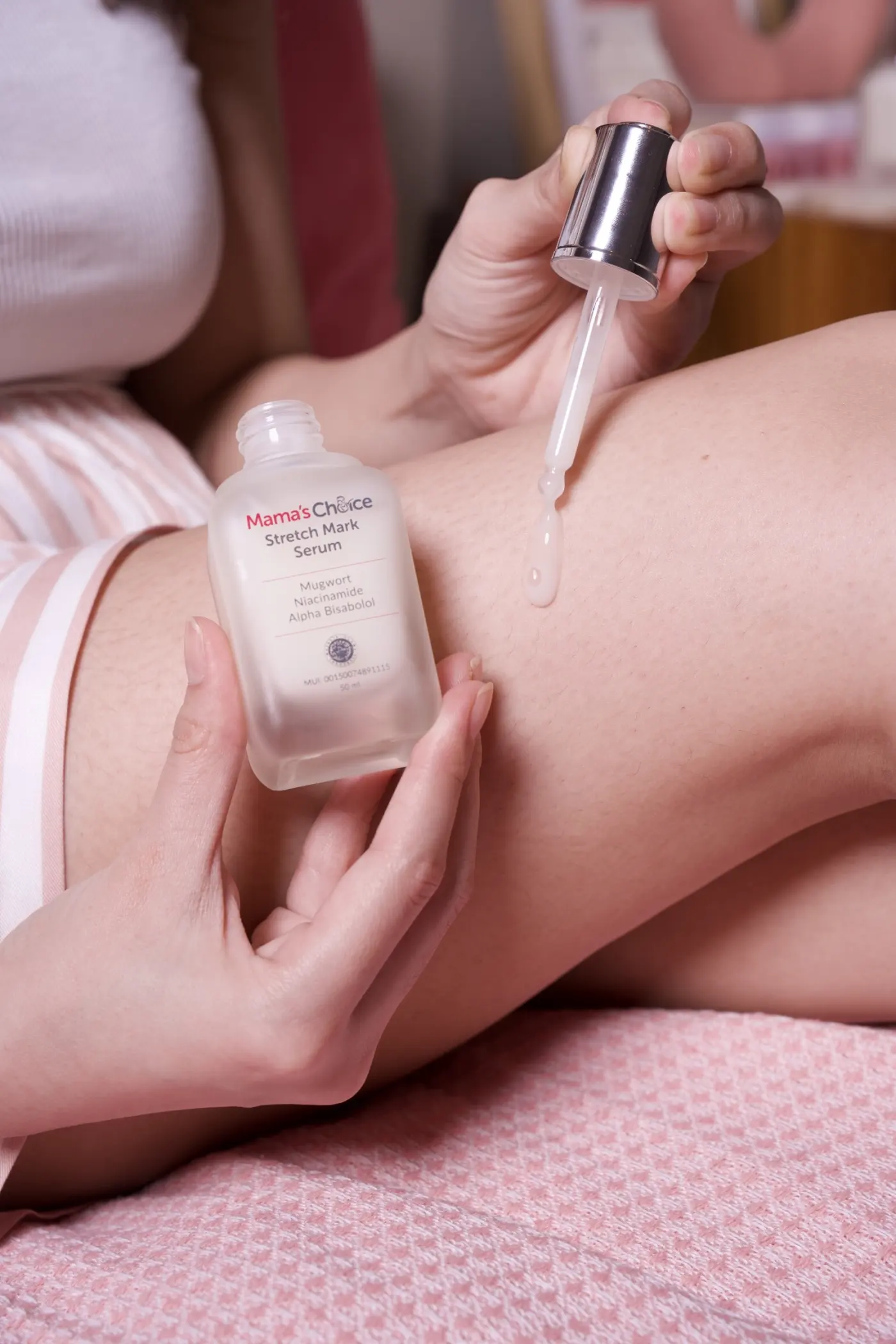
For marks that have already appeared, the Stretch Mark Serum is lighter and absorbs faster, with niacinamide, Japanese mugwort and bisabolol. It helps reduce the look of stretch marks and leaves the skin over them looking brighter. In a Mama's Choice use test with 29 mothers in Indonesia (2022), 79% agreed the stretch mark area looked less red.
Massage in gentle circles so it spreads evenly. Give it months, not weeks. A mark that is still red after a few weeks does not mean nothing is working.
Once they have turned white
No cream will remove a mark. Older white marks can still look softer and smoother with care, though the change is slower and smaller than on new red ones.
Dermatologists also offer laser, microneedling and chemical peels to improve how stretch marks look. These are postponed during pregnancy and usually until after breastfeeding, and they need several sessions, so talk them through with a dermatologist first.
When to see a doctor
Stretch marks are harmless. See your doctor if marks appear very quickly and widely without weight gain, if your skin feels thin and bruises easily, or if a mark becomes painful, hot or surrounded by spreading redness.
Sources
Share this article
This article is for information only and is not a substitute for diagnosis or medical advice. Please talk to your doctor about your own situation.