Which is the safest sunscreen for pregnancy?
Mineral or chemical sunscreen in pregnancy? What the research shows, how to protect your skin in Malaysian sun, and why many Mamas prefer mineral filters.

Sunscreen still matters when you are pregnant, perhaps more than usual. The question many Mamas ask is which kind to use.
Pregnancy hormones make skin more likely to darken in the sun. Many women notice melasma, patches of brown on the cheeks, forehead and upper lip, sometimes called the mask of pregnancy. Sun makes it darker. In Malaysia, with strong UV all year round, daily sun protection is one of the most useful things you can do for your skin.
The two kinds of sunscreen
Chemical (organic) filters such as avobenzone, octocrylene, oxybenzone and octinoxate absorb UV rays and turn them into a small amount of heat. They are light and spread easily, and they are in most sunscreens on the shelf.
Mineral (physical) filters are zinc oxide and titanium dioxide. They sit on top of the skin and absorb and scatter UV. Modern mineral sunscreens are far less chalky than older ones, though some still leave a faint white cast.
Both kinds work. The catch is using enough and reapplying.
Are chemical sunscreens safe in pregnancy?
Studies have found that some chemical filters, oxybenzone in particular, are absorbed into the blood in small amounts. That is why regulators such as the US FDA have asked manufacturers for more safety data. Absorption is not harm. No good evidence shows that using chemical sunscreen during pregnancy harms babies, and dermatology bodies still recommend sunscreen for everyone, pregnant women included.
So you do not need to throw out a chemical sunscreen you already use. Many pregnant women prefer mineral filters anyway, and the reasons are sound:
- Zinc oxide and titanium dioxide are barely absorbed through the skin
- Mineral filters are less likely to sting or irritate sensitive skin, and pregnancy often makes skin more reactive
- Some women simply want fewer question marks on the label for nine months
That is a preference. It is easy to act on.
What to look for
- Broad-spectrum protection. SPF measures protection from UVB, which burns. A PA rating (PA+ to PA++++) or "broad spectrum" shows protection from UVA, which ages skin and darkens pigmentation.
- The right SPF for your day. For a mostly indoor day with a short commute, SPF 15 to 20 is reasonable. For time outdoors, at the beach or during a long day out, use SPF 30 or higher.
- A texture you will use. Use what you enjoy. A sunscreen you like is one you will put on every morning. In humid weather, a light, non-greasy formula makes that easier.
- Enough of it. For your face and neck, use about half a teaspoon. Most people use far less than the amount tested.
Sun habits that help as much as the cream
- Put sunscreen on every morning, even when it is cloudy, and reapply after sweating, swimming or towelling
- Stay in the shade between about 10 a.m. and 4 p.m., when UV is strongest
- Wear a wide-brimmed hat and sunglasses, and carry an umbrella
- Remember that UVA passes through car and office windows
- Keep cool and drink plenty of water, because pregnancy makes you more prone to overheating
Some sun is good for vitamin D. If you cover up a lot or spend most days indoors, ask your doctor or klinik kesihatan whether you need a vitamin D supplement.
A moisturiser with mineral sun protection
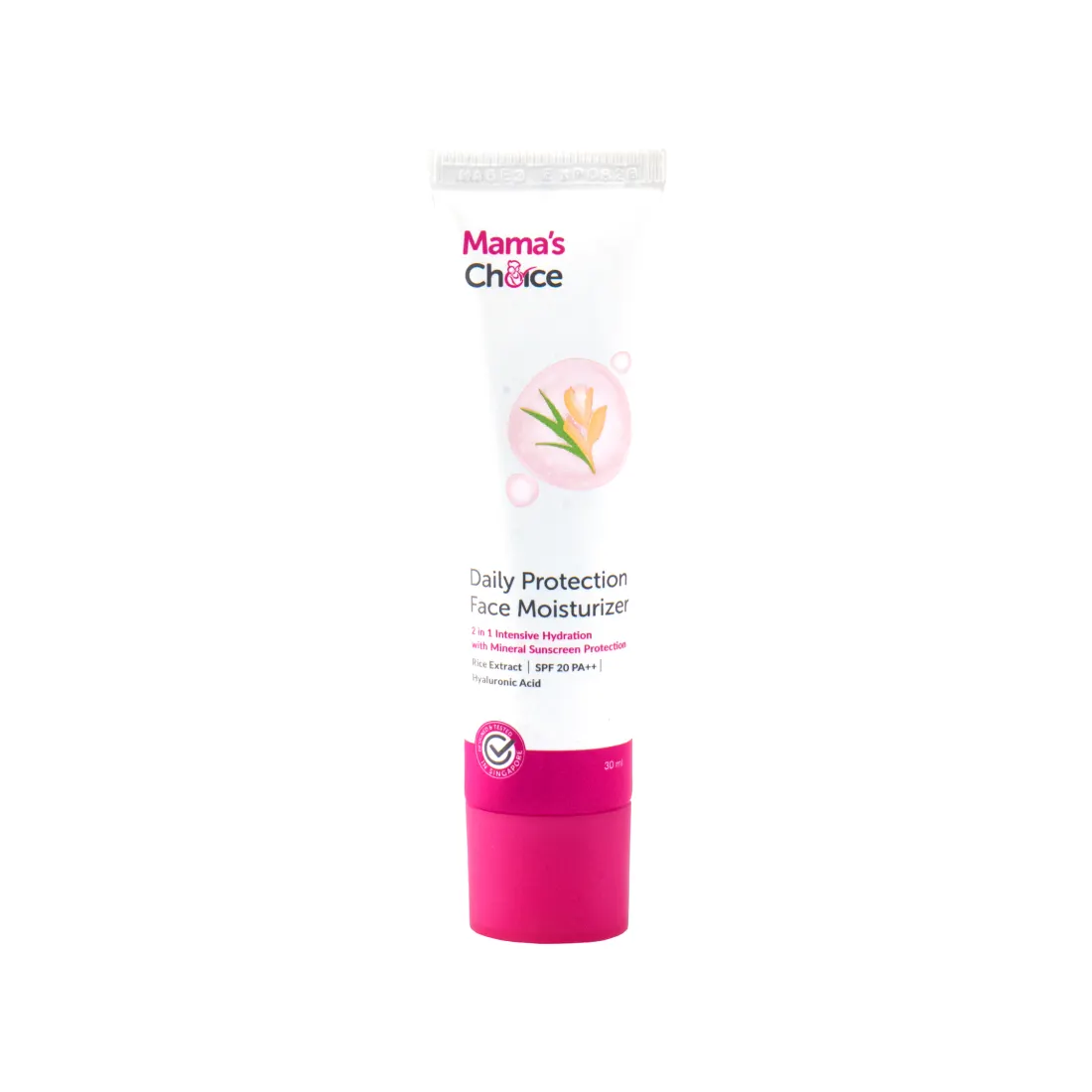
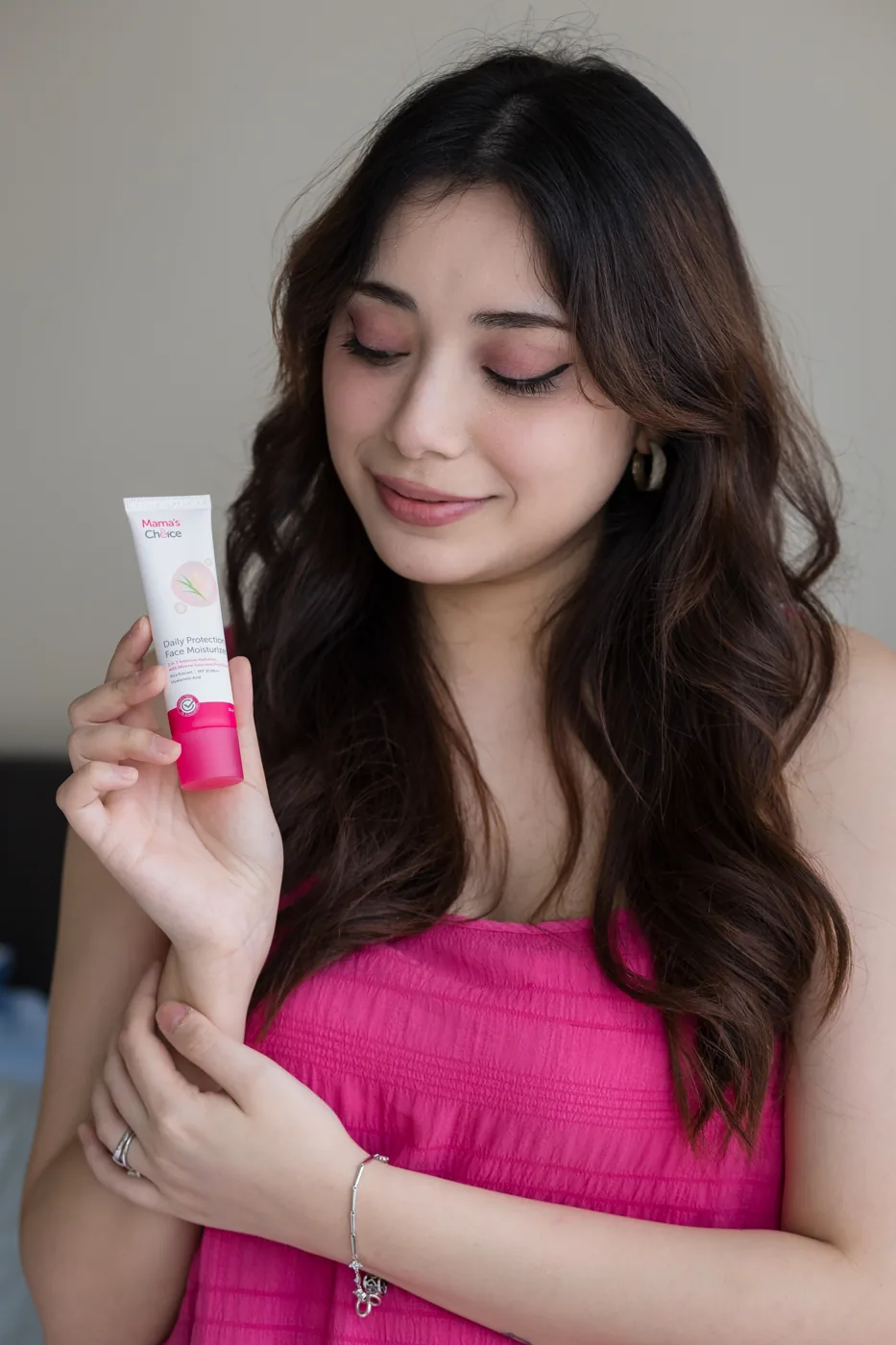
If you would rather keep your routine short, a moisturiser with sun protection covers two steps at once. Our Daily Protection Face Moisturizer is formulated for pregnancy and breastfeeding. It is SPF 20 PA++ and its UV filters are zinc oxide and titanium dioxide only, with no chemical filters.
It is a light, non-greasy cream that suits Malaysian weather. Hyaluronic acid and rice extract help skin hold moisture, so your face feels soft and looks fresh. A little orange oil gives it a light scent. In a Mama's Choice satisfaction survey of 103 mothers in Indonesia in 2022, 95% felt their skin was more moisturised and softer, and 94% felt it suited their skin. It is halal certified by BPJPH, Indonesia.
SPF 20 is medium protection, ideal for everyday use on workdays and errands. For a long day outdoors, add a higher-SPF sunscreen and reapply through the day.
You can find it on Shopee and Lazada, where the latest price is shown.
When to see a doctor
Melasma often fades in the months after birth, though it can linger. Mention dark patches to your doctor if they bother you. Skin-lightening creams with hydroquinone or retinoids are not used in pregnancy, so wait until after the birth to discuss treatment.
See a doctor promptly about any mole that changes in size, shape or colour, bleeds or itches, or a sore that will not heal.
Sources
Share this article
This article is for information only and is not a substitute for diagnosis or medical advice. Please talk to your doctor about your own situation.