Using stretch mark cream on breasts while breastfeeding
Breasts are often the first place to mark. Where stretch mark cream can go, which area needs a different product, and how to fit it around feeds.
Your breasts marked before your belly did, and nobody warned you that might happen.
They start growing in the first trimester, then grow again when your milk comes in. That gives the skin two sharp stretches rather than one gradual one. Putting cream there is fine. Where it goes, and when, needs a little thought.
Why breasts often mark first
They grow early. Plenty of women notice breast changes before they look pregnant at all.
They grow twice. Once through pregnancy, then again a few days after the birth when your milk comes in.
The skin is thinner than on your belly, so marks show more readily.
Where cream can go
Keep body creams off the nipple and areola. A stretch mark cream is made for skin, not for your baby's mouth.
Apply it to the breast skin, out to the sides and underneath, and stop about 2 to 3 cm from the edge of the areola.
Give your nipples their own product. The nipple and areola take the most wear once you start feeding, and they need something made to be there when your baby latches.
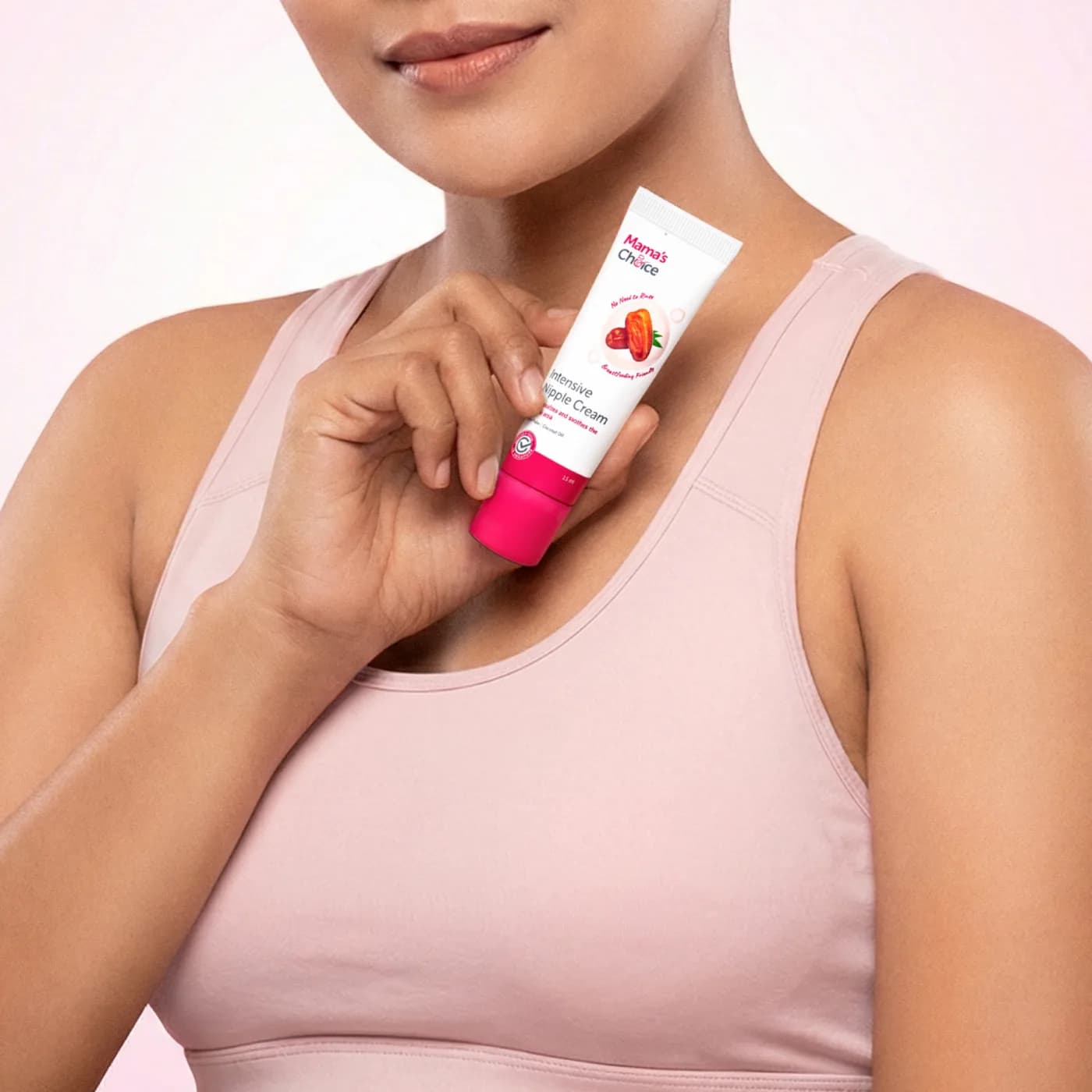
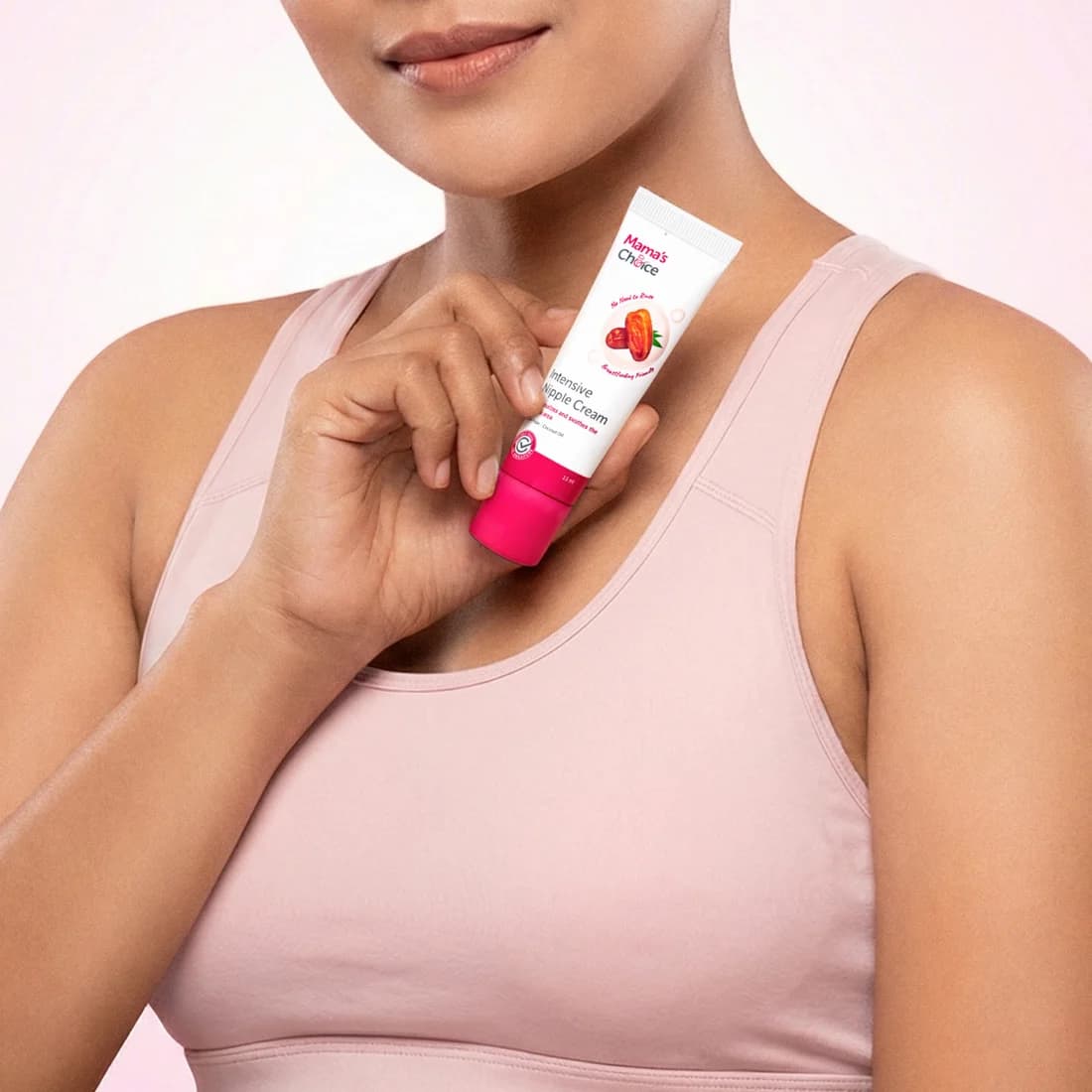
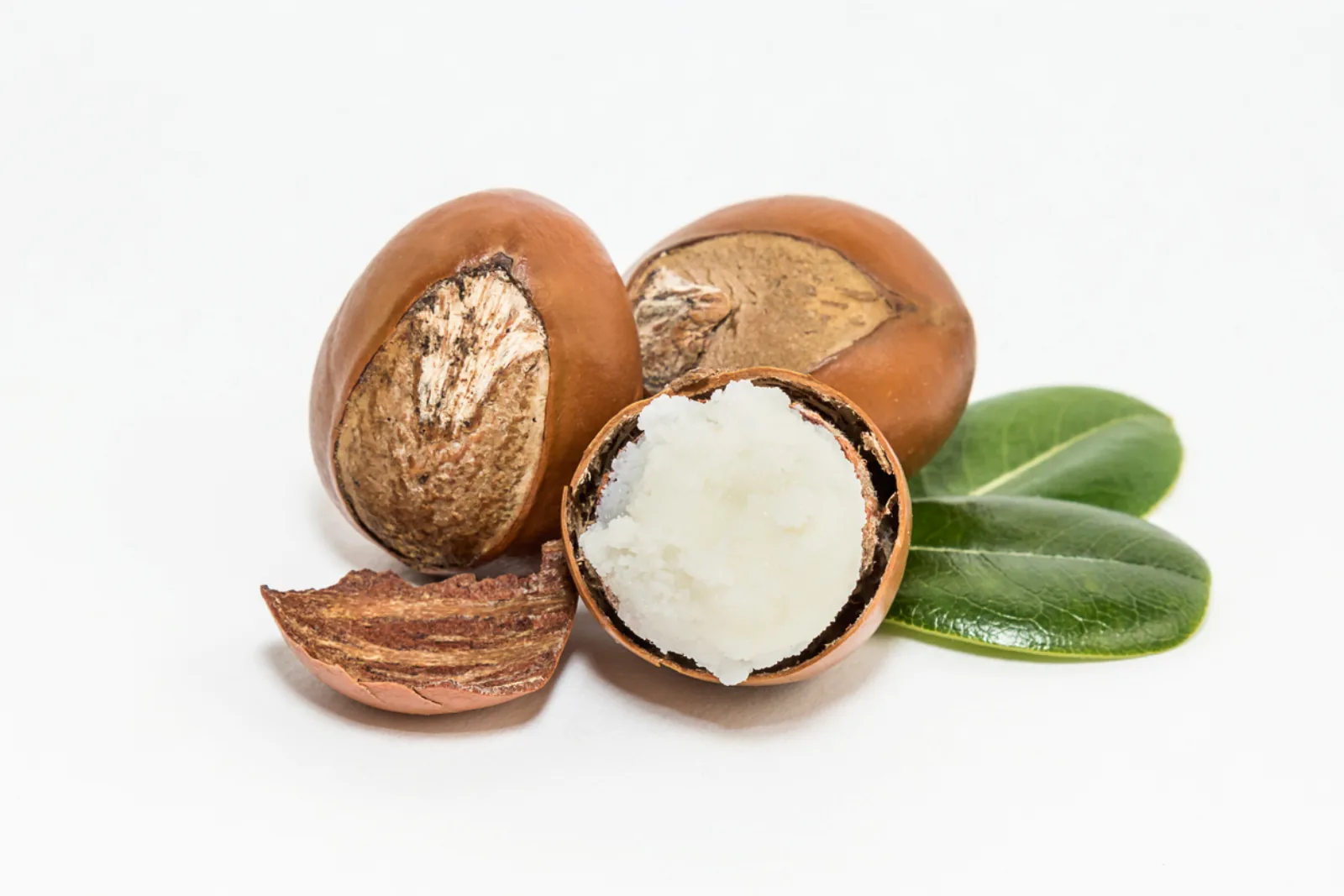
Mama's Choice Intensive Nipple Cream is a rich balm of just five ingredients: lanolin, shea butter, coconut oil, vitamin E and date fruit extract. It moisturises and protects nipple skin, helps prevent cracked nipples, and you do not need to wipe it off before a feed. In a Mama's Choice satisfaction survey of 74 mothers in Indonesia (2022), 96% felt dry nipple skin became softer. It contains lanolin, which comes from sheep's wool, so skip it if you react to wool.
Wash your hands before and after. It sounds obvious, and it is the step most often skipped in the middle of the night.
How to apply stretch mark cream
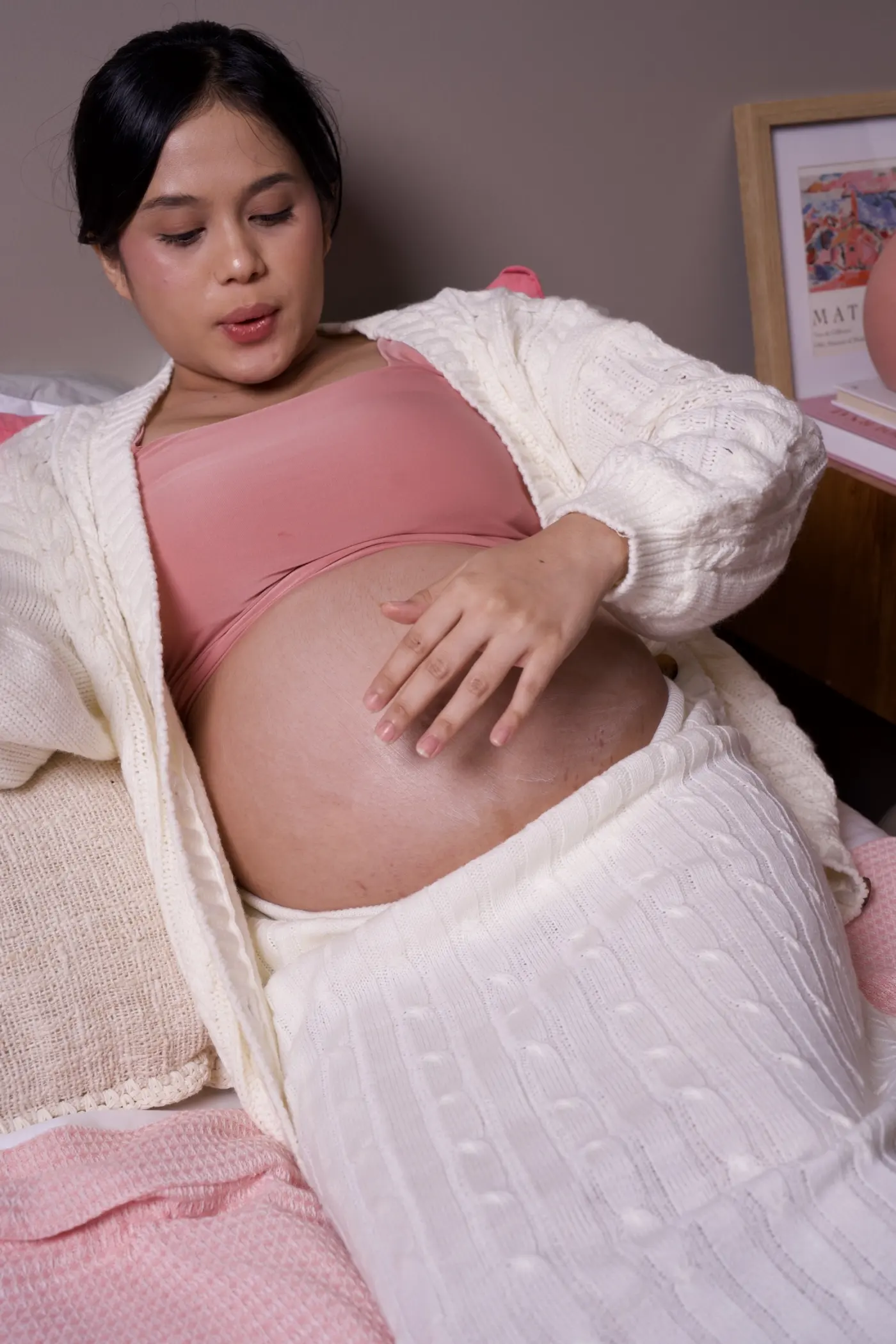
Work upwards and outwards from underneath, in gentle circles, and stop short of the areola.
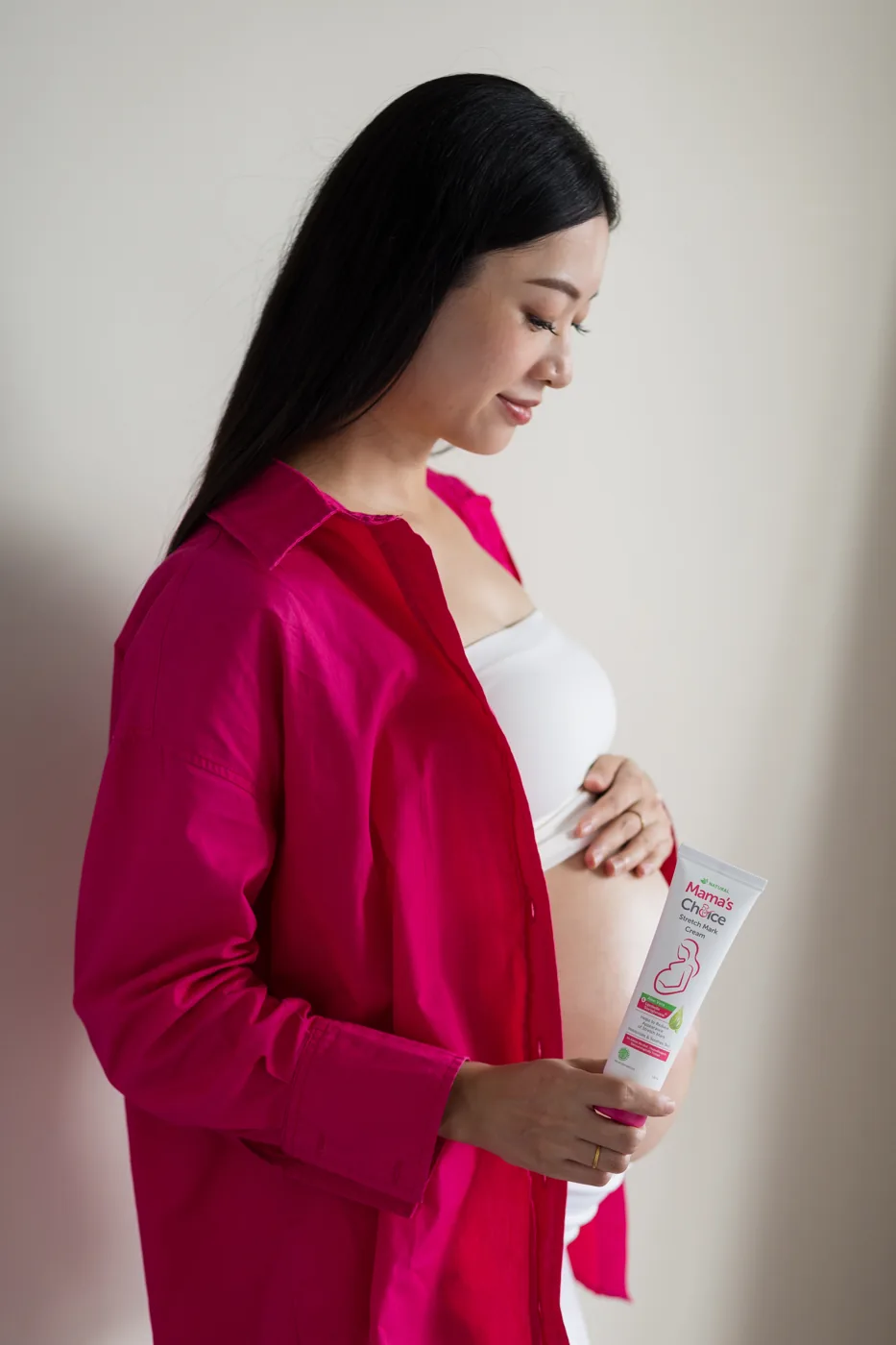
Mama's Choice Stretch Mark Cream is light and non-sticky, which matters on skin that spends the day inside a bra in Malaysian heat. It deeply moisturises stretching skin, keeps it supple and helps prevent stretch marks. It is formulated for pregnancy and breastfeeding.
Twice a day is ideal. Doing it regularly counts for more than the amount you use.
Changes that are simply normal
Veins showing more clearly, from the extra blood flow of pregnancy.
Areolas widening and darkening. This is hormonal, and they often stay a little darker afterwards.
Small bumps on the areola, called Montgomery's glands. They make a natural oil that protects the nipple, which is one reason not to scrub your nipples with soap.
Fullness and tenderness in the first days after the birth, as your milk comes in.
Your bra is part of this
A bra that does not fit adds rubbing and pressure to skin that is already stretching.
- The band sits level and firm across your back and does not ride up
- The cups hold everything, with nothing spilling over
- The straps do not dig in
- The fabric breathes, because skin under the breast stays damp easily in humid weather
Your size changes more than once through pregnancy and feeding, so a bra that fitted at the start may not fit two months later. A wire-free style such as our Maternity Nursing Bra moves with you, and its cups unclip easily for feeds.
Fitting it around feeds
Once your milk is in, the practical question is when there is a gap long enough to put cream on.
After a feed is best for both creams. It leaves the longest gap before your baby is back at the breast.
After the last feed before bed is another reliable slot, because the next one is usually hours away.
On a hard day, skip it. Cream applied five times a week for six months does more than cream applied twice a day for a fortnight before you give up.
Pads, seams and rubbing
A lot of the discomfort in the early weeks comes from what sits against your skin all day.
Change breast pads once they are damp. A wet pad against skin for hours is where irritation starts.
Give underwire a rest while your size is still changing. A tight bra presses on breast tissue that is still changing, and the NHS advises against tight bras and clothing if you have mastitis.
Let your skin breathe when you can. A few minutes without a bra after your shower helps the skin under your breasts.
Check the seams. A rough seam inside a cup rubs the same spot every day.
When to see someone
- Nipples that crack or bleed, or pain that lasts through a whole feed. A midwife, lactation counsellor or your klinik kesihatan can check your baby's latch, which the NHS says is the most common cause
- A tender lump that keeps coming back in the same place
- A breast that is red, hot and painful, especially with a fever or flu-like feeling
- Discharge from the nipple when you are not breastfeeding
- Skin that looks dimpled, like orange peel
That last one needs checking promptly, at any age, pregnant or not.
Sources
Share this article
This article is for information only and is not a substitute for diagnosis or medical advice. Please talk to your doctor about your own situation.