Toothaches during pregnancy and when to see a dentist
Why teeth and gums hurt more while you are expecting, which dental treatment is safe in pregnancy, what helps at home, and when to see a dentist urgently.
A tooth that was quiet for years can start aching in the second trimester. The temptation is to wait until after the birth. It is better to get it seen now.
Pregnancy hormones make gums inflame more easily, and morning sickness bathes the teeth in acid. Toothache usually has a cause that needs fixing, and dental treatment is safe while you are pregnant, including cleaning, fillings, local anaesthetic and an X-ray where one is needed.
Why teeth and gums hurt more in pregnancy
Several changes arrive at once.
Rising oestrogen and progesterone increase blood flow to the gums and change how they react to plaque. Plaque your gums once tolerated now makes them swell and bleed. This is pregnancy gingivitis, and it is very common.
Vomiting brings stomach acid onto the enamel. Eating little and often, the usual advice for nausea, means your teeth meet food many more times a day. Brushing tends to slip too, because a toothbrush at the back of the mouth is the last thing you want when you feel sick.
Existing problems also get worse. A small cavity or a cracked filling you never noticed can start to hurt.
One old belief can go. Your baby does not take calcium out of your teeth. Enamel is not a store the body draws on. Calcium still matters for your bones, so keep up dairy, tofu, ikan bilis and green vegetables.
What pregnancy gingivitis looks like
Gums that are red rather than pink, puffy at the edges, tender and bleeding when you brush. It often starts in the second month and peaks in the third trimester.
Some women develop a pregnancy granuloma, a soft red lump on the gum between two teeth. It looks alarming but it is harmless and usually shrinks after the birth. A dentist can remove it if it keeps bleeding or getting in the way.
Observational studies have linked gum disease in pregnancy with preterm birth and low birth weight, but trials of treating it have not shown that treatment changes those outcomes. Look after your gums because inflamed gums are sore, and untreated gum disease can damage the bone that holds your teeth.
Is dental treatment safe while you are pregnant?
Yes. The American College of Obstetricians and Gynecologists says necessary dental treatment should not be put off until after the birth. Scaling, fillings, root canal treatment and extractions can all be done during pregnancy.
- Local anaesthetic is used routinely in pregnancy. You do not need to sit through a filling unnumbed.
- X-rays are fine when the dentist needs one, with a lead apron. The beam is aimed at your jaw, and the dose is very small.
- Painkillers. Paracetamol is the usual first choice. Ibuprofen and similar medicines are generally avoided, especially from 20 weeks, unless your doctor advises them. Ask before taking anything.
- Antibiotics. Several, such as penicillins, are used in pregnancy. Tetracyclines are avoided.
The second trimester is usually the most comfortable time for a longer appointment. Later in pregnancy, lying flat can make you dizzy, so ask to be tilted slightly onto your left side with a cushion under your right hip.
Always tell the dental clinic you are pregnant, how many weeks, and what you take, including iron and vitamins.
Getting dental care in Malaysia
KKM encourages every pregnant mother to have a dental check-up. Ask at your klinik kesihatan during your antenatal visits, as they can refer you to a government dental clinic (klinik pergigian). Private dental clinics are quicker to book and cost more.
If you are in the third trimester, try to get any work done before your confinement begins. A newborn and forty days at home leave little room for dental appointments.
Morning sickness and your enamel
Stomach acid softens the surface of the teeth within minutes. Repeated vomiting can wear away enamel, especially on the inside of the upper front teeth, and enamel does not grow back.
After vomiting, rinse with plain water, or with half a teaspoon of baking soda stirred into a glass of water. Then wait at least 30 minutes, ideally an hour, before brushing. Brushing straight away scrubs softened enamel off.
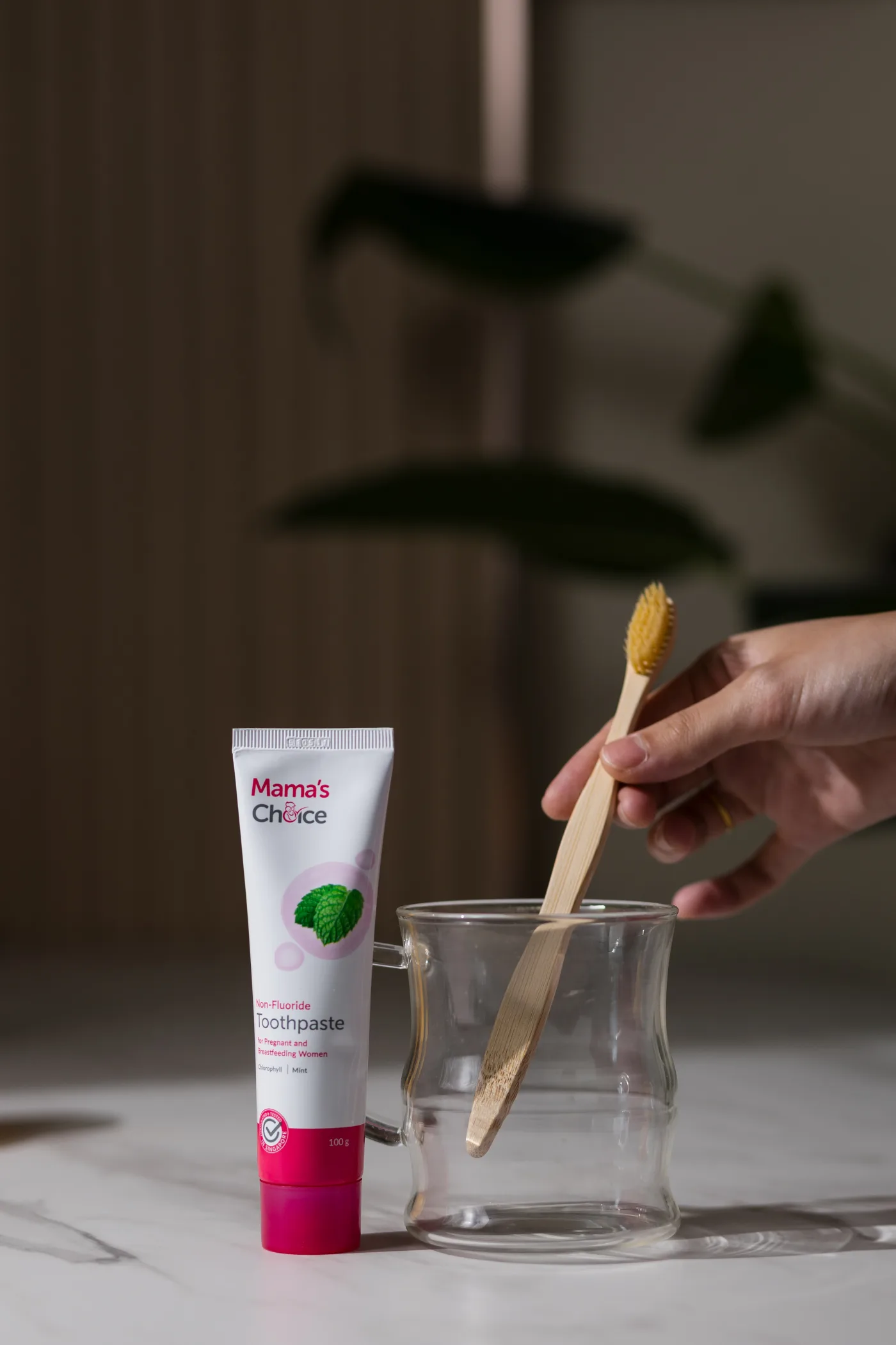
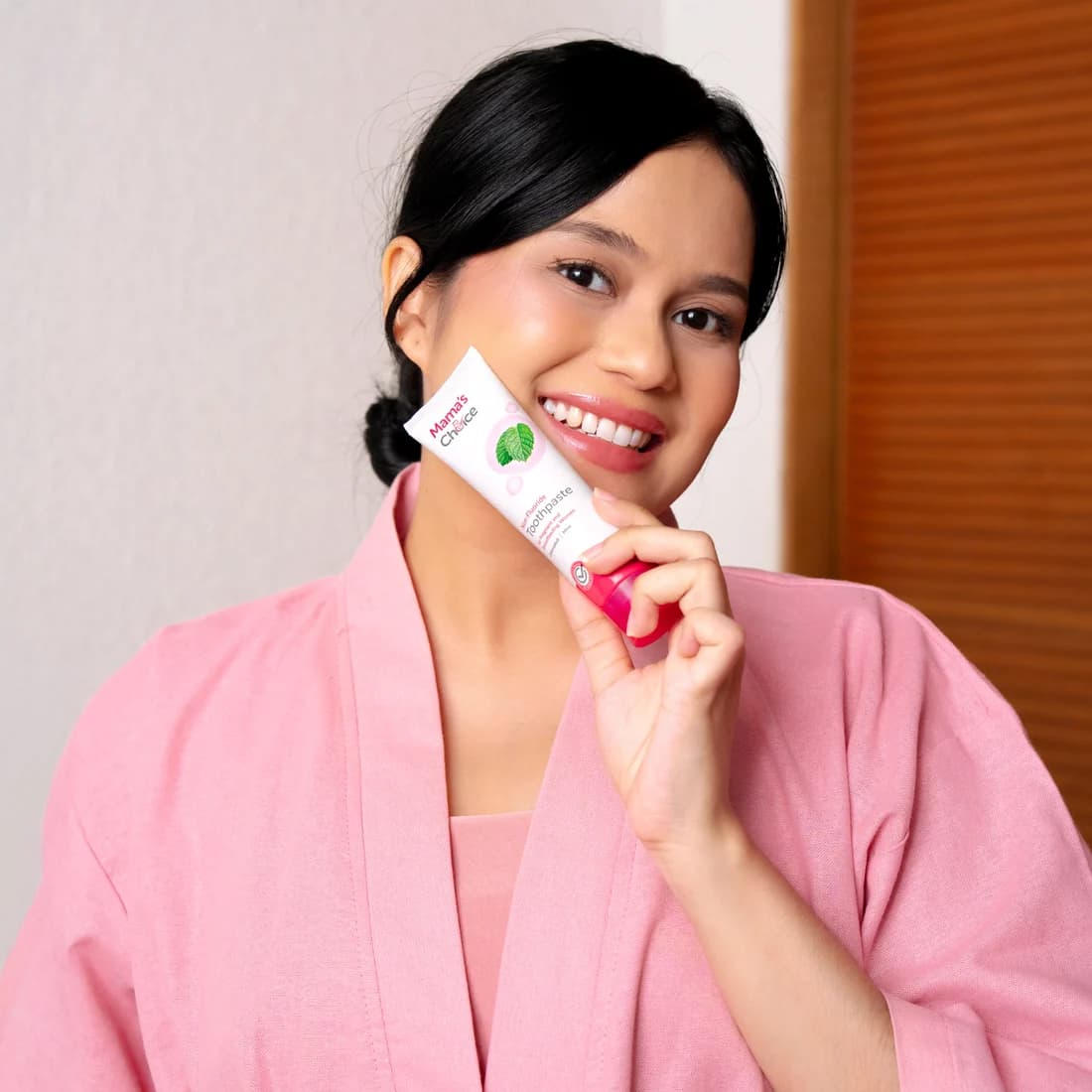
If your usual toothpaste makes you gag, switch rather than skip. A milder flavour, a smaller amount or a child-size brush can help. Our Non-Fluoride Toothpaste was made for this stage: a light mint paste with miswak extract, made without fluoride or SLS. In a Mama's Choice satisfaction survey of 62 mums in Indonesia in 2022, 93% felt comfortable using it, with no nausea, and 89% felt the mint was just right. It is halal certified by BPJPH, Indonesia.
Fluoride itself is safe in pregnancy and gives the most protection against decay, as our article on fluoride in toothpaste explains. If you have had decay before, keep a fluoride paste in your routine or ask your dentist what suits you. For more on choosing, see pregnancy-safe toothpaste.
What helps at home before your appointment
- Rinse with warm salt water, half a teaspoon of salt in a cup of warm water. Swish and spit.
- Hold a cold compress against your cheek for ten minutes at a time.
- Floss gently around the sore tooth, as trapped food is a common cause.
- Keep very sweet, very hot and very cold food away from that side.
- Brush twice a day with a soft brush, and floss daily.
Avoid packing clove oil or garlic into the tooth, or holding aspirin against it. These can burn the gum and do not fix the cause.
When to be seen the same day
Swelling of the face or jaw, a fever with tooth pain, a bad taste of pus, or difficulty opening your mouth or swallowing can mean an infection is spreading. Go to a dental clinic the same day, or to a hospital emergency department if it is night. In an emergency, call 999.
A dental abscess in pregnancy is treated promptly and in the usual way, with drainage and antibiotics that suit pregnancy.
Sources
Share this article
This article is for information only and is not a substitute for diagnosis or medical advice. Please talk to your doctor about your own situation.