
Pregnancy body pains and using herbal oil to ease them
Common pregnancy aches from back pain to carpal tunnel and leg cramps, what helps at home, how to use massage oils with care, and which pains need a doctor.
Your back aches, your hips complain when you turn over in bed and your fingers tingle in the morning. Pregnancy asks a lot of your body. Most of these aches are normal, and there is plenty you can do to feel more comfortable.
By the third trimester you are carrying several extra kilos in front of you, and your body has been changing shape for months to make room. Hormones such as relaxin loosen your ligaments to prepare your pelvis for birth. Your centre of gravity moves forward, your posture shifts, and muscles that never had to work hard suddenly do. No wonder things hurt.
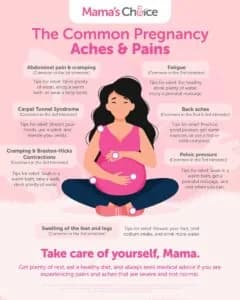
Common aches and why they happen
Back pain
Back pain is one of the most common complaints of pregnancy. Your growing bump pulls your lower back into a deeper curve, and loosened ligaments give your joints less support. The Office on Women's Health also describes aching near the pubic bone later on, as your baby's head presses down.

Pelvic girdle pain
Some women feel pain at the front of the pelvis, across the lower back or in the hips, often worse when walking, climbing stairs or rolling over in bed. This is pelvic girdle pain. A physiotherapist can help a great deal, so mention it at your antenatal check.
Sciatica
Your growing uterus and changing posture can irritate the sciatic nerve. That causes a sharp, shooting or burning pain from the lower back or buttock down the back of the leg. It usually settles after the birth.
Carpal tunnel syndrome
Pregnancy makes your body hold on to more fluid. Swelling in the wrist can squeeze the nerve that runs through it, causing tingling, numbness or aching in the thumb and fingers. It is common, often worse at night or first thing in the morning, and it usually goes away after your baby is born.
Leg cramps
Sudden, painful tightening in the calf, often at night, is common in the second half of pregnancy. Nobody is entirely sure why.
Round ligament pain
A short, sharp pain low on one or both sides of the bump, especially when you stand up quickly or cough, is usually the ligaments that hold your uterus stretching as it grows.
What helps at home
For back and pelvic pain
- Bend your knees and keep your back straight when picking something up
- Wear flat, supportive shoes
- Sleep on your side with a pillow between your knees and another under your bump
- Sit in a chair with good back support, and get up to move every half an hour or so
- Try gentle exercise such as swimming, walking or a pregnancy yoga class
- Share the heavy lifting, including your older children, with someone else
- A massage from someone trained in pregnancy massage can ease tight muscles

A warm compress or warm shower on your lower back can feel lovely. Keep heat away from your bump, and avoid hot baths and saunas that raise your core temperature.
For carpal tunnel
- Rest your hands and take breaks from typing or phone scrolling
- Keep your wrists straight, and raise your hands on a pillow at night
- Ask a pharmacist or physiotherapist about a wrist splint to wear while you sleep
- A cold pack wrapped in a cloth can ease swelling
For sciatica and leg cramps
- Stretch your calves gently before bed, pulling your toes towards you
- Walk or swim regularly
- Avoid crossing your legs or standing in one position for a long time
- Massage the cramping muscle and flex your foot until it eases
If pain is affecting your sleep or daily life, talk to your doctor. Paracetamol is generally considered suitable in pregnancy at the usual dose for short periods. Ask before taking anything else, including ibuprofen, which is usually avoided in pregnancy, and herbal or traditional medicines.
Massage oils and herbal oils
A slow, gentle massage is one of the nicest ways to ease tired muscles in pregnancy, and the oil you choose adds to the experience. A plain oil such as olive, grapeseed, sweet almond or coconut lets hands glide smoothly and leaves skin soft. Many Malaysian families also reach for minyak kayu putih, cajuput oil, whose warming feel and familiar scent many find comforting.
Herbal and essential oils are concentrated, though, and pregnancy is a time to use them with care.
- Dilute them. Essential oils should be mixed into a plain carrier oil, never put neat on the skin.
- Do a patch test. Pregnancy can make skin more sensitive. Try a little on your inner arm first.
- Go easy in the first trimester. Many midwives suggest avoiding essential oils in the first 12 weeks.
- Avoid some oils altogether. Aromatherapy safety bodies list oils such as clary sage, sage, rosemary in large amounts, wormwood, pennyroyal, parsley seed, camphor, rue and hyssop as ones to avoid in pregnancy.
- Keep strong oils away from your baby. After the birth, do not put cajuput, eucalyptus or peppermint oil on or near a newborn's face, as they can affect breathing.
- Ask your doctor or midwife before using any herbal oil regularly, especially if you have a pregnancy complication.
Gentle lavender, a classic choice for relaxing, is widely used in diluted form later in pregnancy. A massage oil is a comfort, and a lovely ritual at the end of the day. It cannot fix the underlying causes of pregnancy aches, so pair it with the habits above. Our guide to prenatal massage covers positions and what to tell your therapist, and choosing a prenatal massage oil goes into oils in more detail.
Pains that need a doctor
Most aches are normal, but some are not. Contact your doctor or go to the hospital straight away if you have:
- pain, swelling, redness or warmth in one leg, especially the calf, which can be a sign of a blood clot called deep vein thrombosis
- chest pain or sudden breathlessness
- regular, tightening pains before 37 weeks, or back pain that comes and goes in waves
- severe or constant tummy pain, or any bleeding
- a bad headache, blurred vision or sudden swelling of your face and hands
- back pain with fever or pain when you pass urine
- numbness or weakness in your legs, or trouble controlling your bladder or bowels
In an emergency, call 999. For everything else, keep your antenatal appointments and mention any pain that worries you. Nobody expects you to just put up with it.
Sources
Share this article
This article is for information only and is not a substitute for diagnosis or medical advice. Please talk to your doctor about your own situation.