How to choose a safe mouthwash during pregnancy
Can you use mouthwash while pregnant? What to look for on the label, when a rinse helps with bleeding gums or nausea, and how to use it alongside brushing.
Yes, you can use mouthwash while you are pregnant. A rinse is an extra, though, and it works best alongside brushing twice a day and cleaning between your teeth. Choosing one is mostly about comfort and about what your gums need right now.
Why your mouth changes in pregnancy
Pregnancy hormones increase blood flow to the gums and change how they react to plaque. Gums that coped well before can turn red, puffy and quick to bleed. This is pregnancy gingivitis, and it is common, especially in the second and third trimesters.
Morning sickness adds acid. Snacking little and often, which helps with nausea, gives bacteria more sugar through the day. And a toothbrush at the back of your mouth can be the last thing you want when you feel sick.
A mouthwash can help freshen your breath and reach places a brush misses. It cannot remove the plaque that is stuck to your teeth. Only brushing and flossing do that.
What to look for on the label
Alcohol-free
Many standard mouthwashes contain alcohol. The amount you would absorb from rinsing and spitting is tiny. Even so, alcohol can dry and sting the mouth, and that sting is unwelcome when your gums are already tender. An alcohol-free rinse is the sensible, comfortable choice for most pregnant women.
A gentle flavour
Strong mint or menthol can trigger nausea for some women and settle it for others. If one flavour makes you gag, try a milder one. You need a rinse you can actually use.
The active ingredient you need
- Fluoride rinses help protect enamel. They are useful if you have had decay before or your enamel has been worn by vomiting. Use them at a different time from brushing, such as after lunch, so you do not wash away the fluoride from your toothpaste.
- Cetylpyridinium chloride is a common antibacterial ingredient in everyday rinses for fresher breath.
- Chlorhexidine rinses are used for short periods for gum problems, usually on a dentist's advice. They can stain teeth with longer use.
Triclosan
Triclosan is an antibacterial ingredient still allowed in some oral care products in this region, within a set limit. Laboratory and observational studies have raised questions about its effect on hormones, and the evidence in pregnancy is not settled. If you would rather avoid it, check the label.
Mouthwash and morning sickness
After vomiting, do not brush straight away. Stomach acid softens enamel, and brushing scrubs that softened surface off.
Instead, rinse with plain water, or with half a teaspoon of baking soda stirred into a glass of water. This neutralises the acid. Then wait at least 30 minutes, ideally an hour, before brushing. A mild mint rinse later in the day can help your mouth feel fresh again.
If nausea or vomiting is severe, you cannot keep fluids down, or you are passing very little urine, see your doctor or klinik kesihatan the same day.
How to use a mouthwash well
- Brush twice a day with a soft brush, for about two minutes.
- Clean between your teeth once a day with floss or an interdental brush.
- Use a mouthwash at a different time from brushing.
- Swish for the time on the label, then spit. Do not swallow it.
- Avoid eating or drinking for 30 minutes after a fluoride rinse.
Bleeding gums often settle within a couple of weeks of gentle, regular flossing. If they do not, or you have pain, swelling or loose teeth, see a dentist.
A toothpaste that is easier to face
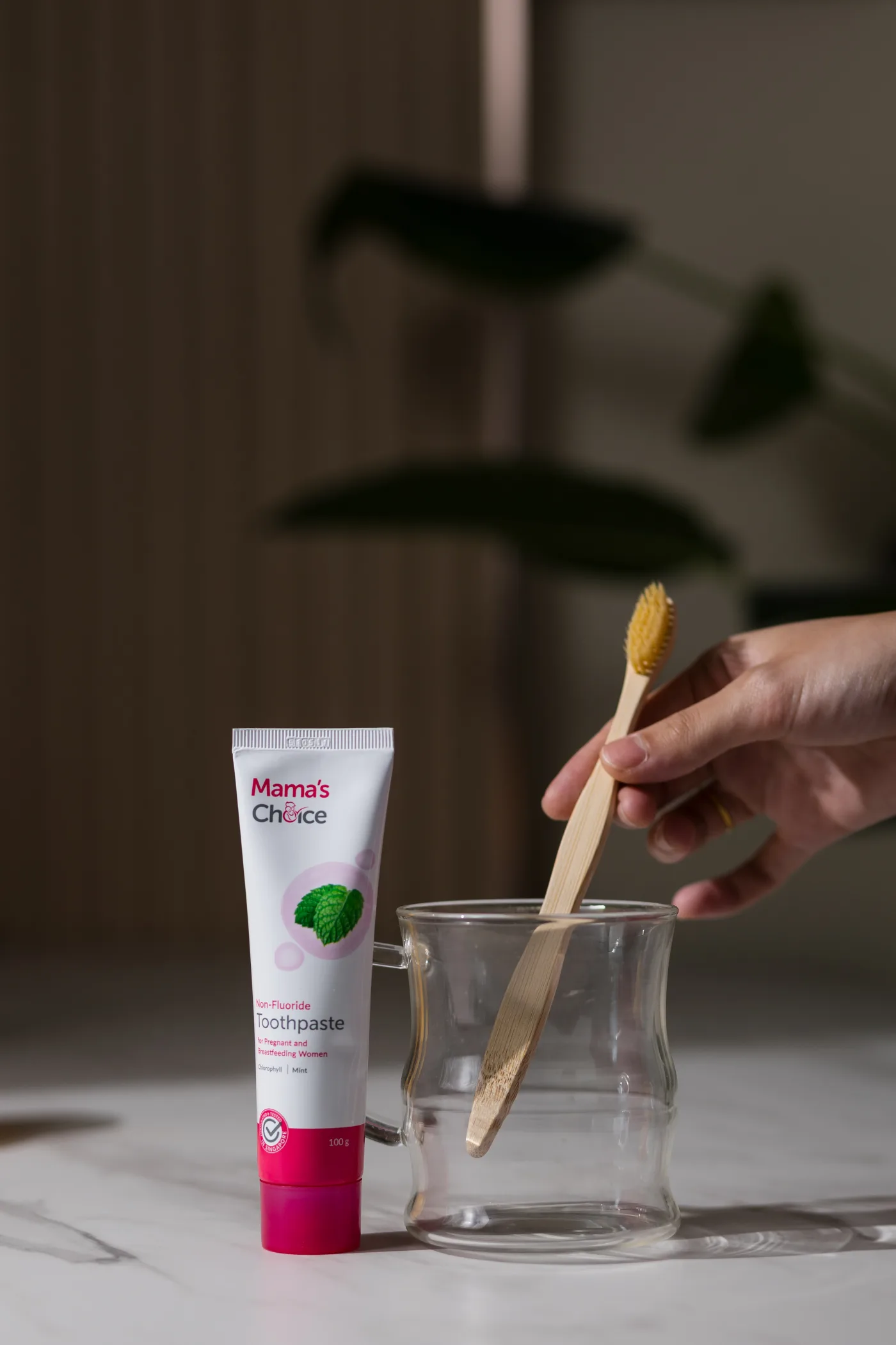
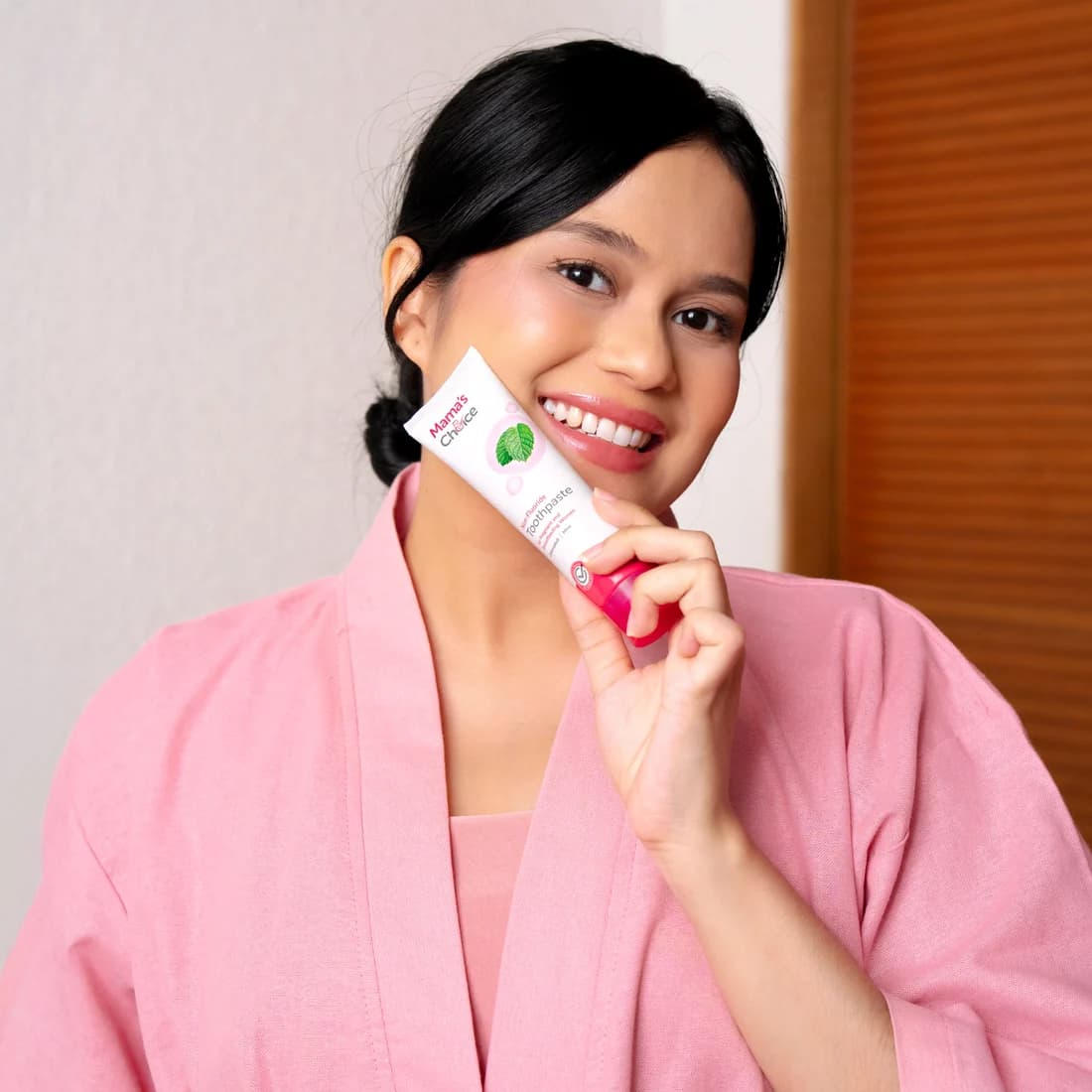
For many mothers, the hard part is the toothpaste itself. Our Non-Fluoride Toothpaste is a light mint paste with miswak extract, formulated for pregnancy and breastfeeding and made without fluoride, SLS or triclosan. In a Mama's Choice satisfaction survey of 62 mothers in Indonesia in 2022, 93% felt comfortable using it with no nausea. It is halal certified by BPJPH, Indonesia.
Fluoride is safe in pregnancy and protects against decay. If you choose a fluoride-free paste, a fluoride rinse at another time of day is one way to keep that protection. Our article on pregnancy-safe toothpaste explains the choice in more detail.
See a dentist during pregnancy
Dental check-ups, cleaning and fillings are safe during pregnancy. The second trimester is usually the most comfortable time. Ask at your klinik kesihatan about a referral to a government dental clinic, and tell any dentist that you are pregnant and how many weeks. If you already have tooth pain, read our guide to toothaches during pregnancy.
Sources
Share this article
This article is for information only and is not a substitute for diagnosis or medical advice. Please talk to your doctor about your own situation.