Can you breastfeed while pregnant?
Feeding through a new pregnancy, how often a newborn needs milk, how long expressed milk keeps in Malaysian heat, and when feeding pain needs help.

Most women with a healthy pregnancy can keep breastfeeding an older child, though supply drops and nipples turn tender. Tell your doctor at the klinik kesihatan or your obstetrician that you are still feeding. Ask first if you have had a preterm birth, bleeding in this pregnancy, or you are carrying more than one baby. After that, most of it is about comfort.
Can you breastfeed while pregnant?
Usually, yes. La Leche League describes feeding through a pregnancy as something many mothers do, and your body carries on making milk while it builds a placenta.
Two changes are worth expecting. Supply falls as pregnancy hormones take over, which often leads an older baby to wean on their own. Nipples also become much more sensitive in the first trimester, and some mothers find feeding uncomfortable for a few weeks.
Feeding also sets off mild tightenings of the womb. In a straightforward pregnancy these are harmless and feel much like tightenings at other times. Talk to your doctor before deciding anything if you have a history of preterm labour or miscarriage, unexplained bleeding, a twin pregnancy, or have been advised to avoid sex.
Tandem feeding, nursing a newborn and an older sibling, is possible too. Feed the newborn first each time, so the baby gets the colostrum and then the milk.

How often should a newborn feed?
Often, and not to a schedule.
The American Academy of Pediatrics puts the early weeks at roughly 8 to 12 feeds in 24 hours, on demand. Evening cluster feeding, when a baby wants the breast every 40 minutes from 6pm, is normal and passes.
Watch what comes out rather than the clock. Six or more wet diapers a day by the end of the first week, stools changing from dark to yellow, and weight that follows the growth chart in your baby's health book at the klinik kesihatan. Those tell you more than a feeding log.
As your baby's stomach grows the gaps stretch, commonly to every 2 to 4 hours by a few weeks old. Some babies go longer at night and some do not.
How long should you breastfeed?
The World Health Organization recommends exclusive breastfeeding for the first 6 months, with no water or other food, then breastfeeding alongside family food up to 2 years or beyond. KKM gives the same advice.
In practice, the 98 days of paid maternity leave under the Employment Act 1955 end before that 6-month mark, and that is where many mothers here face the real decision. Pumping at work bridges the gap, and asking your employer for a room and some fridge space before you return makes it far more likely to work. Our guide to pumping at work covers the details.
Partial breastfeeding counts. So does stopping at 3 months, or 3 weeks. The recommendations describe an ideal, not a pass mark.
How long does expressed milk keep in this climate?
| Where | How long | Note |
|---|---|---|
| Room temperature | Up to 4 hours | The CDC defines room temperature as 25°C or cooler |
| Insulated cooler with ice packs | Up to 24 hours | The realistic choice for a commute here |
| Fridge | Up to 4 days | At the back of a shelf, not in the door |
| Freezer | Best within 6 months, acceptable to 12 | Lay bags flat and label them with the date |
| Thawed in the fridge | Use within 24 hours | Never refreeze |
Look twice at the room-temperature line. The CDC's 4-hour limit assumes 25°C. A Malaysian kitchen without air-conditioning sits closer to 30°C in the afternoon, so milk left on the counter is on a shorter clock than the chart suggests. Use a cooler bag with ice packs for anything not going straight into the fridge.
Milk left in a bottle your baby has drunk from should be used within 2 hours.
Should breastfeeding hurt?
A brief tug as your baby latches is common in the first days. Pain that carries on through the feed is a signal, and it almost always comes back to how your baby is attached.
The NHS describes the signs: a nipple that comes out flattened, pinched, creased or pale after a feed, cracking, or bleeding. Left alone, a poor latch keeps rubbing the same spot and can lead to blocked ducts and mastitis.
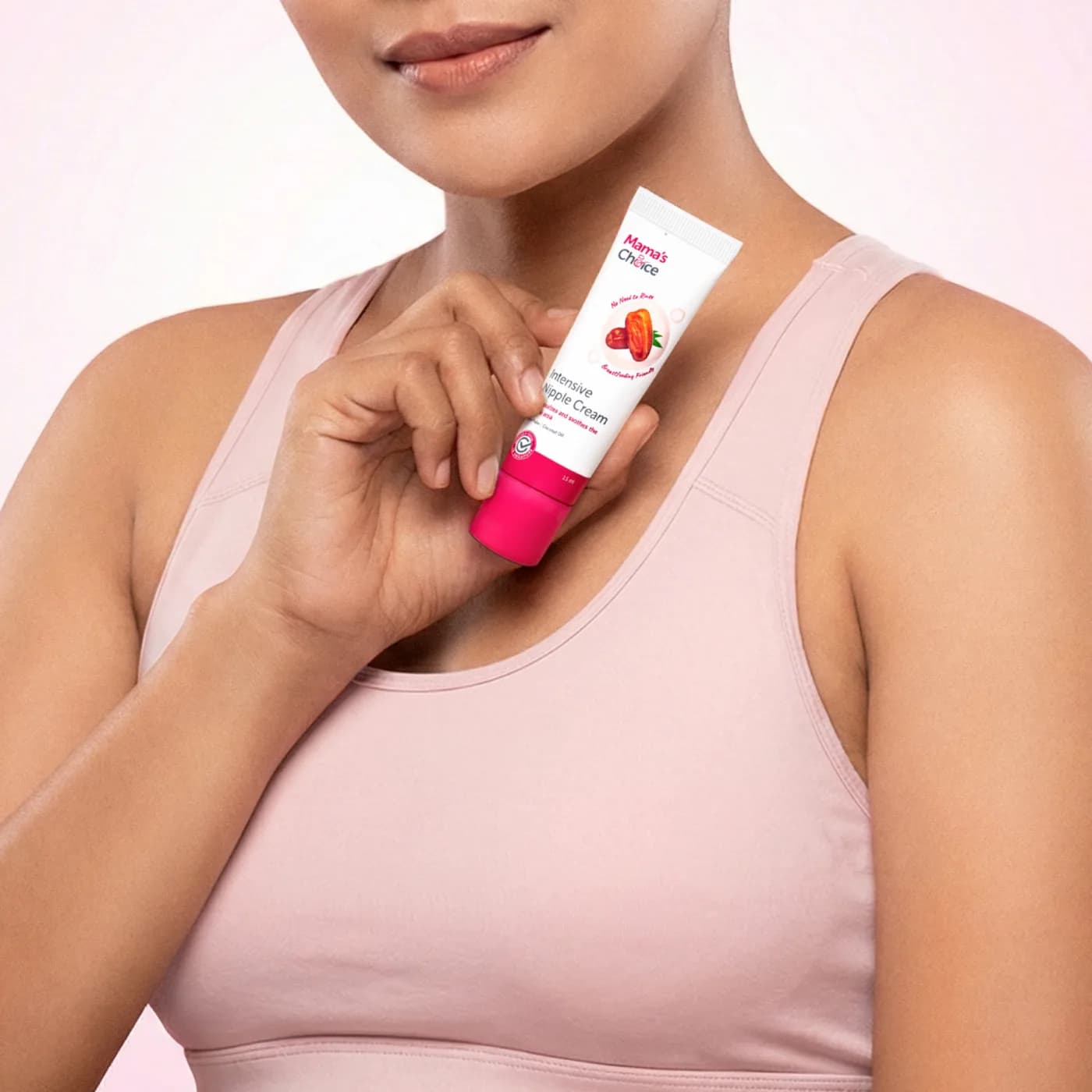
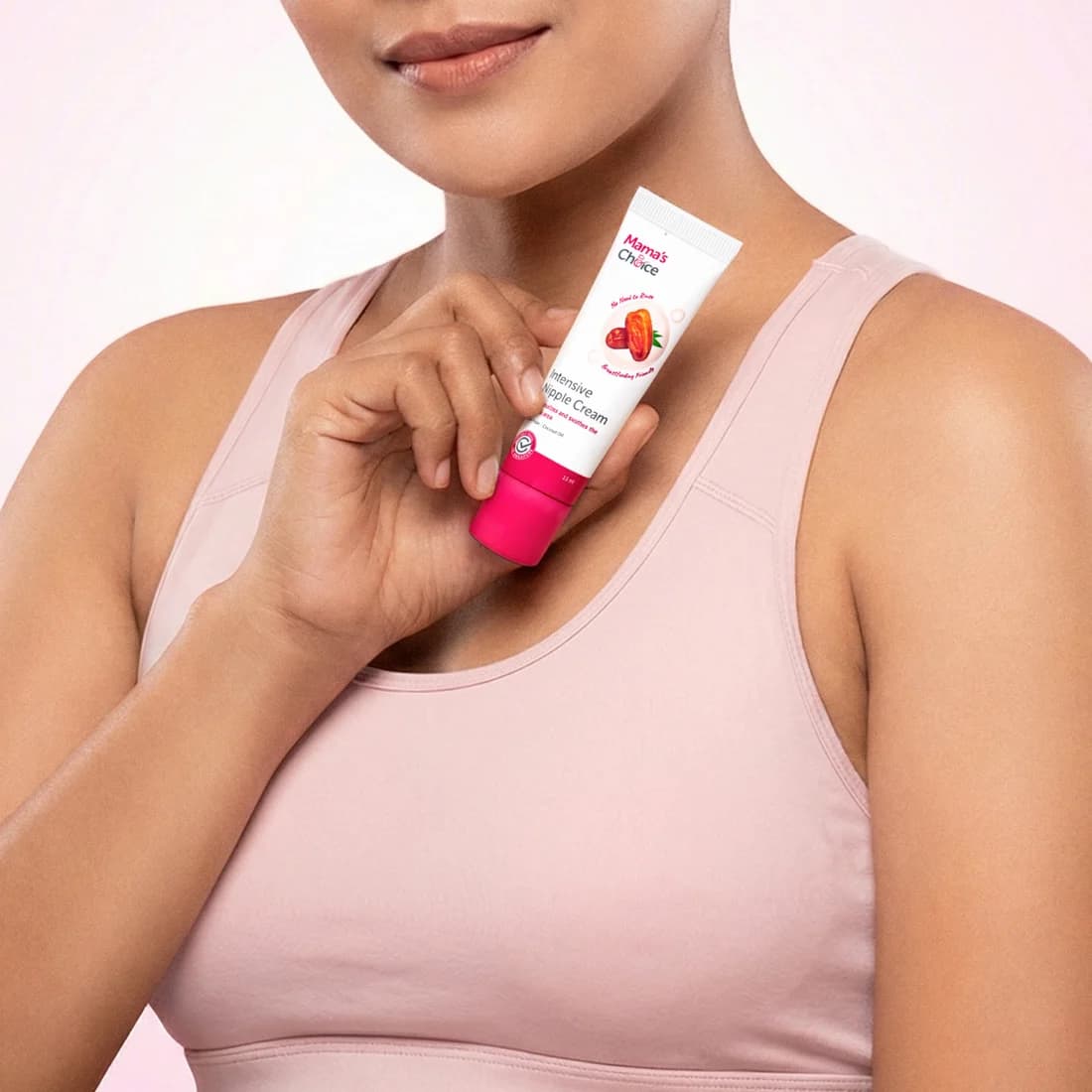
A good nipple balm keeps the skin moisturised and protected between feeds, which matters even more when pregnancy has made your nipples tender. Our Intensive Nipple Cream is a rich lanolin balm with shea butter, coconut oil, vitamin E and date fruit extract. It moisturises dry nipple skin and helps prevent cracked nipples, and there is no need to rinse it off before a feed. In a Mama's Choice satisfaction survey of 74 mothers in Indonesia (2022), 96% felt dry nipple skin became softer. It is formulated for pregnancy and breastfeeding and halal certified by BPJPH, Indonesia.
A soft, wire-free bra helps too when your breasts are tender and changing size. Our Maternity Nursing Bra has 3 rows of hooks so you can loosen it as you grow, and cups that unclip easily once the new baby arrives.
Comfort does not fix a poor latch, so get that checked as well. Our guide to breastfeeding pain runs through the other causes, including thrush and tongue-tie.

Where can you get help in Malaysia?
Ask early. Nipple damage gets harder to sort out the longer it goes on.
Your klinik kesihatan is the first stop, and nurses there can watch a feed and refer you on. Many government and private hospitals run lactation clinics where a consultant will watch a whole feed and adjust the hold, which helps far more than reading about positions. Breastfeeding peer counsellor groups also run support lines for the days when you need an answer before your next appointment.
Take your baby hungry, bring the bottles or pump you use, and write down what hurts and when. Our comfortable breastfeeding basics are a good place to start while you wait for a slot.
Frequently asked questions
- Is it all right to breastfeed while pregnant?
- For most women with a straightforward pregnancy, yes. La Leche League describes feeding through pregnancy as common, with tender nipples and a drop in supply as the usual trade-offs. Tell your doctor you are still feeding, and ask specifically if you have a history of preterm birth, bleeding or a twin pregnancy.
- How often should a newborn feed?
- Roughly 8 to 12 times in 24 hours in the early weeks, which the American Academy of Pediatrics describes as feeding on demand rather than by the clock. Cluster feeding in the evenings is normal. Wet diapers and steady weight gain tell you more than a timetable.
- How long should I breastfeed for?
- The World Health Organization and KKM recommend exclusive breastfeeding for the first 6 months, then continued breastfeeding alongside other food up to 2 years or beyond. Any amount counts, and stopping earlier than you planned is not a failure.
- How long does expressed breast milk keep in Malaysia?
- The CDC gives up to 4 hours at room temperature, and defines room temperature as 25°C or cooler. A Malaysian kitchen without air-conditioning is often warmer, so take 4 hours as the absolute limit and use a cooler bag. In the fridge, up to 4 days. In the freezer, best within 6 months and acceptable up to 12.
- Should breastfeeding hurt?
- A few seconds of tugging as your baby latches is common. Pain that lasts through the feed, or a nipple that comes out flattened, pinched or pale, points to a latch problem rather than something to put up with. A lactation consultant or a trained nurse watching one full feed usually finds the cause.
Sources
- World Health Organization: Infant and young child feeding
- American Academy of Pediatrics (HealthyChildren): How often and how much should your baby eat?
- CDC: Proper storage and preparation of breast milk
- La Leche League International: Breastfeeding during pregnancy and tandem nursing
- NHS: Sore or cracked nipples when breastfeeding
- myHEALTH (Kementerian Kesihatan Malaysia): Breastfeeding
Share this article
This article is for information only and is not a substitute for diagnosis or medical advice. Please talk to your doctor about your own situation.